How Driver Apps Transform Waste Hauling Operations in 2026
Why Driver Apps Are Essential for Waste Hauling
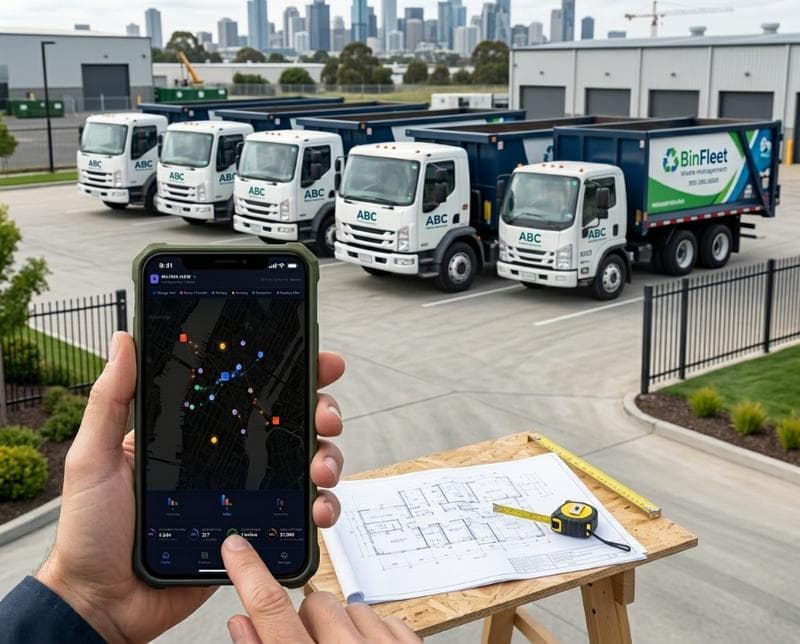
The waste and recycling industry has historically relied on paper manifests, radio communication, and manual reporting. This approach introduces friction at every step: drivers navigate by memory or printed maps, office staff wait hours for completion reports, and customers don't know when their bins will arrive. A modern driver app collapses these gaps by putting route information, proof of service, and customer communication directly in your team's pockets.
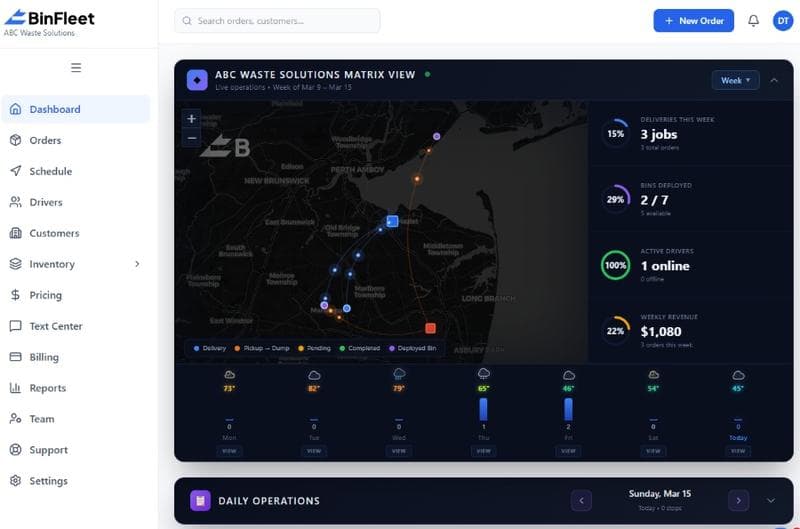
Without mobile visibility, dispatchers operate blind during the day. When a customer calls asking "where is my pickup?", your office staff can only guess based on the route sequence printed that morning. Real-time driver apps solve this by streaming live location, completed stops, and status changes to your dispatch center and customer management system simultaneously. The result is fewer missed pickups, faster problem resolution, and happier customers who receive accurate arrival windows.
Streamlining Stop Management and Accountability
Each stop on a waste route involves multiple decision points: finding the correct container, checking for hazardous materials, confirming payment status, and documenting what was collected. Paper-based processes leave room for skipped steps. A driver app enforces accountability by requiring drivers to confirm arrival, input container details, and move to the next stop only after the current one is properly logged. This structure eliminates the guesswork and reduces disputes about whether a service was actually performed.
Modern driver apps also allow dispatchers to adjust routes on the fly based on traffic, customer requests, or equipment failures. If a bin is blocked or a customer wants to reschedule, the driver taps a button, the system recalculates the route for remaining stops, and the office is instantly informed. This flexibility keeps schedules on track instead of having drivers improvise, which often leads to late finishes and overtime costs.
Photo Capture and Digital Proof of Service
Photos are the gold standard for proving service was delivered. A customer disputing a charge, or a driver claiming a location was inaccessible, can both be resolved with a single image. Driver apps make photo capture frictionless by integrating the device camera directly into the stop workflow. Drivers can snap photos of the bin, the pickup area, or any obstacles—and these images are instantly tagged with the stop location, timestamp, and driver ID. No manual file management, no lost documentation, no email chains of fuzzy phone photos.
Photo data also builds a historical record of each location. Over time, your office staff can spot patterns: certain addresses frequently report missed pickups (but photos show they weren't home), or particular routes always encounter access issues at specific times. This data-driven view lets you adjust service parameters, set customer expectations, or identify route optimization opportunities that raw manifests never reveal.
Real-Time Status Updates and Customer Communication
Customers today expect SMS or app notifications about service arrival, just as they do with food delivery or rideshare. A driver app that integrates with your customer communication system (like the SMS features in BinFleet) can automatically send "Driver arriving in 15 minutes" alerts or "Service completed—photo attached" confirmations without requiring a dispatcher to manually send messages. This automation reduces your office workload while giving customers the transparency they increasingly demand.
Real-time status updates also reduce customer service calls. When customers see that their pickup was completed and a photo was captured, fewer of them contact your office with "Did you get my bin?" questions. Dispatchers spend less time answering routine inquiries and more time handling genuine issues like access problems or billing questions. The result is a leaner operation and better first-contact resolution rates.
Reducing Errors and Operational Cost
Manual route execution introduces errors that are expensive to fix: missed pickups that require callbacks, forgotten upcharges for extra containers, incorrect billing due to manual data entry, and disputes that tie up staff hours. A driver app minimizes these errors by digitizing the critical data points at the moment of service. Container weights, special handling requirements, and billable extras are confirmed and recorded in real time, not typed into a spreadsheet the next day from memory or crumpled notes.
Over a typical hauling operation, error reduction compounds into real savings. Fewer callback routes mean less fuel and labor burned. Fewer billing disputes mean cleaner accounts receivable. Fewer customer complaints mean less time spent on customer service and more time on profitable routes. A driver app also reduces administrative overhead: dispatchers don't need to manually reconcile paper records, drivers don't need to fill out forms at the end of the day, and office staff don't need to spend hours re-entering data. Request a demo to see how real-time driver tools accelerate your operation.
Choosing and Implementing a Driver App
Not all driver apps are built for waste hauling. Generic delivery apps don't account for the weight of containers, hazmat checks, or the specific workflows of recycling and dumpster operations. Look for a platform that understands waste industry operations: one that lets drivers mark bins as damaged or contaminated, handle split pickups, and manage heavy equipment safely. The app should also integrate seamlessly with your dispatch system, billing, and customer communication so data flows without manual handoffs.
Implementation is often where driver apps fail. If your team can't easily learn the app or it adds steps instead of removing them, drivers will resist and your investment won't pay off. Choose a platform with strong training resources, clear workflows, and a design philosophy that respects how drivers actually work. Many modern platforms offer phased rollouts: start with a pilot team, gather feedback, refine, and then expand. This approach builds buy-in and reduces the risk of costly missteps. For haulers evaluating options, checking out case studies and operational guides from industry-focused platforms helps you avoid generic SaaS traps.
FAQ
Do driver apps require expensive smartphones, or can we use older devices?
Modern driver apps are designed to work on affordable Android and iOS devices, and most don't demand the latest hardware. The key is reliable cellular or data connectivity. If your service area has spotty coverage, look for apps with offline modes that sync data when the driver reaches a connected zone. This matters more than device age.
How long does it take drivers to learn a new app?
A well-designed driver app with clear, intuitive workflows can be mastered in one to two shifts. Your team should invest in hands-on training before launch—not just a quick demo. If you're seeing adoption resistance weeks later, the problem is usually app design (too many steps) or missing context (drivers don't understand why they're required to do something). Choose a platform that offers training support and listens to driver feedback.
What happens to our data if the app goes offline?
Quality driver apps store critical data locally on the device and sync to the cloud when connectivity returns. This means drivers can complete stops and capture photos even without a signal. The data is safeguarded in transit and stored securely on cloud servers. Always confirm your platform's data backup and security practices before committing.
Can we integrate a driver app with our existing billing system?
Most modern platforms offer API integration with common billing and ERP systems, but integration depth varies. The best platforms are designed to pull data from your billing system (to inform drivers of account status or special instructions) and push service data back (to auto-populate invoices). This two-way integration is where real efficiency gains happen, so prioritize it in your evaluation.
Ready to Streamline Your Operation?
See how BinFleet AI helps waste haulers save time, cut costs, and grow.
Request a Free 30-Day TrialRelated Articles
How a Mobile Driver App Transforms Waste Hauling Operations
Driver Apps for Waste Haulers: How Mobile Technology Transforms Daily Operations