Driver Apps for Waste Haulers: How Mobile Technology Transforms Daily Operations
Why Driver Apps Matter in Modern Waste Hauling
The waste hauling business moves at ground level, where communication gaps and manual processes cost time and money. Drivers juggling multiple stops, customers demanding proof of service, and dispatchers flying blind to real-time issues create friction that compounds throughout the day. A proper driver app eliminates this friction by putting route optimization, stop verification, and customer communication directly in your driver's pocket. This isn't about replacing experienced drivers—it's about giving them the tools to work smarter and faster.
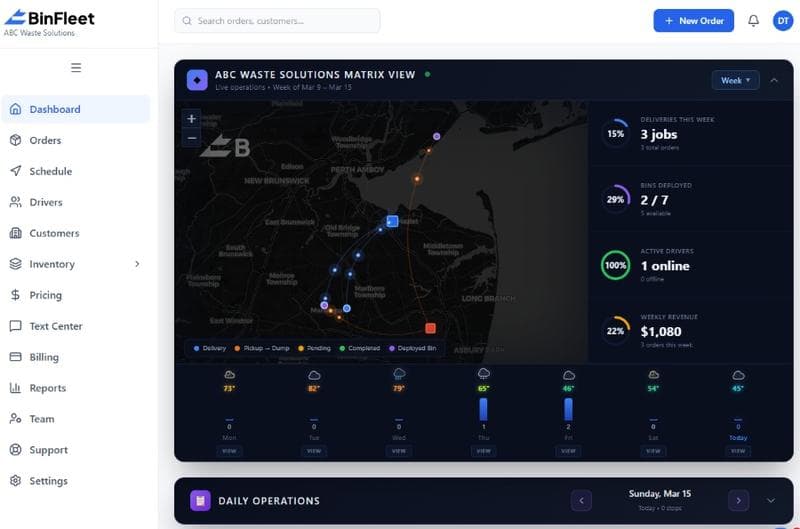
When dispatchers can't see where drivers are or what's happening at each stop, they're forced to react to problems instead of preventing them. Customers email complaints about missed pickups hours after the fact, and drivers waste time explaining what actually happened rather than moving to the next job. Modern driver apps solve this by creating transparency that benefits everyone: dispatchers see live updates, drivers spend less time on paperwork, and customers get proof of service before the truck leaves the property.
Real-Time Stop Management and Route Optimization
A driver app doesn't just show a list of addresses—it intelligently sequences stops based on geography, time windows, and container status. When a driver arrives at a location, the app pulls up the customer details, bin size, special instructions, and any notes from the last visit. This eliminates the confusion of finding the right bin, mismatching container sizes, or missing access instructions that lead to callbacks and customer frustration. The driver taps to confirm arrival, begins the pickup, and the dispatcher sees it happen in real-time on the map.
Route optimization becomes automatic rather than a manual process that changes constantly. If a driver finishes early or runs late, the dispatcher can adjust the remaining stops dynamically, preventing gaps in coverage and customer complaints about missed appointments. Some drivers still use paper clipboards or mental notes about which bins go where—but that's why competitors are taking their customers. Digital stop management reduces service errors by up to 40 percent and cuts average service time per stop by minutes that add up across dozens of daily pickups.
Photo Capture and Proof of Service
Customers want evidence that their bin was actually picked up, and drivers want to prove they did the job right. A driver app with photo functionality solves both problems simultaneously. After completing a stop, the driver snaps a photo of the empty bin or the completed work, and it's immediately attached to that job record. This documentation becomes invaluable when a customer disputes a charge, questions whether the pickup happened, or files a claim. You have timestamp-verified proof stored in your system, not a grainy photo on a driver's personal phone that might get deleted.
Photo capture also helps catch operational problems before they become bigger issues. If a bin is damaged, overfilled, or inaccessible, the driver documents it on the spot. Your office team can then contact the customer to explain the situation or schedule a follow-up, rather than discovering the problem during billing and scrambling to fix it. This proactive approach reduces disputes, strengthens customer relationships, and creates a paper trail that protects your business in compliance scenarios or liability questions.
Instant Customer Notifications and Communication
Customers have come to expect text updates about deliveries and pickups—they want the same transparency from their waste hauler. A driver app integrated with SMS notifications automatically sends customers a message when the driver is 15 minutes away, when the job is complete, or when there's an issue. No more voicemail tag, no more missed calls, no more angry customers wondering if their dumpster will get picked up today. The driver doesn't type these messages; the app sends them automatically based on what's actually happening on the route.
This level of communication turns a pain point into a competitive advantage. When customers receive a text confirming their pickup arrived on time, they feel heard and valued. When there's a delay, a proactive notification prevents frustration from turning into a service complaint or negative review. Many waste haulers see customer satisfaction scores jump significantly after implementing automated driver app notifications, because reliability stops being a promise and becomes a verifiable fact delivered straight to the customer's phone.
Reducing Dispatch Headaches and Administrative Burden
Dispatchers spend enormous amounts of time on phone calls fielding driver questions, customer complaints, and scheduling conflicts. A driver app puts answers in the driver's hands, so they don't call dispatch asking which bin number is on their route or whether a customer has a gate code. Drivers see instructions, photos from previous stops, and special notes without picking up the phone. Meanwhile, the dispatcher can focus on route optimization, problem-solving, and customer service instead of being a glorified information desk.
The administrative work after the route is finished shrinks dramatically when driver app data flows directly into your system. Stop completion times, photos, customer signatures (where applicable), and notes are all already recorded—no manual data entry, no reconciling handwritten logs, no re-keying information that's already been captured. This means invoicing and billing happen faster, your team has more time for strategic work, and the chance of billing errors drops. Many operations managers find they can handle 15-20 percent more routes with the same staff size after implementing a solid driver app.
Choosing the Right Driver App Solution for Your Fleet
Not all driver apps are created equal, and a solution built specifically for waste hauling outperforms generic delivery app platforms. Look for features tailored to your business: container-specific status updates (rather than just generic "delivered"), integration with your existing dispatch system, offline functionality for areas with poor coverage, and dashboards that let you monitor fleet performance at a glance. A good driver app should feel natural to use, not like forcing drivers through a clunky interface that slows them down.
Integration is critical—your driver app needs to talk seamlessly with your dispatch system, billing software, and customer communication platform. When data lives in isolated silos, you lose the real-time visibility and efficiency that driver apps are supposed to provide. The best solutions are purpose-built for waste and recycling companies, understand your operational flow, and have been refined based on feedback from hundreds of operators running real routes every day. Schedule a demo with BinFleet to see how a purpose-built driver app transforms your daily operations.
FAQ: Driver Apps for Waste Haulers
What happens if a driver loses cell signal during their route?
Modern driver apps work offline by storing route data and stop details on the device before the day starts. Drivers can complete pickups, capture photos, and record notes without an active connection. Once signal is restored, the app automatically syncs all the information back to your system. This ensures no job information is lost and drivers don't waste time waiting for a signal to record their work.
Can customers see real-time location of the truck, or just notifications?
That depends on the app and your preferences. Most waste hauler driver apps send automated notifications (arrival, completion, issues) rather than live GPS tracking for privacy and data reasons. Some solutions offer customers a narrow window to track the driver (like 15 minutes before arrival), which provides transparency without giving out constant location data. Read more about customer communication strategies to decide what works for your brand.
How does a driver app help with compliance and regulations?
Driver apps create an auditable record of every stop—when it happened, who did it, what photos were taken, and any notes. This documentation is invaluable for environmental compliance, hazardous waste handling verification, and customer disputes. If a regulator or customer ever questions whether a job was completed correctly, you have timestamped proof instead of relying on a driver's memory or paper logs that might be lost or illegible.
What's the typical learning curve for drivers using a new app?
Most experienced drivers pick up a well-designed driver app within a single shift—the core actions (arrive, complete, photo, next stop) are intuitive and similar to apps they already use. The key is choosing an app with a clean interface built for actual drivers, not IT departments. BinFleet prioritizes simplicity so your team spends zero time troubleshooting and maximum time doing their jobs. New drivers are usually productive by day two.
Start Simplifying Your Operations Today
Driver apps aren't a future feature anymore—they're the baseline expectation for operators who want to compete in 2026. Real-time visibility, proof-of-service automation, and instant customer communication solve genuine operational problems that waste haulers face every single day. If you're still coordinating pickups through phone calls and email, you're burning time and money that could go toward growth or profitability.
The transition to a digital driver workflow is smoother than you'd expect. Most operators see improvements in customer satisfaction and operational efficiency within the first month. If you'd like to see how a purpose-built driver app works for waste and recycling companies, request a free demo of BinFleet or visit our homepage to learn more about how we help haulers streamline their entire operation from dispatch to invoicing.
Ready to Streamline Your Operation?
See how BinFleet AI helps waste haulers save time, cut costs, and grow.
Request a Free 30-Day Trial