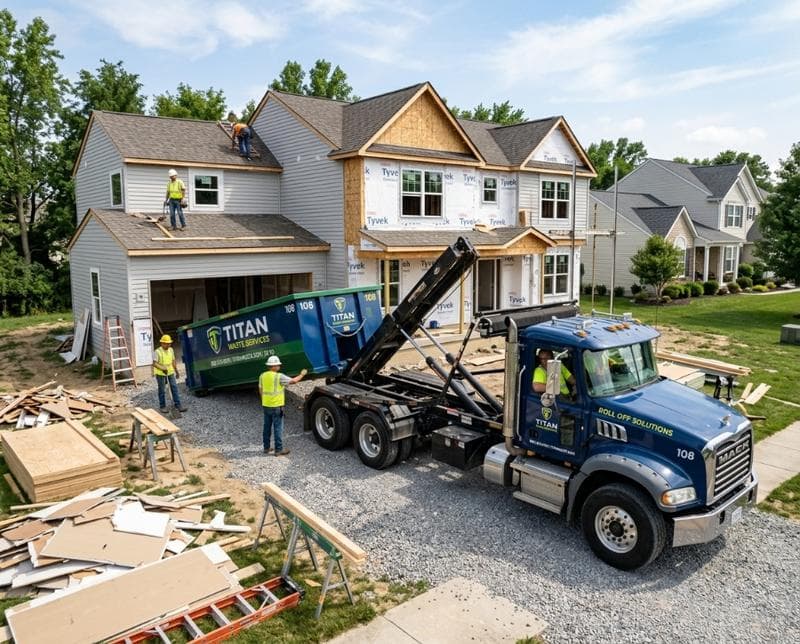
How Driver Apps Transform Waste Hauling Operations
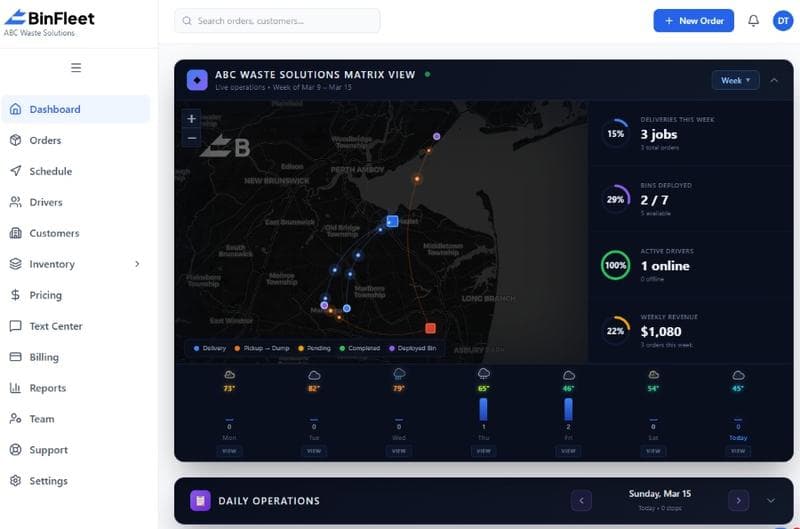
Why Driver Apps Matter More Than You Think
Most waste hauling operations still rely on printed manifests, post-it notes, and drivers calling the office with status updates. That friction costs money—missed stops get rescheduled, proof of service is incomplete or lost, and dispatch has no real-time visibility into where trucks actually are. A driver app erases these problems by putting the tools your team needs into their pockets.
In 2026, the hauling industry has moved past "nice-to-have" mobile solutions. Customers expect SMS confirmations, photo proof that their bins were serviced, and accurate pickup times. Drivers expect to work without the confusion of competing communication channels. A purpose-built driver app becomes the single source of truth for every stop on the route, reducing customer service calls and giving dispatchers confidence in their data.
Real-Time Stop Management and Route Optimization
Your drivers don't need a generic field service app. They need one built for dumpster rental and waste hauling workflows. A proper driver app shows the full stop details—bin size, location notes, special instructions, account notes—before the driver arrives. This eliminates confusion and keeps the stop moving efficiently. When the driver checks in at each location, the app captures GPS data, timestamps, and customer interaction notes automatically.
Real-time routing adjustments become possible when dispatch can see exactly where each truck is and how long stops are taking. If a driver is running behind, dispatch can reassign a nearby stop or notify the next customer. If a stop takes longer than expected, you have the data to understand why—and improve scheduling on future routes. This visibility alone prevents the cascading delays that haunt traditional operations.
Photo Capture and Proof of Service
Photos are proof. A customer disputes a charge? You show the photo of their bin at their location. A driver says they completed a stop but the customer says it didn't happen? The timestamp and geolocation metadata in the app photo settle it instantly. A driver app with built-in photo capture and storage removes the he-said-she-said conversations that eat time and damage relationships.
Beyond liability protection, photos drive accountability in a positive way. When drivers know every stop is documented with a photo, service quality improves naturally. You also gather visual data about site conditions, access issues, or damage that helps you flag problem accounts early or adjust pricing for difficult locations. The photo library becomes operational intelligence that improves how you bid work and manage customer expectations.
SMS Updates and Customer Communication
Customers want to know when their service is complete. They don't want to guess or call the office to check. A driver app that triggers automatic SMS notifications to the customer—"Your bin was picked up at 10:47 AM"—improves satisfaction and reduces customer service overhead. Better yet, that notification can include a clickable link to view the photo proof, turning post-service communication into a confidence-builder instead of a friction point.
This automation also means your dispatchers spend less time answering "Where's my truck?" calls. Drivers don't need to call in updates manually. The app does it automatically, keeping customers informed and your team focused on operations. When customers feel kept in the loop, complaints drop and retention improves—especially for commercial accounts where service reliability directly impacts their business operations.
Streamlining Paperwork and Reducing Errors
Paper manifests are slow and error-prone. A driver checks a box for the wrong address, a signature is illegible, a weight gets written down wrong, or the sheet gets wet and becomes unreadable. Digital capture eliminates these errors at the source. When a driver marks a stop complete in the app, the system records who did it, when, where, and what was documented. This creates an auditable record that works in your favor for accounting, customer disputes, and compliance.
The data flows directly into your invoicing and accounting systems. No more manual data entry, no more transcription errors, no more lost manifests. Drivers spend less time on paperwork and more time completing stops. Your office staff stops chasing drivers for missing or unclear documentation. This simplification compounds—fewer errors means fewer customer disputes, faster billing cycles, and better financial visibility.
Choosing the Right Driver App for Your Operation
Not all driver apps are built the same. Some are designed for pizza delivery or plumbing services and feel bolted-on for waste hauling. The best driver apps are built specifically for the workflows you actually use. Look for apps that integrate with your dispatch system, capture the data points your operation needs, and don't require extra steps or workarounds to use on a daily basis. The app should feel like an extension of how your drivers already work, not a burden layered on top.
Integration matters too. Your driver app should feed directly into your routing system, your invoicing platform, your customer communication tools, and your yard management system. If drivers are using one app but dispatch is using another disconnected tool, you're creating more problems than you're solving. See how BinFleet connects driver capture to your entire operation and eliminates these gaps. A unified platform means real-time accuracy and your team works from one source of truth, not three different systems.
FAQ: Driver Apps and Waste Hauling Operations
What if my drivers already use paper manifests? Do I really need to switch?
Paper works until it doesn't. You'll hit a scale point—usually around 5-8 routes—where manual tracking becomes a liability. You lose manifests, miss billing opportunities, can't track service quality, and your dispatchers spend hours chasing drivers for updates. A driver app becomes essential the moment you value accuracy, speed, and customer confidence more than the cost of training your team.
Will my drivers actually use a driver app, or will they ignore it?
Drivers adopt tools that make their job easier, not harder. An app designed for hauling—one that shows them every stop detail upfront, eliminates phone calls back to the office, and removes paperwork friction—gets used naturally. The key is adoption training and showing drivers the benefit: they finish routes faster, don't waste time on unclear instructions, and have proof of their work in their pocket. Read more about driver adoption strategies to ensure your rollout succeeds.
How do photo timestamps and GPS data help with customer disputes?
A photo with embedded GPS coordinates and timestamp is legal-grade proof of service. If a customer claims they weren't serviced, you show them the photo taken at their address at the exact time your driver was there. If they dispute a charge, the documentation backs your invoicing. This protection alone—avoiding even one or two disputed charges per month—often pays for the app in the first month.
Can a driver app really improve my dispatch efficiency?
Yes. Real-time visibility into driver locations lets dispatch reassign stops on the fly, optimize routes mid-day, and reduce idle time. Drivers stop waiting for unclear instructions; the app has all the details. Stop times are logged automatically, so you see which accounts are taking longer and can adjust future scheduling. Over time, this data drives continuous improvement in how you plan routes and manage driver utilization.
Ready to Streamline Your Operation?
See how BinFleet AI helps waste haulers save time, cut costs, and grow.
Request a Free 30-Day TrialRelated Articles
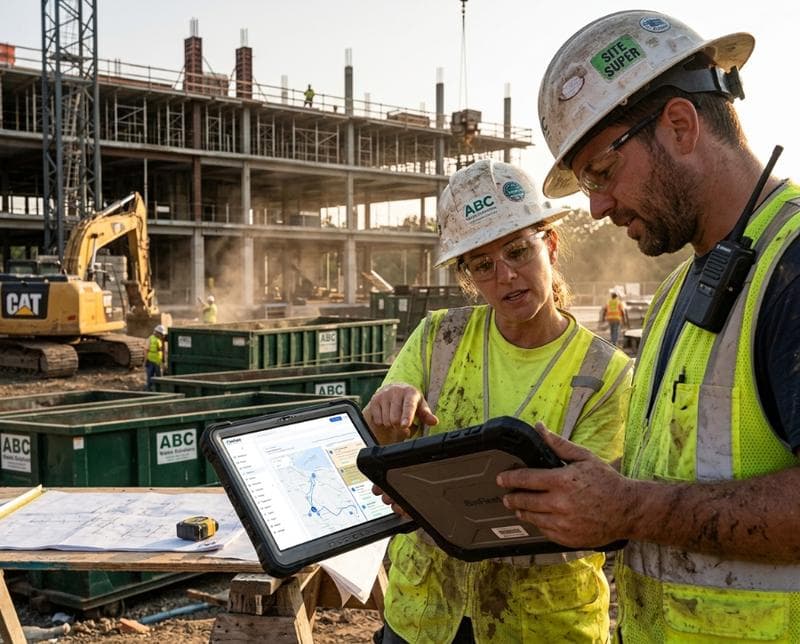
How a Driver App Transforms Waste Hauling Operations
How a Mobile Driver App Transforms Waste Hauling Operations