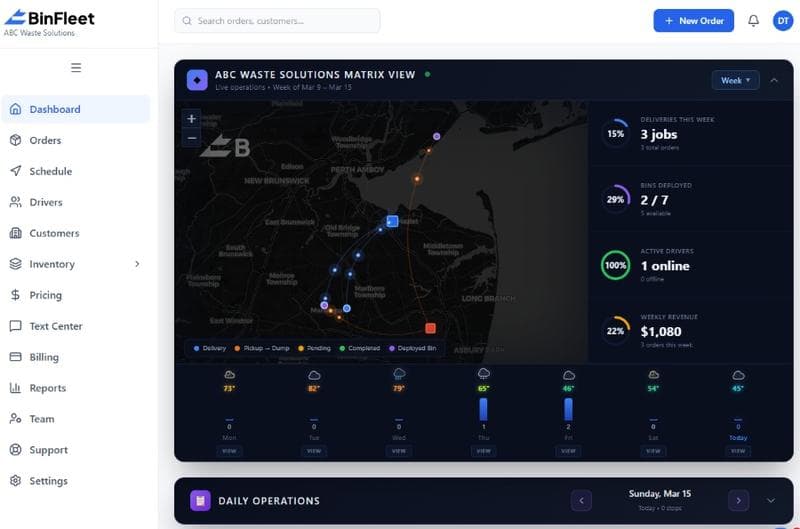
How Driver Apps Transform Waste Hauling Operations
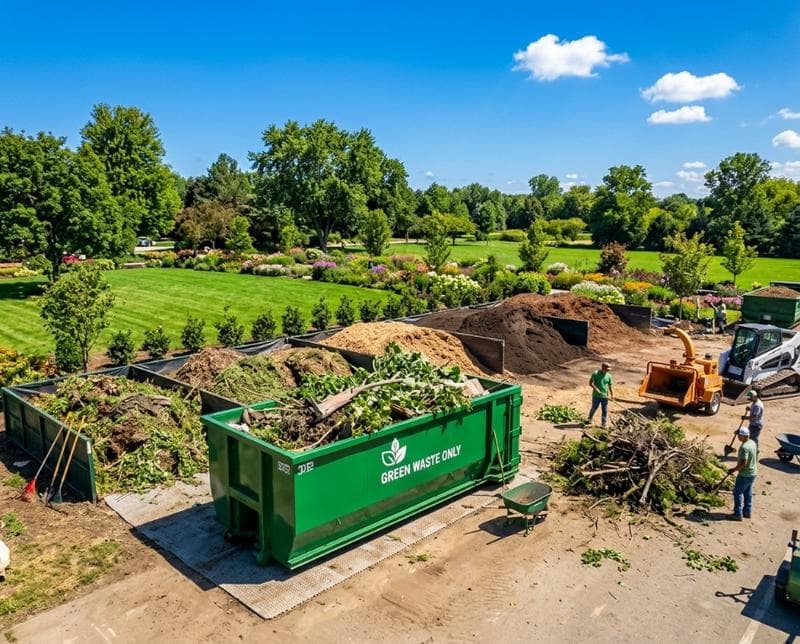
The Daily Grind Without a Driver App
Most waste hauling operations still rely on paper tickets, handwritten notes, and radio chatter to coordinate pickups and deliveries. Drivers print route sheets in the morning, scribble completion times and notes by hand, and then manually reconcile everything back at the yard—often days later. Meanwhile, customers text dispatch asking where their container is, and dispatchers scramble to call drivers for updates because there's no real-time visibility into what's actually happening in the field.
This workflow creates cascading problems: missed pickups because a driver didn't see a note, disputed invoices because there's no proof of service, poor customer experience because nobody can give an accurate status update, and wasted time at the office reconciling handwritten records. By 2026, waste haulers who haven't adopted driver apps are already falling behind competitors who have streamlined their operations and improved first-pass service rates by 15–20%.
Real-Time Stop Management and Completion Tracking
A modern driver app puts every stop on the driver's phone in the exact sequence they need to execute. Instead of squinting at a printed route sheet, drivers see their next three stops, turn-by-turn navigation, customer notes, and bin requirements all in one place. When they arrive at a location, a single tap confirms their arrival and automatically notifies dispatch and the customer that service is underway. This eliminates guesswork and ensures nobody is wondering if the driver is lost or stuck in traffic.
When a driver completes a stop—picking up or dropping off a container—they log it in the app with a timestamp, photo confirmation, and any exceptions (like "customer requested extra service" or "bin was damaged"). This data syncs immediately to your back-office system and becomes the source of truth for billing, customer communication, and performance tracking. No more missing stops marked as complete, no more disputes over whether service was actually rendered, and no more data entry errors when information gets manually transferred from paper to spreadsheet.
Photo Capture and Documentation Made Simple
Photos are your best defense against damage claims, service disputes, and compliance questions. A driver app with built-in photo capture lets drivers snap photos of each container's condition before pickup, after delivery, and if there's any damage or contamination issue. These photos are automatically tagged with location, timestamp, and driver ID, then attached to the customer's service record and available in your compliance files.
This is especially critical for commercial accounts and roll-off jobs where container condition directly affects your liability and revenue. Instead of relying on driver memory or customer phone calls to report problems, you have visual proof embedded in your system. When a customer claims a bin arrived damaged or that they were charged for extra weight they didn't authorize, you can pull timestamped photos from the app and resolve the dispute in seconds, not days.
Customer Status Updates and Communication Automation
Customers want to know where their container is and when it will arrive. Without a driver app feeding real-time data to your dispatch system, your only option is to have dispatchers manually call or text updates, which doesn't scale and leaves gaps. A driver app that integrates with BinFleet's dispatch and communication system automatically sends customers SMS notifications when their stop is 15 minutes away, when service is complete, and when their container will be picked up. This visibility reduces customer service inquiries and builds trust because communication is proactive, not reactive.
For recurring customers or contract accounts, these automated touchpoints also create opportunities for upsells—notification that a bin is "full and ready for pickup" can include a link for customers to request an extra service or schedule an upgrade. The driver app becomes part of your customer experience strategy, not just an internal tool.
Exception Handling and Route Flexibility
Waste hauling routes are never perfectly linear. A customer calls requesting an emergency pickup, a container is blocked, or a stop takes longer than expected. With a paper route, these exceptions create confusion and delays. With a driver app, the dispatcher can send a new stop to the driver's phone in real time, and the app recalculates the optimal route automatically. The driver sees the priority, accepts the new stop, and the updated route is reflected instantly in the system and communicated to affected customers.
This flexibility means you can respond to customer requests without derailing your entire day, reduce empty miles by accepting nearby jobs that come in mid-route, and give drivers clear guidance on priorities so they're not making judgment calls on their own. When a driver encounters an issue—like a damaged bin, restricted access, or a customer not present—they log it in the app with details and photos. Your team can address the issue immediately rather than discovering it during end-of-day reconciliation.
Data That Improves Operations and Profitability
Every action a driver takes in the app generates data: arrival times, completion times, photos, customer notes, exceptions, and miles driven. Over time, this data reveals patterns. You'll see which stops consistently take longer than estimated, which customers have recurring issues, which drivers are most efficient, and where your routes have inefficiencies. This intelligence feeds back into route optimization, staffing decisions, pricing, and customer relationship management—none of which is possible with paper-based operations.
Beyond optimization, driver app data is the foundation of accountability and training. You can see exactly what happened at each stop, measure driver performance objectively, and identify coaching opportunities. You can also use this data to justify rate increases to customers ("we've improved on-time delivery by 22%") and defend against unfounded claims because every transaction has a record.
FAQ
What if my drivers don't want to use a smartphone app?
Most resistance comes from unfamiliarity, not technology aversion. Once drivers see that the app makes their job easier—no more deciphering handwritten notes, automatic navigation, one-tap completion instead of manual forms—adoption is quick. Start with a training session and pair new app rollout with incentives like early quitting time when all stops are logged properly. Veterans in the field often become champions of the tool once they realize it reduces their cognitive load and paperwork.
Does a driver app require expensive equipment?
No. Modern driver apps work on any smartphone, including older Android devices and used iPhones. You don't need to buy new hardware for your team. Many haulers simply require drivers to have a basic smartphone as a condition of employment, similar to having valid insurance or a clean driving record. See how BinFleet's driver app works on standard devices.
How secure is driver location data?
Location data in a professional driver app is encrypted in transit and at rest, and access is limited to dispatchers and managers who need it for operational purposes. Your data lives on secure servers, not on individual devices. Employees can't disable tracking without being noticed, and location history is retained according to your compliance and privacy policies. Check your vendor's SOC 2 certification and data handling agreements to ensure they meet your standards.
Can the app integrate with my existing billing and dispatch system?
Good driver apps are designed to integrate, not replace, your existing workflow. Read about how haulers are integrating mobile tools with legacy systems. Look for platforms like BinFleet that sync stop data, photos, and exceptions directly to your billing and accounting software so your team doesn't have to manually re-enter information. This integration is what prevents the app from becoming an isolated tool and ensures it actually accelerates your operations end-to-end.
Ready to Streamline Your Operation?
See how BinFleet AI helps waste haulers save time, cut costs, and grow.
Request a Free 30-Day TrialRelated Articles
How a Mobile Driver App Transforms Waste Hauling Operations
Driver Apps for Waste Haulers: How Mobile Technology Transforms Daily Operations