How Driver Apps Transform Waste Hauling Operations in 2026
The Real Problem: Disconnected Field Operations
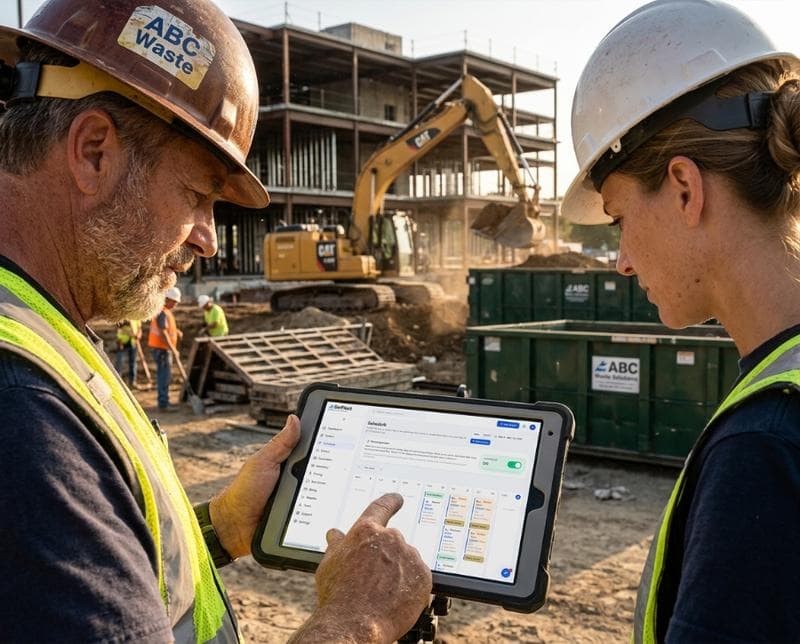
Waste hauling operations are built on split-second timing and precision. A driver running thirty minutes behind doesn't just miss a lunch break—it cascades: the next customer gets an unexpected delay, dispatch loses visibility into what's actually happening, and office staff fielding calls have no real answers. Traditional setups rely on voice calls, text messages, and spreadsheets that get updated hours after the fact. By then, the damage is done: customers are frustrated, dispatchers are making reactive decisions, and no one has a clear picture of where the day actually stands.
The gap between office and field is where most waste hauling problems live. Drivers complete a stop, mark it done on paper or via a basic check-in system, and hours pass before anyone knows if the job was actually finished correctly. Photo documentation happens sporadically—if at all—and damage claims become he-said-she-said disputes. Meanwhile, customers wait without knowing when to expect pickup or rolloff delivery. A driver app that connects real-time field actions to dispatch and customer communication isn't a luxury; it's the difference between operating efficiently and operating blind.
Real-Time Stop Management and Route Visibility
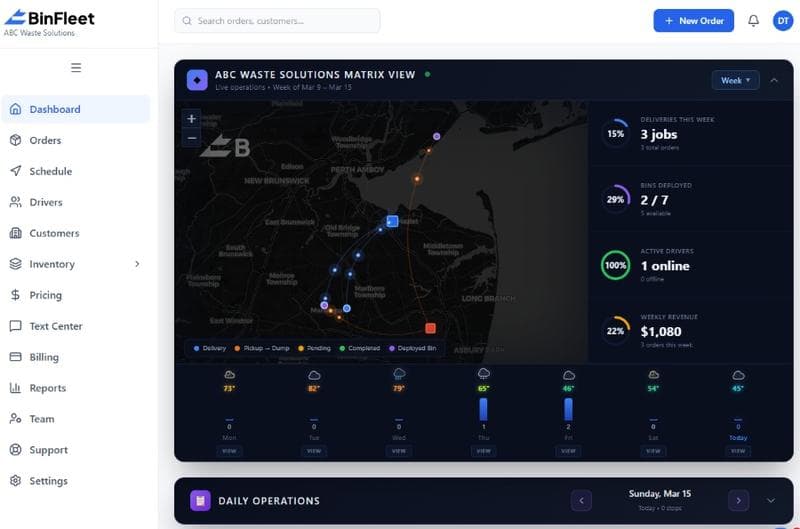
A modern driver app puts the current route in the driver's pocket and gives dispatch a live view of progress. When a driver arrives at a stop, the app captures exact timestamp and GPS location. Dispatch sees it happen in real-time, not as a report filed at end-of-day. If a driver is running late, dispatch knows immediately and can adjust downstream stops, notify waiting customers, or reassign work. This visibility transforms routing from a static plan into an adaptive workflow that responds to what's actually happening on the ground.
Stop details—customer location, special instructions, container size, service type—appear on the driver's screen without needing to remember or cross-reference a separate list. The driver can mark a stop as arrived, in-progress, or completed with a single tap. If a stop needs rescheduling because access is blocked or the customer requested a callback, the driver logs that directly through the app, and dispatch immediately sees the updated status. No more waiting for end-of-shift phone calls to find out why work wasn't done. This real-time loop closes the information gap and gives everyone—dispatch, management, and customers—the truth about operations as it unfolds.
Photo Capture and Damage Prevention
Photos matter in waste hauling. They document container condition before pickup, show completed work, capture overflow hazards, and protect both driver and company from liability disputes. Yet most drivers don't take photos because the process is cumbersome: dig out a personal phone, take a photo, figure out how to send it somewhere, remember the customer name so it ends up in the right folder. A driver app makes photo capture a one-tap workflow. Before lifting a container, the driver opens the app, taps "capture photo," and the image is automatically tagged with timestamp, GPS location, customer info, and route number. Done.
When a customer later claims their bin was damaged during pickup, you have timestamped photo evidence from that exact stop. When a new customer disputes a container's condition, you have a baseline photo from day one. When management needs to investigate a safety incident or verify work quality, the photo library is organized by route, date, and customer. This digital record doesn't just prevent false claims; it builds confidence. Customers see photos of their completed service, which reinforces trust and quality. Drivers know they're documented fairly, which reduces anxiety around liability. The combination of photo evidence and timestamped location data transforms waste hauling from a trust-based business to a verification-based one.
Customer Status Updates Without the Phone Tag
A driver app can trigger automatic customer notifications at key moments. When a driver is five minutes away, the customer receives an SMS or push notification: "Your pickup is arriving soon." When the job is complete, another message goes out with the stop confirmation. These automatic updates eliminate the most common complaint in waste hauling: the customer who didn't know when to expect service and missed the pickup. They also reduce dispatch's phone volume by half. Instead of customers calling to ask "where's my service?", they already know because they got a notification when the driver marked the stop as complete.
For rolloff and large container services, customers appreciate even more detail. A photo sent via the app shows the container has been delivered and is ready. A message confirms the driver has collected payment and left. For residential pickup services, a final notification tells the customer their bin was collected and will be returned within a specified window. This constant, gentle communication isn't busy-work; it's customer retention. Customers feel informed and in control, which directly correlates to fewer complaints and higher loyalty. The driver app becomes an extension of your customer service team, working 24/7 without human effort.
Streamlined Invoicing and Proof of Service
One of the most time-consuming office tasks is matching billing records to what actually happened in the field. A service was scheduled, but did it actually get done? Did the driver collect payment or leave an invoice? Was there a special request that warrants a charge adjustment? Without clean field data, billing becomes guesswork or relies on drivers remembering details at end-of-day. A driver app creates an automatic audit trail: every stop has a timestamp, GPS coordinates, photos, and driver confirmation. This data feeds directly into invoicing, so billing reflects reality, not assumptions.
When a customer disputes a charge, you don't need to argue—you have proof. The app captured exact time of service, location, and photos. For payment collection, drivers can process card or check payments directly through the app, and receipts are automatically recorded in the system. For subscription services or contract renewals, the accumulated photo history and service records become powerful sales tools. You can show a customer a six-month visual timeline of service quality, which justifies retention and upsells. The driver app transforms field data into business evidence that accelerates billing, reduces disputes, and supports sales.
Integration With Dispatch and Inventory Management
The real power of a driver app emerges when it connects to your broader operations platform. When a driver picks up a full container, that information immediately updates inventory, triggering a wash ticket or alerting warehouse staff to stage an empty replacement. When a container is delivered to a new location, the app confirms GPS coordinates, which syncs with your service address records. When a driver starts their route, the app loads live data on which containers need pickup versus delivery based on current inventory—eliminating the offline paper route that becomes stale the moment circumstances change.
This integration is what separates a nice-to-have app from a profit-generating tool. A driver working with a connected app, dispatch system, and inventory platform can handle more stops per shift because they're never fumbling for information or waiting for instructions. Dispatch can optimize routes dynamically instead of locking in a static plan at 6 AM. Management gets real-time KPIs: average stop time, stops per route, on-time percentage, photo capture rate. When every field action syncs to every backend system, your team operates as one connected organism instead of three separate departments.
FAQ: Driver Apps and Waste Hauling Operations
What's the learning curve for drivers to adopt a mobile app?
Most drivers adapt within a few shifts. A well-designed driver app mimics what they already do—arrive, work, leave—just on a phone instead of paper. The initial onboarding should include a hands-on walkthrough (15-20 minutes) and a cheat sheet laminated to the dashboard. After that, repetition is the teacher. Within a week, the app becomes second nature, and drivers realize it actually makes their job easier because they're not searching for information.
Can a driver app work offline or in areas with poor cell signal?
Yes. A good driver app stores route details, customer info, and stop instructions locally on the phone. When signal returns, the app syncs pending updates and new data. For waste hauling, which happens in neighborhoods and remote areas, offline-capable design is non-negotiable. The app should work whether signal is strong, weak, or absent, and catch up whenever connectivity is available.
How do you prevent drivers from gaming the system—marking stops complete when they didn't actually go?
GPS verification combined with photo requirements create natural safeguards. When a driver marks a stop complete, the app captures the exact location. If the GPS coordinate doesn't match the customer's address (with reasonable tolerance), dispatch gets flagged. Photo requirements for certain stop types (damage assessment, container delivery) mean the driver must show work. The combination of location, timestamp, and visual evidence makes gaming the system difficult and risky.
Is a driver app expensive to implement?
Modern driver apps are often included as part of an integrated waste management platform rather than sold separately, making them much more affordable than building custom software. Setup typically takes 2-4 weeks and involves loading your route data, customer info, and service types. The investment pays for itself quickly through reduced disputes, faster billing, fewer missed stops, and improved route efficiency. Many operators see ROI within the first quarter.
Getting Started With Driver App Technology
The waste hauling business is shifting toward real-time, verified operations. A driver app isn't a feature you add when business is good; it's an operational necessity that affects safety, customer satisfaction, and profitability. If your team is still relying on phone calls, paper routes, or vague end-of-day reports, you're losing money and customer goodwill every single day. The move to mobile-first field operations is happening in 2026, and the operators who make that shift first capture significant competitive advantage.
If you're ready to see how a connected driver app integrates with dispatch, invoicing, and inventory management, schedule a free demo of BinFleet. We'll show you exactly how real waste hauling teams are using driver apps to handle more work with fewer errors. You can also learn more about our platform or check out our operations blog for additional insights on waste hauling technology.
Ready to Streamline Your Operation?
See how BinFleet AI helps waste haulers save time, cut costs, and grow.
Request a Free 30-Day TrialRelated Articles
How a Mobile Driver App Transforms Waste Hauling Operations
Driver Apps for Waste Haulers: How Mobile Technology Transforms Daily Operations