How a Dumpster Rental CRM Drives Customer Retention and Revenue Growth
Why Dumpster Rental Companies Need a CRM
The dumpster rental business runs on relationships. You might have a customer sign a contract for one container, but if you don't stay in front of them, a competitor will. CRM software transforms scattered customer data into actionable intelligence that keeps your team aligned and your accounts active. Without it, renewal dates slip through the cracks, upsell opportunities get missed, and customers drift to haulers who remember their names and needs.
A proper dumpster rental platform with integrated CRM functionality doesn't replace your people—it empowers them. Your dispatcher knows when a regular customer needs a rolloff. Your manager spots accounts about to churn. Your billing team catches payment issues before they become disputes. This coordination directly impacts your bottom line: companies with strong customer retention strategies see 25-95% higher customer lifetime value, and CRM is how you operationalize that strategy.
Tracking Customer History and Service Patterns
Every customer interaction matters, and most dumpster rental operators lose track of them. A driver notes that a contractor is planning a renovation project next month. A customer calls with a special request during rolloff. Your team forgets both by next week. CRM software creates a single source of truth where every call, email, special instruction, and service pattern is recorded and accessible to anyone on your team. This institutional memory becomes your competitive advantage when it's time to renew that account or pitch an upsell.
Understanding service patterns helps you anticipate customer needs before they call. If you notice a contractor always rents two containers in spring and three in summer, you can proactively reach out in February with a tailored offer. If a business has never missed a payment and consistently uses the same container size, they're a candidate for a loyalty discount or service upgrade. CRM analytics make these insights obvious, so your team can act on them instead of hoping customers re-engage on their own.
Automating Follow-Up and Renewal Campaigns
Manual renewal follow-up is a sinkhole for time and money. You need structured communication at scale: payment reminders 30 days before expiration, renewal offers with minor incentives, win-back campaigns for lapsed accounts. A CRM with automation handles this without eating up dispatcher bandwidth. Emails and SMS messages go out on schedule, triggered by customer lifecycle events. Your team focuses on the accounts that need human attention—negotiations, complex logistics, or high-value relationships—while the system keeps routine communication flowing.
Automation also ensures consistency. Every customer gets the same professional touchpoints at the same intervals, regardless of who's managing their account. A customer whose main contact leaves your company doesn't experience a service cliff because the system maintains relationship continuity. This predictable, scalable communication reduces churn and creates natural opportunities for upselling services like specialized waste disposal, extra pickups, or maintenance contracts.
Identifying Upsell and Cross-Sell Opportunities
Most dumpster rental operators leave revenue on the table because they're not systematically identifying growth opportunities within their existing customer base. CRM systems surface these chances naturally. A customer who's used your standard rolloff for two years might benefit from a dedicated weekly pickup contract. A construction company using two containers might need a third or a specialized hauling service. A business that switched to a competitor last year might be ready to return if you demonstrate improved service. These insights live in your CRM data; you just need a system that highlights them.
The sales motion becomes clearer too. Instead of cold-calling prospects or waiting for inbound leads, your team focuses on warm conversations with known customers who are already familiar with your brand. This dramatically improves conversion rates and deal velocity. A CRM built for waste operations shows you exactly where each account stands in the customer lifecycle, making it obvious which ones to nurture and which ones to grow.
Reducing Churn Through Proactive Service Management
Churn often signals a service problem that surfaced too late. A customer gets frustrated about something small—a late pickup, miscommunication about container size—and quietly switches to a competitor rather than complain. A CRM with real-time service tracking lets you catch these issues before they become relationship threats. If a customer's service quality drops—missed pickups, late deliveries, or failed special requests—the system flags it. Your operations manager can reach out personally, resolve the problem, and save the account.
Proactive relationship checks matter too. Quarterly check-in calls or email surveys don't have to be fake—they're genuine opportunities to confirm the account is satisfied and surface improvement areas. CRM systems remind your team to make these touchpoints happen and log the feedback. Customers feel heard, and you build data about satisfaction trends. The companies that take this seriously enjoy dramatically lower churn and higher customer lifetime value compared to reactive competitors.
Centralizing Data for Multi-Yard Operations
If you run multiple yards or routes, customer data fragmentation kills profitability. One yard has the account history, another has the billing records, and nobody knows the full picture. CRM software consolidates everything into one platform, so any team member—whether they're at the office, in a truck, or managing a satellite yard—can see the complete customer relationship. This unified view prevents double-billing, service failures, and missed renewal opportunities that happen when operations are siloed.
Scale becomes achievable when your data infrastructure keeps pace with your growth. Adding a second location shouldn't require manual data transfers or duplicate customer records. A centralized CRM grows with you, giving every yard access to the same customer intelligence and allowing headquarters to manage profitability across all locations simultaneously. This is what separates regional waste companies from those that plateau.
FAQ: Dumpster Rental CRM Questions
How is CRM different from just using spreadsheets and email?
Spreadsheets don't scale, and email is a poor archive. CRM software automatically tracks interactions, schedules follow-ups, and surfaces insights that would take hours to find manually. You can't run a profitable multi-account operation on spreadsheets—you'll miss renewals, double-book resources, and lose institutional knowledge when people leave. A CRM treats customer data as a strategic asset, not a burden.
Does a dumpster rental company really need CRM or is it overkill?
If you have more than 50-100 active accounts, CRM pays for itself quickly through reduced churn and faster upsells. Even smaller operators benefit from automated renewal reminders and centralized customer history. The real question isn't whether you need CRM—it's whether you can afford not to have it. Every lapsed account and missed upsell is money you're leaving on the table.
Can I use a generic CRM like Salesforce for my dumpster rental business?
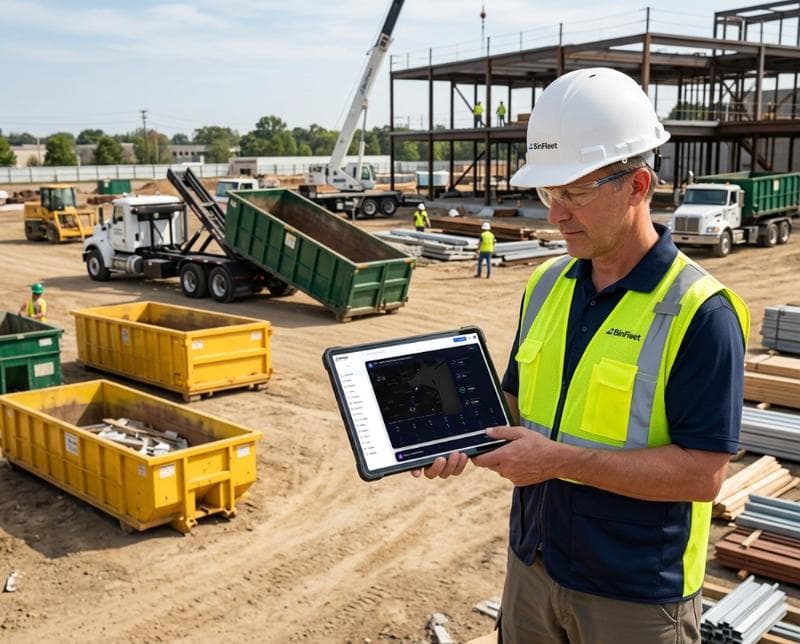
Generic CRM platforms work but require heavy customization and don't speak your operational language. A purpose-built platform like BinFleet integrates CRM with dispatching, inventory tracking, invoicing, and SMS notifications—everything waste operators actually need. You avoid the learning curve and configuration headaches that come with enterprise CRM systems designed for completely different industries.
What's the fastest ROI I can expect from implementing CRM?
Most operators see immediate benefits: fewer missed renewals (often 5-10% recovery), faster upsell conversations (2-3 deals per quarter in a healthy-sized book), and reduced billing disputes. The payback period is typically three to six months when you factor in time saved and prevented churn. The longer-term benefit—increased customer lifetime value and predictable recurring revenue—compounds over years.
Start Retaining More Customers Today
Customer relationship management isn't a luxury for dumpster rental companies—it's the operating system for profitable growth. Without it, you're managing accounts reactively, losing money to churn, and missing revenue buried in your existing customer base. See how BinFleet's CRM capabilities work in action, or explore more operational best practices for waste hauling businesses. Your next growth phase starts with treating customer relationships as seriously as your logistics.
Ready to Streamline Your Operation?
See how BinFleet AI helps waste haulers save time, cut costs, and grow.
Request a Free 30-Day Trial