How a Dumpster Rental CRM Transforms Customer Relationships Into Revenue
Why Standard Contact Lists Fail Waste Haulers
Managing customer relationships in spreadsheets or basic CRM tools designed for sales teams doesn't work for dumpster rental operators. Your business runs on recurring pickups, seasonal demands, and complex multi-site accounts that standard software can't track properly. When you rely on email, phone notes, or disconnected systems, you lose visibility into which customers are happy, which are at risk of leaving, and which are ready to upgrade to larger containers or additional services.
The real cost isn't just lost revenue—it's the operational friction. Dispatchers don't know that a customer called three times about billing issues. Account managers miss renewal dates. When a competitor offers a lower price, you have no data showing your customer's actual usage patterns or service history to justify retention. Without a unified platform, your team operates in silos, and customers feel it.
Customer Retention Through Visibility and Proactive Service
A dumpster rental CRM centralizes customer interaction history, service records, and account profitability in one place. When a dispatcher pulls up a job, they see not just the pickup address but the full account timeline: how long that customer has been with you, their average fill rates, any past complaints, and whether they're under contract. This context transforms service from transactional to relationship-based. Your team can identify at-risk customers before they call a competitor—like the account that's been trending lower volumes or hasn't scheduled a pickup in six weeks.
Proactive retention beats reactive recovery every time. Modern platforms like BinFleet allow you to set automated alerts when customer behavior changes, so your account managers can reach out with solutions instead of waiting for cancellation calls. You can also track which customers received excellent service (on-time pickups, clean drops, responsive communication) and use that data to build stronger relationships with your best accounts before they even think about switching vendors.
Upselling and Revenue Growth From Account Intelligence
Retention is only part of the equation. A CRM system that tracks container sizes, fill frequency, seasonal spikes, and service type usage reveals natural upsell opportunities. If a commercial customer consistently overfills their 20-yard container, you have data to propose a 30-yard option—not a guess, but a documented trend. If a construction account spike every spring, you can proactively reach out in February with temporary container packages. This intelligence-driven approach to growth increases average contract value without aggressive sales tactics that erode relationships.
Revenue per customer compounds when you understand their full usage picture. Bundling services (recyclables pickup, hazmat handling, scheduled vs. on-call), offering annual agreements with locked rates, and cross-selling related services all become easier when your CRM shows the complete customer profile. Accounts that see consistent, relevant service recommendations from you renew at higher rates than those who feel ignored or aggressively sold to.
Reducing Churn With Data-Driven Communication
Churn happens quietly in waste hauling. A customer downsizes their container, extends days between pickups, or simply stops ordering without fanfare. By the time you notice, they've already switched providers. A CRM that monitors account trends gives you early warning signs and the data to address root causes. Is a customer churning because of price, service quality, or changing business needs? The answer determines your response—and only integrated systems give you that visibility across billing, operations, and customer interactions.
Automated communication workflows ensure no customer falls through the cracks. Renewal reminders, service quality check-ins, and payment confirmation messages can be triggered based on account milestones or behavior flags. Customers appreciate proactive outreach, and your team saves time on manual follow-ups. When combined with SMS capabilities and mobile dispatch tools, CRM-driven communication keeps customers informed and engaged throughout the service cycle.
Multi-Yard Operations and Customer Consistency
If you operate across multiple yards or have sub-contractors handling accounts, CRM becomes critical infrastructure. A customer served by Yard A or Yard B should experience consistent service, pricing, and communication. Without centralized customer data, you risk duplicate accounts, conflicting service history, and customers who feel nickeled and dimed by inconsistent billing. A unified CRM ensures that whether a customer's pickup is scheduled through your main office or a satellite location, their account history, preferences, and pricing are always accurate and accessible.
This consistency builds trust and simplifies expansion. As you add yards or acquire competitor routes, you inherit both accounts and operational chaos—unless your CRM can quickly merge and reconcile customer records, service territories, and pricing structures. Modern platforms designed for multi-location waste operations handle this automatically, so growth doesn't mean doubling your administrative headaches.
Integration With Operations and Dispatch for Seamless Service
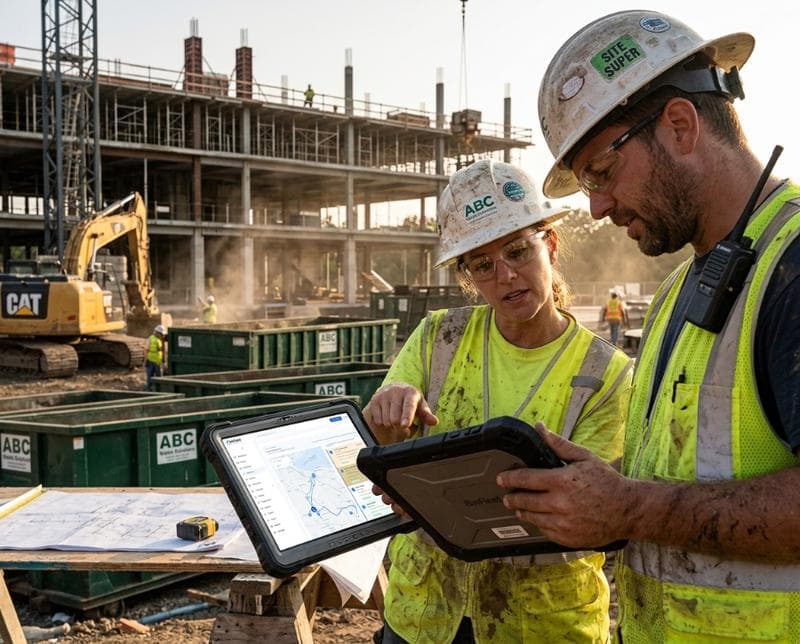
A CRM that lives in isolation from your dispatch and billing systems is mostly ornamental. The best platforms integrate customer relationship data with real-world operations. Your dispatcher sees a customer's contact history when they arrive for a pickup. Your invoice carries notes about service issues that were resolved. Your billing team knows which accounts have recurring problems so they can apply credits proactively instead of waiting for dispute calls. This integration between CRM and operations is where customer retention becomes automatic rather than aspirational.
When dispatch, billing, and customer management are connected, accountability improves. If a pickup was missed, the CRM flags it, dispatch gets notified to reschedule, and account management reaches out with a service credit or explanation before the customer even calls to complain. This kind of coordinated responsiveness is impossible with disconnected tools and is exactly what keeps customers loyal in a competitive market. Exploring operational best practices can help you identify gaps in your current workflow that a CRM could address.
FAQ
What's the difference between a CRM and a dispatch management system?
A CRM manages customer relationships, communication, and account history. A dispatch system routes drivers and optimizes collections. Together, they're powerful: dispatch feeds operational data into the CRM (did the pickup happen on time? were there issues?), and the CRM provides context that improves dispatch decisions (this customer is at churn risk, prioritize great service). Many waste operators now use integrated platforms that handle both to avoid data silos.
How does a CRM help with price negotiations or retention calls?
When a customer threatens to leave, you can instantly pull their service history, utilization data, total contract value, and any past service issues—all in one view. This gives you concrete data for retention conversations instead of guesses. You might discover they've been overcharged, or that their actual usage supports a better pricing tier. Real data is far more persuasive than gut feeling in retention calls.
Can a dumpster rental CRM reduce customer service staffing needs?
Partially. Automation (automated reminders, self-service payment, SMS tracking updates) reduces routine inquiries. However, most waste companies find that CRM-driven insights and better data actually increase customer touchpoints—because your team spots opportunities and problems earlier. The real benefit is that your staff spends less time chasing lost information and more time solving problems and growing relationships.
What ROI should we expect from implementing a CRM?
Most waste haulers see ROI within 6-12 months through a combination of reduced churn (5-10% retention improvement), higher renewal rates, and increased upselling. The exact number depends on your current churn rate, average account value, and how thoroughly your team adopts the system. Starting with a free demo lets you model the impact based on your own account data.
Ready to Streamline Your Operation?
See how BinFleet AI helps waste haulers save time, cut costs, and grow.
Request a Free 30-Day Trial