How CRM Software Drives Customer Retention in Dumpster Rental
Why Dumpster Rental Needs Its Own CRM Strategy
The dumpster rental industry operates differently than typical service businesses. Your customers aren't just making one purchase—they're establishing ongoing relationships with recurring pickups, seasonal fluctuations, and unique service requirements. A generic CRM designed for retail or software sales won't capture the operational realities of waste hauling, which means you're missing critical data about container placement, service frequency, driver interactions, and payment patterns that directly influence customer satisfaction and lifetime value.
Many operators still manage customer relationships through fragmented systems: dispatch software handles routing, accounting software tracks invoices, and customer notes live in someone's email or a spreadsheet. This fragmentation creates blind spots. You can't see at a glance why a good customer stopped renewing, whether a route driver has been building stronger relationships with certain accounts, or which customers are on the verge of canceling because of a service gap. A purpose-built CRM for waste hauling consolidates this information and turns it into actionable intelligence.
The True Cost of Losing Customers in Waste Hauling
Customer acquisition in dumpster rental is expensive. Between marketing, sales calls, site visits, and the cost of deploying equipment, you're investing hundreds or thousands of dollars to land a new account. Losing even a handful of mid-size customers annually can mean tens of thousands in lost revenue. But the real damage extends beyond that single loss. When a customer churns, they often switch to a competitor, and they tell other businesses about their experience. In tight-knit local markets, reputation moves fast.
CRM software mitigates this risk by creating visibility into customer health before churn happens. You can identify accounts that haven't scheduled a pickup in 90 days, notice when service quality issues crop up, or spot opportunities to upgrade customers from 20-yard to 30-yard containers based on their usage patterns. Retention is always cheaper than acquisition, and a CRM gives you the early warning system to act before a customer leaves.
How CRM Improves Dispatch Efficiency and Customer Satisfaction
Every route driver interacts with customers, but most dispatchers have no structured way to capture or share those interactions with the office. A driver might notice a customer's business is expanding and needs more frequent service, or overhear that a competitor is undercutting your price. This feedback dies in the field. With a CRM integrated into your dispatch workflow, drivers can log notes about site conditions, customer requests, or relationship-building moments directly into the job. Those insights flow back to the office and create a 360-degree view of each account.
This visibility improves service consistency and customer experience. When an account calls with a problem, your team isn't starting from zero—you have full history of previous issues, service patterns, and any special instructions. You can identify if a particular route is generating complaints and adjust accordingly. Over time, customers notice this level of attentiveness, and it becomes a competitive advantage that's harder for rivals to replicate than price alone.
Revenue Growth Through Data-Driven Upselling
A CRM isn't just a retention tool; it's a revenue multiplier when used strategically. By analyzing customer usage data—how often they request pickups, average fill rates, seasonal trends—you can identify upsell opportunities that make sense for each business. A construction company that rents containers twice a year during spring cleanup might benefit from a maintenance package. A restaurant generating consistent waste might upgrade to weekly instead of bi-weekly service. These aren't aggressive sales tactics; they're genuine improvements to customer experience that increase their spend.
The data lives in your CRM, so your sales or account management team can work from a prioritized list of high-impact opportunities rather than guessing. You'll also notice patterns across similar customer types—maybe all your landscaping clients follow similar seasonal patterns, or all your retail accounts spike in the fall. These insights let you create targeted campaigns that feel relevant to each segment, not generic blasts to your entire list.
Building Long-Term Relationships with Automated Touchpoints
Relationship building doesn't require constant manual effort if you've automated the right touchpoints. A CRM allows you to send automated reminders before a renewal date, check in after a service completion, or alert the account manager when an account goes quiet. These aren't intrusive robocalls; they're system-generated messages that keep your company top of mind and demonstrate that you're actively managing their service. Many customers appreciate the proactive communication, especially when it leads to solving a problem before they have to call in.
You can also schedule personal check-in calls or emails at strategic intervals without relying on someone to remember. Birthdays, anniversaries of when they signed up, or seasonal peaks in their business become natural moments to reconnect. This cadence of touchpoints—some automated, some personal—builds loyalty that transcends price competition and turns satisfied customers into long-term partners and referral sources.
Measuring Success: CRM Metrics That Matter
A good CRM gives you visibility into the metrics that actually move your business. Customer lifetime value, churn rate, average revenue per account, and time-to-upsell become measurable and trackable. You can segment your customer base to see which types of accounts are most profitable and which ones require disproportionate support. This data informs hiring, training, and resource allocation decisions. If you know that a certain route or region has higher churn, you can investigate and fix the root cause rather than assuming it's just the nature of the business.
Reporting also holds your team accountable in a constructive way. Account managers can see their own pipeline and conversion rates. Dispatchers can see service quality metrics tied to their routes. This transparency tends to improve performance without creating resentment because people can see exactly what's expected and how they're being measured against it.
Choosing CRM Software Built for Waste Hauling
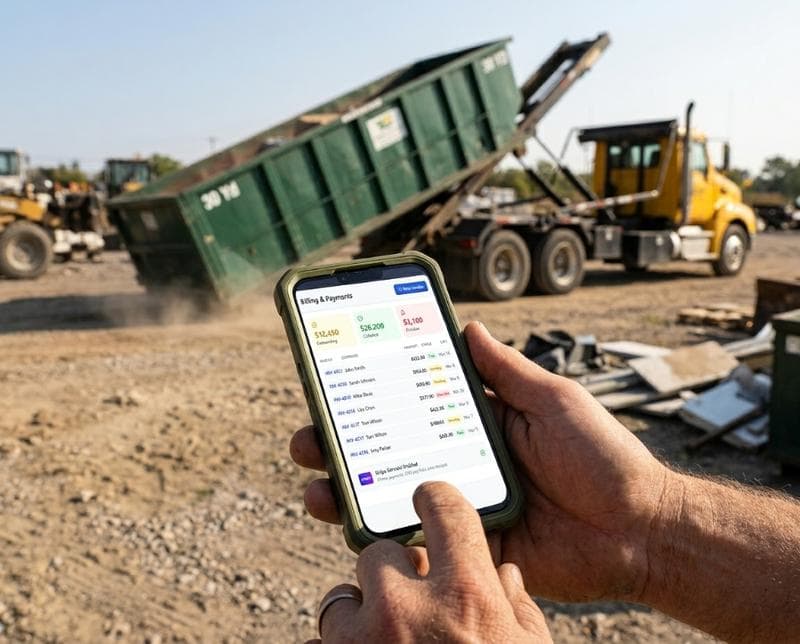
Not all CRM platforms understand the unique needs of dumpster rental and waste hauling operations. Generic enterprise CRM tools often feel like overkill and require extensive customization. Look for software that integrates seamlessly with your dispatch system, accepts mobile input from drivers, and tracks service-specific data like container condition, placement location, and weight. The platform should also handle payment integration and invoicing—your CRM shouldn't live in isolation from your financial systems.
Integration is critical. If your CRM can't communicate with your dispatch, accounting, and customer communication tools, you'll end up re-entering data and creating more work instead of less. The best CRM platforms for waste hauling are designed with the operational reality of multi-yard operations, seasonal fluctuations, and field-based teams in mind. Many haulers find that BinFleet's integrated approach eliminates these pain points by consolidating orders, dispatch, inventory, customer communication, and invoicing in one platform, so you're not juggling five different systems.
Getting Started: Quick Wins in Your First 90 Days
Implementing a new CRM doesn't have to be overwhelming. Start by getting your customer data clean and centralized. Export what you have from spreadsheets and old systems, deduplicate, and load it in. Then focus on one high-impact use case: maybe it's automated renewal reminders, or creating a checklist for account managers to review customer files before calls, or tracking service complaints to identify systemic issues. Quick wins build momentum and team adoption.
Training should be light and practical. Show your team the specific workflows that affect their job. Dispatchers care about driver notes and job history. Account managers care about opportunity tracking and communication history. Finance cares about invoice status and payment patterns. When people see the direct benefit to their own workflow, adoption accelerates naturally. Within 90 days, you should see improved communication, fewer missed follow-ups, and clearer visibility into which customers are at risk.
FAQ: CRM Questions Waste Haulers Frequently Ask
Will implementing a CRM slow down our operations during the transition?
There's always a short ramp-up period where your team is learning new workflows, but well-designed CRM software for waste hauling minimizes disruption. If the platform integrates tightly with your dispatch and invoicing systems, data flows automatically rather than requiring manual re-entry. Most operators see operational speed return to normal within 2-3 weeks, then improve beyond baseline as processes become familiar.
How do I convince my team to use a new CRM system consistently?
People adopt tools when they solve a real problem or save time. Start by identifying your team's biggest pain point—whether it's lost customer history, poor communication across shifts, or difficulty tracking which accounts need follow-up. Show them specifically how the CRM solves that problem, and train them on just that workflow first. Success creates demand for more features, and adoption becomes self-reinforcing.
Can a CRM really help us reduce customer churn?
Yes, but only if you actually use the data to take action. A CRM gives you visibility into which accounts are at risk and why, but you still need someone to act on that information—whether that's an account manager calling a quiet customer or a route adjustment to improve service quality. The software removes the visibility gap; your team's responsiveness determines the impact on churn.
What if we're a small operation with just one yard?
CRM value isn't limited to large operations. Even a single-yard hauler benefits from having all customer data in one place, automating renewal reminders, and being able to quickly review service history during a customer call. As you grow, the system scales with you. Many companies start with a free trial to explore what's possible before committing to a full implementation.
The Path Forward: CRM as Competitive Advantage
In 2026, waste hauling is increasingly competitive, and price alone doesn't win long-term loyalty. The operators who retain customers and grow revenue are the ones who understand their accounts deeply, respond quickly to needs, and make every interaction feel personalized and professional. A CRM built for waste hauling makes this possible without requiring a massive office staff. It automates the routine stuff—reminders, data entry, basic follow-ups—and frees your team to focus on the relationships that matter.
The best time to implement CRM software is before you need it desperately. Start now while you have the breathing room to do it right, and you'll have a significant advantage over competitors still managing customer relationships in spreadsheets and email. Ready to see how better CRM can transform your operation? Schedule a quick demo to explore how waste haulers are using integrated software to improve retention and revenue, or check out more resources on operations management for dumpster rental companies.
Ready to Streamline Your Operation?
See how BinFleet AI helps waste haulers save time, cut costs, and grow.
Request a Free 30-Day Trial