Roll Off Dumpster Inventory Tracking: Optimize Locations, Status & Utilization
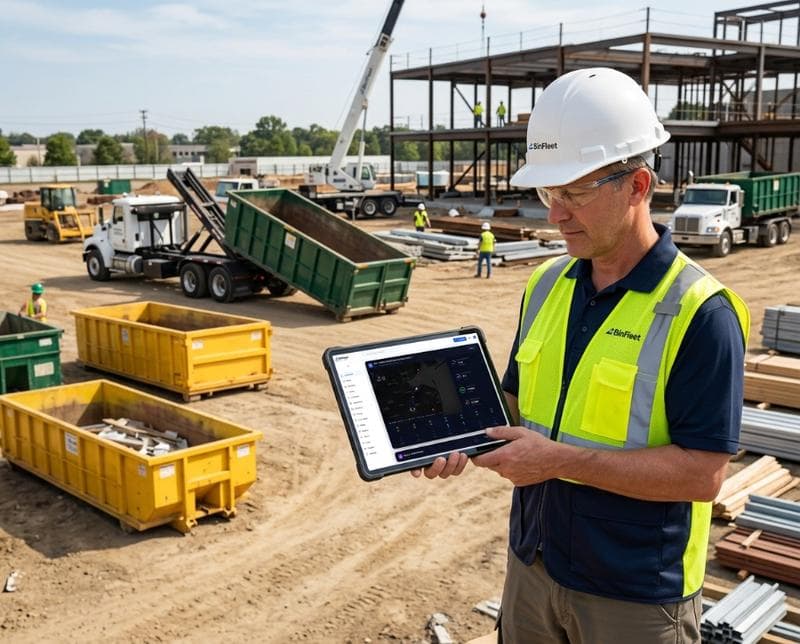
Why Roll Off Dumpster Inventory Tracking Matters More Than Ever
If you're running a dumpster rental or waste hauling business without real-time visibility into your container fleet, you're hemorrhaging profit. Every roll off sitting in an unknown location, every container marked as available when it's actually deployed, and every unit lost to theft or misplacement chips away at your margins. The problem isn't new, but the stakes are higher in 2026 as labor costs rise, fuel prices fluctuate, and customers demand faster service and transparency.
Modern inventory tracking systems solve a problem that's plagued the waste industry for decades: the gap between what you think you own and where those assets actually are. Container loss, extended idle times, and duplicate billing errors compound across hundreds of units. A mid-sized hauler managing 500 containers might lose $15,000 to $25,000 annually just from preventable inventory mismanagement. Real-time tracking eliminates guesswork, reduces dead-heading, and ensures every container generates revenue instead of expense.
Understanding Your Current Inventory Visibility Gap
Most haulers still rely on spreadsheets, driver memory, or fragmented systems to track containers. A driver drops off a bin, manually updates a form (or forgets to), and the office assumes it's back in inventory when actually it's sitting at a customer's site for another week. Dispatchers waste time calling drivers to confirm container status. Billing delays because no one knows when a rental ended. Customers complain about missing pickups because the system shows a container available that's already deployed.
This visibility gap creates a cascade of operational inefficiencies. You can't accurately forecast container availability, which leads to either overselling capacity or underutilizing your fleet. Maintenance schedules slip because you don't know which units are active versus idle. Theft and unauthorized retention go undetected for weeks. Without accurate data, you can't make informed decisions about fleet size, route optimization, or capital allocation. The cost of operating blind is far higher than the investment in proper tracking.
Real-Time Location Tracking: More Than GPS
Effective inventory tracking goes beyond basic GPS coordinates. You need to know not just where a container is, but why it's there and how long it's been there. A container at a job site generates revenue; the same container sitting in your yard or a customer's parking lot after the rental ends is pure liability. Real-time tracking systems should capture automated updates from drivers, GPS pings, and integration with your dispatch software so that status changes propagate instantly across your operation.
When a driver delivers a container, the system records the location, timestamp, and customer details. When they pick up, the same happens. This creates an immutable audit trail that protects you during disputes, supports accurate billing, and identifies patterns—like which customers consistently request late pickups or which routes cluster containers in ways that could be optimized. A platform like BinFleet automates this workflow, reducing manual data entry and human error while giving you a live map of your entire fleet's status and location.
Measuring Container Utilization Rates and Idle Time
Utilization rate—the percentage of your fleet actively generating revenue at any given time—is one of the most important metrics waste haulers overlook. If you have 500 containers but only 300 are rented out on average, your utilization is 60 percent. That remaining 40 percent ties up capital, requires storage space, needs maintenance, and generates no income. Industry benchmarks suggest healthy utilization rates hover between 70-85 percent, depending on seasonality and market dynamics.
Tracking idle time per container reveals which units spend too long between jobs or linger at customer sites beyond the rental period. Some containers might consistently show lower utilization because they're older, less accessible in your yard, or rarely matched with the right job type. By analyzing this data, you can identify underperformers, decide whether to sell or repair them, and reallocate high-utilization containers to routes or markets where they generate the most revenue. A modern inventory system dashboards this data so you see idle-time trends and utilization patterns at a glance, enabling faster decision-making.
Preventing Loss and Theft Through Continuous Monitoring
Container loss and theft represent a significant drain on profitability, yet many haulers only discover missing units during physical audits—sometimes months after they vanish. A container "lost" for 90 days could have been stolen, misplaced at a third-party facility, abandoned at an old customer site, or caught in a billing gap. Without continuous monitoring, you never know. Real-time tracking creates a system where any container offline or unreported for an abnormal period triggers an alert, allowing you to investigate immediately.
Automated alerts notify you when a container hasn't moved in X hours, when it's outside your service area, or when a driver abandons it without confirming a pickup or delivery. These guardrails significantly reduce theft and loss exposure. You can also use location history to resolve customer disputes—if a customer claims they returned a container on a certain date, your tracking data confirms it. This documentation protects revenue and strengthens customer relationships by providing objective proof rather than "he said, she said" arguments.
Integrating Inventory Data Into Operations and Billing
Inventory tracking only creates value when the data flows into other systems. Dispatch software needs accurate container status to assign jobs efficiently. Billing systems need precise pickup and delivery timestamps to invoice correctly. Route optimization depends on knowing where containers currently are and where they need to go. When these systems operate in silos, you lose the compounding benefits of real data. A unified platform ensures inventory status updates immediately push to dispatch, which prevents double-booking or assigning unavailable containers, while billing automatically reflects accurate rental periods.
Integration also enables smarter business analytics. You can correlate container utilization with profitability by location or customer segment. You can identify seasonal patterns and adjust pricing or fleet deployment accordingly. You can spot operational inefficiencies—like routes that consistently pick up containers late—and address them. The data becomes a competitive advantage, not just a compliance record. BinFleet and similar platforms unify these workflows so inventory data is the single source of truth across your entire operation, eliminating duplicate entry and data conflicts.
Frequently Asked Questions
What's the best way to track containers if we don't have GPS in every truck yet?
Start with driver-initiated status updates at key touchpoints—delivery, pickup, and yard arrival. Pair this with a system that flags containers that don't receive updates for extended periods, triggering manual verification. Over time, add GPS to your most-used trucks first, prioritizing routes where loss and idle time have been highest. Many haulers implement hybrid approaches, combining driver updates with periodic GPS pings, to gain visibility without major upfront investment.
How often should we physically count inventory versus relying on software tracking?
Conduct physical audits quarterly or biannually, depending on your fleet size and turnover rate. Software should be your daily source of truth, but physical counts catch errors, theft, and data entry mistakes that digital systems miss. Use audit results to calibrate your tracking system—if counts reveal consistent discrepancies in certain yards or routes, investigate the root cause and adjust your processes. The goal is to reduce audit frequency over time as your tracking accuracy improves.
Can inventory tracking help us reduce our overall fleet size?
Absolutely. If you discover that 40 percent of your fleet is idle or underutilized, you can confidently reduce headcount and reinvest that capital in high-performing units or technology. Better utilization data also enables predictive planning—you'll know when seasonal demand peaks or drops, so you can rent or sell containers strategically rather than guessing. Many haulers cut their total containers by 15-20 percent after implementing rigorous tracking, with zero impact on service levels.
What ROI can we expect from implementing an inventory tracking system?
ROI typically materializes within 6-12 months through reduced loss, improved billing accuracy, lower idle time, and better route optimization. A hauler with 300 containers might recover $10,000-$20,000 annually just from preventing theft and billing errors. Add savings from optimized routing, reduced duplicate pickups, and faster billing cycles, and total savings easily exceed software costs. Schedule a demo to see how your specific operation might benefit.
Getting Started With Modern Inventory Tracking
The path forward doesn't require overhauling everything at once. Start by selecting a platform designed for waste operations that integrates with your existing dispatch and billing systems. Define the metrics that matter most to your business—utilization rate, idle time, loss frequency, billing accuracy. Establish baseline measurements so you can quantify improvement. Train your team on the new workflow and give them time to adapt before demanding perfection.
Real-time dumpster inventory tracking transforms a blind spot into a competitive advantage. You'll operate with confidence, eliminate surprises, and make data-driven decisions that improve profitability. The waste industry is evolving rapidly, and 2026 operators who combine solid operations with smart technology will outperform those still relying on spreadsheets and hope. Explore more operational best practices and consider whether a managed platform upgrade makes sense for your business this year.
Ready to Streamline Your Operation?
See how BinFleet AI helps waste haulers save time, cut costs, and grow.
Request a Free 30-Day TrialRelated Articles
How to Manage Seasonal Demand Fluctuations in Dumpster Rental
How to Manage Seasonal Demand Fluctuations in Your Dumpster Rental Business