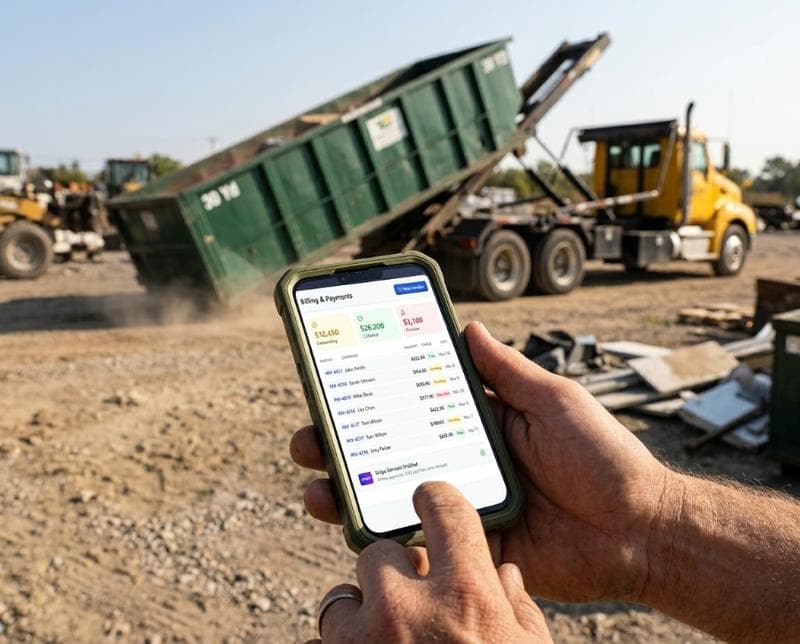
Roll Off Dumpster Inventory Tracking: The Complete Guide for Waste Haulers

Roll off dumpster inventory tracking has evolved from simple spreadsheets to sophisticated systems that monitor container locations, status, and utilization in real-time. As the waste management industry faces increasing pressure from rising fuel costs, labor shortages, and competitive pricing, operators who effectively track their container assets gain significant advantages over competitors who rely on outdated methods.
The financial impact of poor inventory tracking extends beyond simple operational inefficiencies. Lost containers, extended rental periods due to poor visibility, and suboptimal routing decisions can collectively drain thousands of dollars from monthly revenue. Modern tracking solutions address these challenges while providing actionable insights that transform how waste haulers manage their most valuable physical assets.
Why Traditional Tracking Methods Fall Short
Many waste hauling operations still rely on handwritten logs, basic spreadsheets, or memory-based systems to track container locations and status. These methods create information silos where dispatchers struggle to locate available containers, drivers operate with outdated pickup schedules, and managers lack visibility into asset utilization rates. The result is a cascade of operational problems that compound throughout the business.
Manual tracking systems also fail to capture the dynamic nature of roll off operations, where container status changes multiple times per day across different job sites. When drivers complete deliveries or pickups without immediately updating central records, the entire operation loses synchronization. This disconnect leads to customer service issues, inefficient route planning, and containers sitting idle when they could generate revenue elsewhere.
Essential Components of Modern Container Tracking
Effective roll off inventory tracking requires three core components working in harmony: real-time location monitoring, comprehensive status management, and integrated communication systems. Location tracking extends beyond simple GPS coordinates to include contextual information like job site details, customer information, and expected service dates. This comprehensive approach ensures that every stakeholder has access to current, actionable information.
Status management encompasses the complete container lifecycle, from initial deployment through pickup and maintenance cycles. Modern systems track not just whether a container is available or in use, but also maintenance schedules, capacity utilization, and customer-specific requirements. Integration with dispatch and customer communication systems ensures that status changes trigger appropriate notifications and workflow updates across the organization.
Calculating and Improving Utilization Rates
Container utilization rates directly impact profitability, yet many operators lack accurate methods for measuring this critical metric. True utilization analysis considers both time-based and revenue-based factors, examining how long containers remain deployed, their capacity utilization at pickup, and the revenue generated per container per time period. These insights reveal opportunities to optimize pricing strategies and deployment patterns.
Improving utilization rates requires systematic analysis of deployment patterns, customer behavior, and market dynamics. Operators who track utilization discover that certain customer segments consistently generate higher returns, specific container sizes optimize revenue in different market segments, and seasonal patterns create predictable opportunities for asset reallocation. This data-driven approach transforms inventory management from reactive problem-solving to proactive profit optimization.
Technology Solutions for Container Tracking
Modern container tracking relies on integrated software platforms that combine GPS tracking, mobile applications, and automated workflow management. These systems eliminate the communication delays and data entry errors that plague manual tracking methods while providing real-time visibility across the entire operation. Cloud-based solutions ensure that critical information remains accessible even when individual devices or locations experience connectivity issues.
The most effective tracking platforms integrate with existing business systems, including dispatching software, customer management tools, and financial systems. This integration eliminates duplicate data entry while ensuring that container status changes automatically trigger appropriate business processes. Advanced platforms like BinFleet combine these capabilities with route optimization and customer communication features, creating comprehensive operational management solutions.
Implementing Tracking Systems Successfully
Successful inventory tracking implementation requires careful planning that addresses both technical and cultural challenges. The transition from manual to automated tracking affects multiple departments and requires coordination between drivers, dispatchers, customer service teams, and management. Clear communication about benefits and expectations helps overcome resistance while ensuring that team members understand their roles in the new system.
Training programs should focus on practical applications rather than technical features, demonstrating how improved tracking directly benefits each role. Drivers benefit from reduced confusion about pickup schedules and clearer communication about job requirements. Dispatchers gain real-time visibility that enables more efficient routing and customer service. Managers access performance metrics that guide strategic decisions about fleet expansion, pricing adjustments, and operational improvements.
Measuring Success and ROI
The return on investment from container tracking systems manifests through multiple channels that compound over time. Direct cost savings include reduced fuel consumption from optimized routes, decreased administrative overhead from automated processes, and eliminated revenue losses from misplaced or forgotten containers. These immediate benefits often justify implementation costs within the first year of operation.
Long-term benefits include improved customer satisfaction from reliable service delivery, enhanced competitive positioning through operational efficiency, and data-driven insights that guide strategic growth decisions. Operators who embrace comprehensive tracking systems position themselves to capitalize on market opportunities while maintaining operational flexibility in an increasingly competitive industry. The most successful implementations create feedback loops where improved data quality leads to better decisions, which generate measurable business improvements that fund continued system enhancements.
Frequently Asked Questions
How accurate are GPS tracking systems for roll off containers?
Modern GPS tracking systems achieve accuracy within 3-10 feet under normal conditions, which is more than sufficient for container location management. The accuracy depends on factors like satellite visibility, device quality, and local terrain, but even in challenging conditions, GPS provides adequate precision for operational needs.
Can tracking systems work with existing dispatch software?
Most modern container tracking platforms offer integration capabilities with popular dispatch and business management systems through APIs or direct database connections. The integration process typically takes 2-4 weeks depending on system complexity and customization requirements.
What happens if containers move outside cellular coverage areas?
Quality tracking devices store location and status data locally when cellular coverage is unavailable, then synchronize with central systems when connectivity returns. This ensures that no critical information is lost even in remote job sites or areas with poor cellular coverage.
How much can effective inventory tracking improve profitability?
Industry studies show that comprehensive container tracking typically improves operational efficiency by 15-25% through reduced idle time, optimized routing, and eliminated lost containers. Most operators see measurable improvements in profit margins within 90 days of implementation.
Ready to Streamline Your Operation?
See how BinFleet AI helps waste haulers save time, cut costs, and grow.
Request a Free 30-Day TrialRelated Articles
How to Manage Seasonal Demand Fluctuations in Your Dumpster Rental Business

How to Master Seasonal Demand Fluctuations in Dumpster Rental Operations