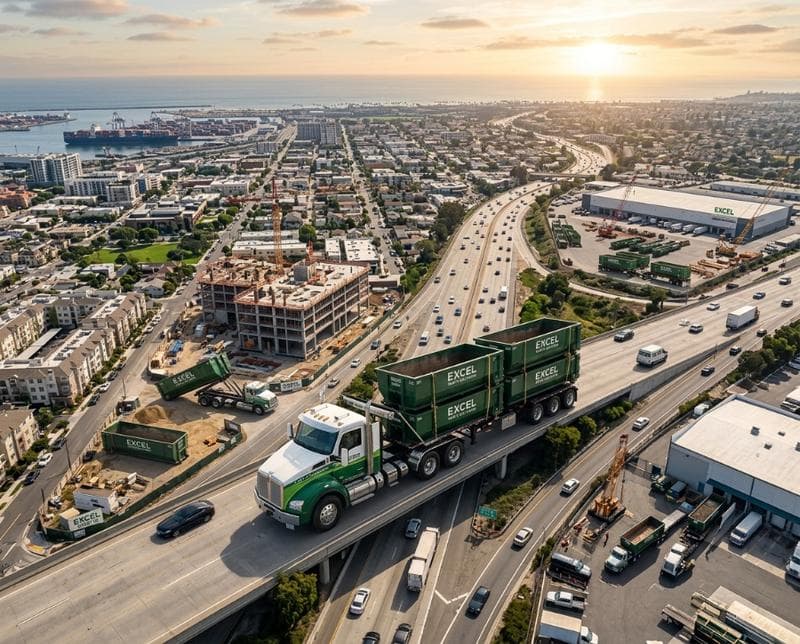
How AI-Powered Dumpster Scheduling Cuts Empty Miles and Maximizes Truck Utilization

The Hidden Cost of Manual Scheduling in Waste Operations
Manual dumpster scheduling is costing waste haulers more than most realize. Dispatchers spend hours matching pickups, drops, and returns to available trucks—often making decisions on incomplete information about traffic, container inventory, and driver availability. The result is inefficient routes, wasted fuel on half-empty trucks, and drivers sitting idle waiting for the next job, all while customer calls go unanswered and deadlines slip.
The real problem isn't just inefficiency; it's predictability. Every empty mile driven reduces profit margin and increases emissions without generating revenue. For a fleet running 20 trucks, just two preventable empty miles per truck per day adds up to roughly $15,000 in lost annual fuel costs. When you multiply that across peak season or multi-yard operations, the impact becomes catastrophic. Haulers operating without intelligent scheduling are essentially leaving money on every dispatch.
How AI-Powered Scheduling Works in Real-World Operations
Modern AI scheduling platforms analyze real-time data to create routes that flow naturally through your service area. Instead of treating each job as an isolated transaction, AI-powered systems like those in BinFleet see the entire operational picture: active pickups, pending drops, container inventory at each yard, current driver locations, traffic conditions, and historical demand patterns. The system then automatically suggests or executes optimal routes that cluster nearby jobs, minimize backhauls, and account for time windows without human intervention.
The technology works by ingesting historical pickup patterns, seasonal demand trends, and real-time operational data, then using predictive algorithms to forecast which customers will need service and when. This forward-looking approach enables dispatchers to build efficient routes days or even weeks in advance, rather than reactively dispatching as calls come in. Drivers receive routes that flow logically through their territory, reducing time spent navigating and increasing the number of quality stops they can make per shift.
Reducing Empty Miles Through Route Consolidation
The single biggest opportunity to cut empty miles lies in consolidating jobs that would otherwise require separate trips. AI scheduling identifies clusters of nearby pickups, drops, and returns, then chains them into a single route where one truck handles multiple stops. A driver who would normally make isolated trips to three different neighborhoods can now complete all three stops in a single loop, dramatically reducing deadhead distance. This isn't just about proximity—the system also considers container type, truck capacity, and service timing to ensure routes are both efficient and executable.
What makes this powerful is the scale of opportunity. Most waste operations discover that 15-25% of their daily mileage consists of empty or half-full trucks repositioning between jobs. By consolidating routes intelligently, haulers routinely reduce empty miles by 20-35% in their first year of implementation. Some operations see even greater gains, particularly in dense urban markets or multi-yard setups where dispatch flexibility is high. The savings accumulate quickly: fewer gallons burned, less wear on vehicles, and more billable stops per driver per day.
Predictive Scheduling Keeps Trucks Productive
Predictive AI doesn't just react to incoming orders—it anticipates customer needs before they call. By analyzing historical data, seasonal patterns, and market trends, scheduling systems forecast which customers are likely to need service in the coming days or weeks. This allows dispatchers to proactively schedule preventive pickups or swaps, filling gaps in the route before they become empty miles. A customer whose container typically fills every Tuesday can be pre-scheduled, ensuring the truck is already in that area handling nearby work.
This predictive capability also enables better resource planning. When the system forecasts a busy Friday, dispatch knows to schedule maintenance on Wednesday and Thursday, when demand is lighter. Conversely, slower days can be used for driver training, equipment checks, or marketing outreach to underserved areas. The result is more consistent truck utilization throughout the week, fewer idle hours, and better cash flow predictability. Drivers spend less time waiting for dispatch and more time generating revenue.
Real-Time Adjustments When Plans Change
No schedule survives first contact with reality. A truck breaks down, a customer calls with an urgent request, or a driver has to abandon a route. AI-powered systems handle these disruptions automatically, recommending real-time route adjustments that maintain efficiency without leaving jobs incomplete. The platform instantly recalculates optimal routes for remaining trucks, considering current positions, remaining capacity, and customer time windows. Human dispatchers approve or modify these suggestions in seconds, rather than spending 20 minutes manually reworking a route.
This flexibility is especially valuable during peak season or when scaling operations across multiple yards. Instead of rigid predefined routes that require complete rebuilding when conditions change, AI-based scheduling adapts continuously. A dispatcher can reroute a truck or add an emergency pickup without cascading delays through the rest of the fleet. This responsiveness directly improves customer satisfaction—urgent requests get handled without sacrificing other commitments, and customers receive accurate pickup windows instead of vague timeframes.
Measuring Impact: What Real Haulers Are Achieving
Waste operators implementing AI scheduling report measurable improvements within weeks. Average empty miles typically drop by 20-30%, fuel consumption falls correspondingly, and cost per pickup decreases 12-18%. More importantly, trucks complete 1-3 additional stops per shift simply because routes are optimized—without hiring more drivers or adding equipment. A 15-truck fleet that adds two billable stops per truck per day generates $50,000-$75,000 in incremental annual revenue from the same asset base.
Beyond the financial metrics, operational benefits compound over time. Dispatch teams report spending 30-40% less time manually building routes and handling exceptions, freeing them to focus on customer relationships and strategic planning. Driver satisfaction improves because routes make logical sense and include break time, reducing fatigue and turnover. Customer satisfaction increases because pickups become more reliable and communication improves. See how other operators are measuring success and what metrics matter most for your operation.
Implementing AI Scheduling Without Operational Chaos
The best time to implement intelligent scheduling is during your natural operational rhythm, not during peak season crunch. Start with a pilot in one service area or yard, comparing AI-recommended routes against your current dispatch logic to build confidence. Gradually expand the system across your fleet while maintaining manual oversight and approval gates until your team trusts the recommendations. Modern platforms like BinFleet are built for staged rollouts, allowing you to control the pace of automation and integrate scheduling with your existing order management and dispatch workflows.
Training is minimal but critical. Dispatchers need to understand how the system prioritizes efficiency, what the recommended routes are designed to achieve, and how to handle exceptions. Within one to two weeks, most dispatch teams are comfortable with the new workflow and actively using the system's suggestions to improve daily operations. The key is choosing a platform that works with your existing processes rather than forcing you to rebuild how you operate, ensuring adoption is smooth and benefits arrive quickly.
FAQ: Common Questions About Automated Dumpster Scheduling
How does AI scheduling handle multiple service areas or yards?
AI systems automatically account for which yard each truck is assigned to and optimize routes within service territories while considering rebalancing needs. The platform understands equipment locations, yard capacities, and inter-yard transfers, building efficient routes that minimize repositioning while maintaining container availability across all service areas.
Can drivers override the scheduled route if they see a better option?
Yes, good platforms allow drivers to skip or modify stops within dispatch-approved parameters, but the default flow is the AI-recommended route, which has already accounted for efficiency. Driver feedback is also valuable—if a route consistently underperforms or if drivers discover better sequences, that data feeds back into the system to improve future recommendations.
What happens if my customer demands a specific pickup time?
Time window constraints are built into AI routing algorithms. The system respects customer appointment windows, contractual service levels, and driver availability when building optimal routes, ensuring compliance while still maximizing efficiency within those constraints.
How long until we see ROI on scheduling software?
Most waste operators see measurable improvement in empty miles and cost per pickup within the first 30 days. Full ROI typically arrives within 6-12 months as utilization gains accumulate and operational efficiency settles into the new workflow. Read case studies from similar operators to see realistic timelines for your operation size.
Ready to see how AI scheduling can work for your fleet? Start a free trial with BinFleet and run your routes through our system for 14 days—no credit card required. See the difference intelligent dispatch makes before you commit.
Ready to Streamline Your Operation?
See how BinFleet AI helps waste haulers save time, cut costs, and grow.
Request a Free 30-Day Trial