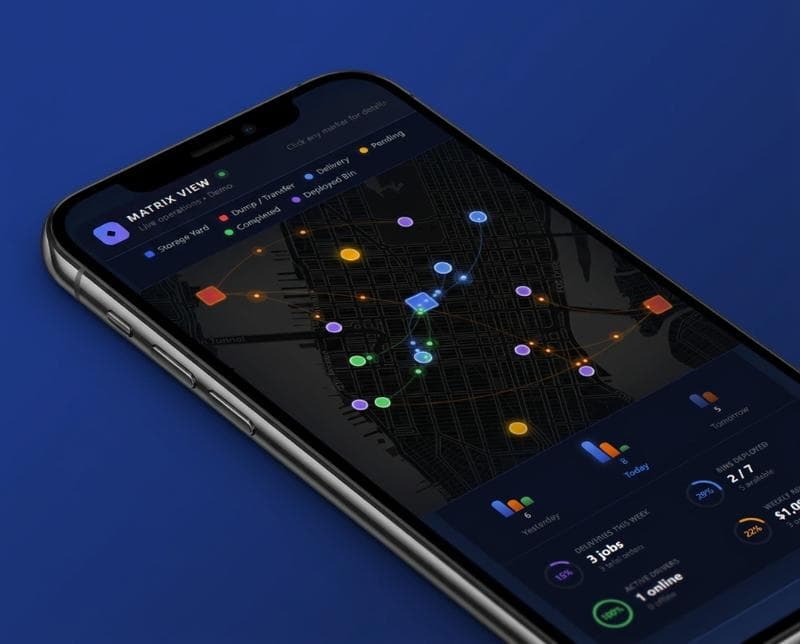
How a Driver App Transforms Waste Hauling Operations in 2026
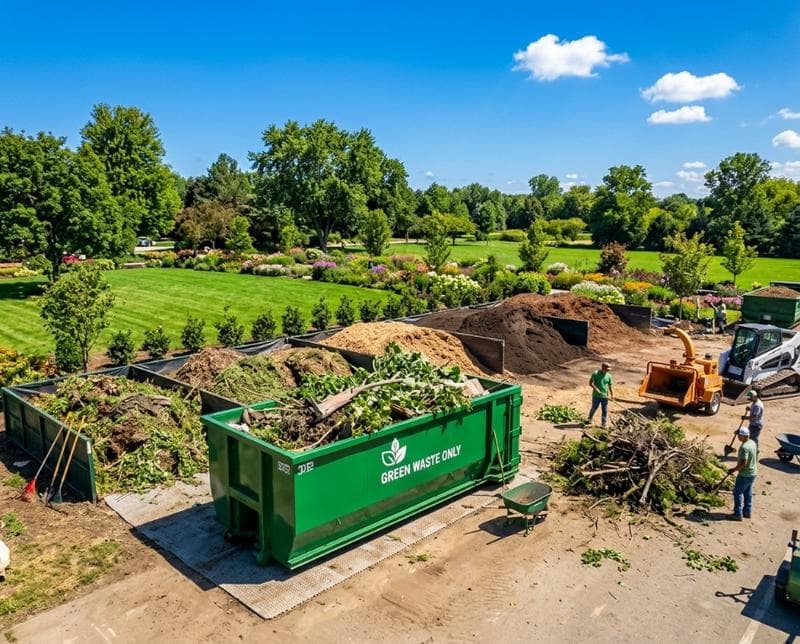
The Real Problem: Why Spreadsheets and Phone Calls Don't Work Anymore
Running a dumpster or waste route on spreadsheets and radio communication is costing you more than just time. Drivers are writing stop details on paper, taking photos with personal phones and losing them, and calling dispatch to report status—all while traffic changes their planned route. Customers don't know if their container has been picked up until tomorrow, and you only discover billing errors during month-end reconciliation.
The real damage happens when a driver skips a stop by accident, marks a pull as complete without actually checking the scale, or forgets to collect payment. Without a connected system, these gaps create customer complaints, revenue leaks, and dispatch headaches that compound throughout the week. A driver app solves this by putting every stop, every photo, and every status update into one source of truth that syncs between the truck and your office in real time.
What a Modern Driver App Actually Does
A purpose-built waste hauler app is not just a GPS tracker—it's a mobile office for your driver. When a driver starts their route, they see their assigned stops in sequence with customer contact info, special instructions, weight specifications, and any billing notes. As they pull up to each location, the app guides them through a standardized stop workflow: confirm arrival, take a photo of the container or job site, scan or manually mark the service type (pickup, drop-off, repair), and note any issues like locked gates or missed containers.
The app also captures proof of service automatically, which protects you from disputes and is essential for insurance documentation. Drivers can collect customer signatures or phone numbers directly in the app, and all data syncs to your back office the moment cell service is available. This means dispatch sees real-time status updates, customers get SMS or app notifications about their service, and you have an audit trail for every single stop—no more guessing whether a job was actually completed.
Why Real-Time Stop Tracking Changes Customer Retention
When customers see that their dumpster is being picked up right now, not just "sometime this morning," they feel respected. A driver app that sends automated SMS updates or push notifications tells customers exactly when their service is scheduled and when it's done. This transparency eliminates most of the "where's my pickup?" calls that tie up your office staff and frustrate drivers who are already behind schedule.
The secondary benefit is operational: when dispatch can see exactly where each driver is in real time, they can handle last-minute requests, reroute around traffic, or reassign urgent stops without guesswork. If a customer calls with a same-day pickup request, your dispatcher can now tell them honestly whether it's feasible and assign it to the nearest available truck. This kind of responsiveness builds loyalty and opens the door to premium service offerings that justify higher pricing.
Photo Capture and Proof of Service: Your Protection
One of the most underrated features of a driver app is enforced photo documentation. At every stop, drivers take a photo of the container before service and after service, or document the condition of a job site. This photo is automatically timestamped and geotagged, so you have proof that the work happened at that location on that date. If a customer disputes a charge or claims you damaged their property, you have visual evidence that protects your company.
Photos also serve an internal quality control function. Managers can review photos to spot safety issues, verify that drivers are following procedures, and catch container damage or spills before they become insurance claims. Some operations use photo data to train newer drivers on what proper service looks like, creating an indirect feedback loop that improves performance across your entire fleet.
Integration: The Driver App Must Connect to Your Dispatch System
A disconnected driver app is almost useless. The app needs to pull route data from your dispatch system, sync completed stops back to your invoicing engine, and feed customer notifications through your communication platform. When everything is connected, one driver completing a stop automatically updates the customer's service history, triggers a payment reminder if needed, and updates inventory in real time. Platforms like BinFleet are built around this integration model—the driver app, dispatch console, customer portal, and accounting all work together instead of forcing you to manually transfer data between tools.
Without this integration, you're recreating manual work in a new format. A driver enters data in the app, then your office staff has to re-enter it into your billing system, and customers still don't get real-time updates. The efficiency gain disappears. That's why it's important to choose a platform that was designed with driver operations in mind, not a generic field service app retrofitted for waste. See how BinFleet connects your entire operation with a single integrated platform.
Reducing Driver Error and Improving Accountability
A structured driver app creates predictable workflows that reduce mistakes. Instead of a driver relying on memory or handwritten notes, the app walks them through each stop step by step. This is especially valuable when you have high driver turnover or seasonal crews who need clear instructions. A new driver can follow the app's prompts and deliver consistent service quality without waiting for a supervisor to explain the process.
The app also creates accountability without surveillance. Managers can review which driver completed which stop, what the conditions were (via photos), and how long the service took. Performance issues become data, not speculation. If a driver consistently skips certain checks or takes shortcuts, you have evidence to address it during training. This kind of transparency also makes your best drivers feel valued, because their work is being documented and recognized by management.
FAQ
How much does a driver app cost?
Pricing varies by platform and scale. Some charge per driver per month (typically $15–50), while others use a flat-rate model for small fleets and tiered pricing as you grow. The best way to evaluate cost is to compare it against the savings: reduced billing errors, fewer missed stops, faster collections, and lower customer churn. Most waste haulers see ROI within the first 3–6 months. Request a personalized quote from BinFleet to understand your specific cost and savings.
What happens if a driver loses cell service during a route?
Modern driver apps are built to work offline. The driver can still complete stops, take photos, capture signatures, and mark services as done—all stored locally on the phone. When the phone reconnects to cell or WiFi, all the data automatically syncs to your server. This means you don't lose any information, and the driver doesn't have to circle back to areas with signal.
Can a driver app integrate with my existing software?
It depends on your current system. Some platforms have open APIs that allow third-party apps to connect, while others are closed systems. If you're looking at waste-specific software, most modern platforms including BinFleet are designed to replace your whole operation stack—dispatch, driver app, customer portal, and billing—so integration isn't an issue because everything talks natively.
How do I get drivers to actually use the app instead of workarounds?
The key is making the app easier than their current process. If drivers see that the app saves them time, reduces paperwork, and makes their job simpler, adoption happens naturally. Provide training in the first week, have management check in early, and address complaints quickly. Drivers also appreciate apps that let them submit issues or photos in real time instead of being blamed for problems later—when they see management responding to their input, buy-in increases dramatically.
Moving Forward: Choose a Platform Built for Your Industry
The waste and dumpster rental industry is competitive, and margins are tight. The companies winning in 2026 are the ones that have eliminated manual work and built direct communication with customers. A driver app is no longer a nice-to-have—it's foundational to efficient operations. But not all driver apps are equal. The best ones are built specifically for waste hauling, integrate seamlessly with dispatch and billing, and are designed to reduce driver friction instead of adding bureaucracy.
If you're ready to see how a unified platform can transform your driver operations, schedule a demo with BinFleet. We'll show you exactly how your drivers would use the app, how dispatch integrates in real time, and how your customers get updates automatically. You'll also see your complete operation in one dashboard—routes, revenue, containers, and customer communication. Start with a free trial to see the difference a purpose-built system makes.
Ready to Streamline Your Operation?
See how BinFleet AI helps waste haulers save time, cut costs, and grow.
Request a Free 30-Day Trial