How Dump Fee Tracking Software Solves Your Disposal Cost Problem
The Real Cost of Manual Dump Fee Tracking
Most waste hauling operations still track disposal fees the same way they did ten years ago: spreadsheets, notes on invoices, and periodic calls to landfill operators to reconcile charges. This manual approach works until it doesn't. A driver forgets to record a scale ticket. A facility changes its pricing structure mid-month. An invoice arrives three weeks late with charges that don't match your notes. By the time you realize there's a discrepancy, you've already paid the bill and lost the documentation trail.
The operational cost of this inefficiency is staggering. When you're managing multiple disposal sites, transfer stations, and landfills across different regions, tracking becomes exponentially harder. You're not just losing time—you're losing money through billing errors, duplicate charges, missed disputes, and the inability to pass accurate disposal costs to customers. Many haulers underestimate their true disposal expenses because they can't reconcile fees across all their facilities consistently.
Why Dump Fee Tracking Matters for Your Bottom Line
Disposal fees are typically your second-largest operating expense after labor. Unlike fuel or vehicle maintenance, they're harder to predict and control because they depend on external factors: facility surcharges, weight-based pricing, hazmat fees, and seasonal fluctuations. Without visibility into these costs, you can't accurately price your dumpster rentals, haul-aways, or junk removal services. You end up bidding jobs without knowing your true disposal costs, which means you're either leaving money on the table or absorbing losses.
Accurate dump fee tracking also protects you from billing disputes and audit exposure. Facilities change their pricing without notice. Scale tickets get lost. Invoices contain errors. When a customer challenges your charge or a facility disputes your payment, you need documentation that proves what you actually paid. Dump fee tracking software creates that audit trail automatically, reducing disputes and giving you leverage when discrepancies arise. This matters even more as waste management regulations tighten and facilities implement stricter verification requirements.
How Modern Dump Fee Tracking Software Works
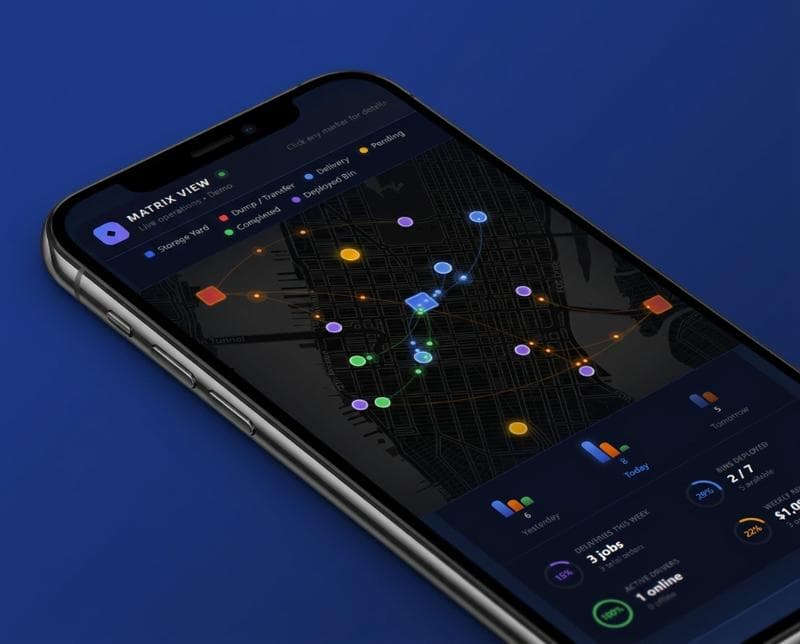
Purpose-built dump fee tracking integrates with your dispatch and billing system to capture disposal costs at the point of transaction. When a driver completes a haul at a facility, the software records the event: what was disposed, weight, facility charges, and timestamp. This data flows into a central ledger that automatically categorizes costs by facility, service type, and customer. No manual data entry. No lost tickets. No delays in reconciliation.
The system then matches your internal records against facility invoices as they arrive. If charges don't align, the software flags the discrepancy and shows you exactly where the variance occurred. You can dispute billing errors before paying, compare pricing across your facilities, and identify trends in your disposal costs. Some platforms even integrate directly with facility systems or accept digital receipts, further reducing manual touchpoints. This automation means your team spends less time chasing paperwork and more time managing operations.
Key Features That Actually Save Money
Real dump fee tracking software includes multi-facility reconciliation, so you're not stuck comparing numbers manually between three different landfills and a transfer station. It tracks fees by service type—standard hauls, bulky items, special waste—so you can see which services are most profitable and which are eating your margins. Weight-based pricing variations are captured automatically, and the system alerts you if a facility is charging above its standard rate without explanation.
Another critical feature is cost allocation to customer invoices. The software lets you pass disposal fees directly to customers so they see exactly what they're being charged for and why. This transparency builds trust and reduces payment disputes. Some advanced platforms also offer facility fee benchmarking, allowing you to compare your disposal costs against regional averages and identify if one of your facilities is significantly overcharging. This data gives you leverage in rate negotiations with operators.
The Real-World Impact on Operations
Consider a typical mid-sized hauler managing four facilities across two states. Before implementing dump fee tracking, their accounting team spent six to eight hours each month reconciling invoices manually. They regularly found discrepancies of $500 to $2,000 per month that went unresolved because the documentation was scattered. After moving to automated tracking, reconciliation time dropped to under two hours, discrepancies were caught and disputed within days, and they recovered approximately $18,000 in the first year through billing corrections and dispute wins.
Beyond the immediate financial recovery, the data revealed that one of their secondary facilities was charging 15% above market rate. With documented evidence from their tracking system, they negotiated better terms and saved $12,000 annually on that location alone. More importantly, their drivers and dispatchers spent less time managing paperwork, their accounting team could focus on strategic financial analysis instead of manual reconciliation, and they had the confidence to bid jobs accurately because they understood their true disposal costs.
Implementation and Team Adoption
Moving to dump fee tracking software doesn't require a complete operational overhaul. The best systems integrate with your existing dispatch platform (like BinFleet) so drivers see facility information in their workflow and don't need to learn new software. Scale tickets are photographed or uploaded automatically. Invoices are matched against records with minimal human intervention. Your accounting team gets a dashboard where they can see reconciliation status, dispute history, and cost trends without digging through spreadsheets.
Training is typically straightforward because the software mirrors your existing processes but removes the manual steps. Drivers continue doing what they do—they just document it digitally instead of on paper. Dispatchers see facility information in their dispatch console. Accounting staff work from a clean dashboard instead of jumping between emails and spreadsheets. The transition period usually takes two to four weeks, and most teams see immediate time savings within the first month of implementation.
Looking Ahead: Dump Fee Tracking in 2026
As we move further into 2026, dump fee tracking is becoming table stakes for professional waste haulers. Facilities are increasingly pushing digital documentation requirements, customers expect itemized invoicing that shows disposal costs, and regulatory compliance demands detailed records of waste streams and their disposition. Manual tracking can't meet these standards consistently. Haulers who've already implemented automated tracking have a competitive advantage: they can respond faster to customer inquiries, provide accurate cost data for bids, and demonstrate compliance during audits.
The industry trend is toward integrated platforms that handle dump fee tracking as part of a broader operations management system. Rather than bolting on a separate tool, forward-thinking operators are choosing platforms that consolidate dispatch, billing, inventory, and cost tracking in one place. This integration eliminates duplicate data entry, reduces errors, and gives you a complete financial picture across all operations. If you're still managing disposal costs manually, 2026 is the year to move beyond spreadsheets.
FAQ: Dump Fee Tracking Questions Haulers Ask
What if my facilities won't share digital invoices?
Most modern platforms allow you to photograph invoices with your phone or scan them digitally, which the system then processes using OCR technology to extract charges automatically. This works with paper invoices just as well as digital ones. You're in control—the software doesn't require facility cooperation to track your costs. What matters is having the documentation on your end for reconciliation and disputes.
How long does it take to reconcile dump fees?
With automated tracking, reconciliation typically takes days rather than weeks. The software flags discrepancies in real time, so you're not waiting for month-end invoices to discover problems. Most haulers report that what used to be a six-to-eight-hour monthly task becomes a one-to-two-hour review of flagged items. The speed also means you can dispute errors while the transaction is still fresh.
Can dump fee tracking help me price my services better?
Absolutely. When you see your actual disposal costs broken down by service type and facility, you can price with confidence. You'll know that junk removal jobs at your most expensive facility need a 20% markup to stay profitable, while standard dumpster rentals at another location have better margins. This data drives better bidding, helps you identify unprofitable service lines, and shows you where to negotiate facility rates.
What if we use multiple facilities for the same material type?
That's one of the strongest use cases for dump fee tracking software. You'll see side-by-side cost comparisons for the same material type across all your facilities, making it immediately obvious which location offers the best rates. This helps you route loads more efficiently and gives you data to negotiate better terms with facilities that are overpriced relative to your alternatives.
Get Visibility Into Your Disposal Costs
Dump fee tracking software turns disposal cost management from a painful monthly reconciliation into an automated process that highlights savings opportunities and prevents errors. If you're managing multiple facilities or handling diverse waste streams, the ROI is usually immediate. The question isn't whether you can afford to implement tracking—it's whether you can afford not to, given how much money most haulers leave on the table through manual processes and billing errors.
BinFleet integrates dump fee tracking with your complete operations platform, so costs are captured automatically as your drivers work. Schedule a demo to see how the system works with your current facilities, or start a free trial to track your disposal fees for the next 14 days with zero commitment. Most haulers are surprised by what they discover when they finally see their true disposal costs in real time.
Ready to Streamline Your Operation?
See how BinFleet AI helps waste haulers save time, cut costs, and grow.
Request a Free 30-Day TrialRelated Articles

How to Track and Reconcile Disposal Fees Across Multiple Facilities
How to Track and Reconcile Dump Fees Across Multiple Facilities