Managing Multi-Yard Dumpster Operations: Inventory and Dispatch Strategies
Running multiple storage yards transforms a straightforward dumpster rental business into a complex logistics operation. The challenge extends beyond simply storing containers at different locations—it requires sophisticated coordination of inventory levels, dispatch decisions, and route optimization to maintain profitability while meeting customer expectations.
As the waste industry consolidates and operators expand their territories, multi-yard management has become a competitive necessity rather than a luxury. Companies that master inventory flow between yards while optimizing dispatch decisions consistently outperform single-yard competitors in both service quality and operational efficiency.
Understanding Multi-Yard Inventory Dynamics
Effective multi-yard inventory management begins with understanding how containers flow through your network. Unlike single-yard operations where every container's location is visible, multi-yard setups create complexity as containers move between yards, job sites, and disposal facilities throughout each day. This constant movement makes real-time inventory tracking essential for preventing the costly scenario of promising customers containers you cannot locate or deliver efficiently.
The key to successful inventory management lies in establishing clear protocols for container transfers between yards and maintaining accurate counts at each location. Many operators discover that their biggest inventory challenges stem not from total container shortages, but from having the wrong container types in the wrong yards when customers need them. This geographic mismatch problem amplifies during busy seasons when quick container deployment determines whether you win or lose customer relationships.
Strategic Yard Positioning and Capacity Planning
Smart yard positioning creates competitive advantages that extend far beyond storage convenience. The most successful multi-yard operators strategically locate their facilities to minimize average delivery distances while ensuring adequate capacity buffers at each location. This approach requires analyzing historical demand patterns, seasonal variations, and geographic service density to determine optimal container allocation across yards.
Capacity planning becomes more nuanced with multiple yards because you must balance the cost of maintaining excess inventory against the revenue loss from stockouts or extended delivery times. Leading operators typically maintain 15-20% buffer capacity at each yard while establishing protocols for rapid container redistribution when demand patterns shift unexpectedly. This strategy prevents the common mistake of over-investing in inventory at underperforming locations while maintaining service levels across your entire territory.
Dispatch Optimization Across Multiple Locations
Multi-yard dispatch decisions multiply in complexity because each order could potentially be fulfilled from several locations, with each choice creating different cost and service implications. The optimal dispatch strategy considers not just immediate delivery costs, but also the downstream effects on inventory positioning and future route efficiency. Advanced operators use sophisticated algorithms that evaluate multiple variables simultaneously to make dispatch decisions that optimize overall system performance rather than individual delivery costs.
Modern dispatch optimization requires real-time visibility into driver locations, container availability at each yard, and traffic conditions that affect delivery times. The most efficient operations integrate these data streams to automatically suggest optimal dispatch decisions, while still allowing experienced dispatchers to override recommendations based on customer relationships or special circumstances that algorithms cannot evaluate.
Technology Solutions for Multi-Yard Coordination
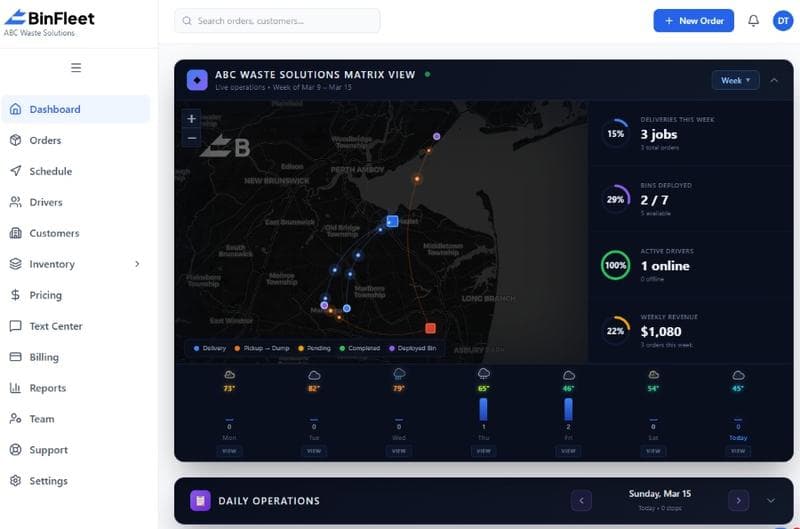
Technology infrastructure becomes critical when managing multiple yards because manual tracking methods quickly become overwhelmed by the complexity of multi-location operations. Cloud-based management systems enable real-time coordination between yards while providing the centralized visibility needed for effective inventory and dispatch decisions. These platforms typically integrate GPS tracking, automated inventory updates, and route optimization to create a unified operational view across all locations.
The most valuable technology features for multi-yard operations include automated container transfer tracking, predictive inventory alerts, and integrated route planning that considers inventory positions at multiple yards. Companies implementing comprehensive technology solutions typically see 20-30% improvements in delivery efficiency while reducing inventory carrying costs through better allocation decisions. Advanced platforms like BinFleet specifically address the unique challenges of multi-yard coordination through specialized features designed for complex waste hauling operations.
Route Efficiency and Cross-Yard Optimization
Route optimization becomes exponentially more complex with multiple yards because drivers might need to visit several locations during a single route to pick up containers for delivery or drop off containers for redistribution. The most efficient operations develop route patterns that minimize deadhead miles while ensuring containers flow to their optimal positions within the yard network. This requires sophisticated planning that considers not just today's deliveries, but also positioning containers for tomorrow's anticipated demand.
Cross-yard optimization strategies focus on identifying opportunities to combine container movements with revenue-generating activities. For example, drivers returning empty containers to disposal facilities can pick up containers from overflow yards for redistribution to high-demand locations. These combination moves reduce operational costs while improving inventory positioning, but require careful coordination to avoid service disruptions or unnecessary delays.
Performance Metrics and Continuous Improvement
Multi-yard operations require more sophisticated performance metrics than single-yard businesses because traditional measures often mask inefficiencies that occur between locations. Key performance indicators should include yard-specific utilization rates, cross-yard transfer frequencies, and average delivery distances from each location. These metrics help identify optimization opportunities and ensure that expansion into multiple yards actually improves rather than complicates operational efficiency.
Regular performance analysis should focus on identifying patterns in container movement between yards and opportunities to reduce unnecessary transfers through better demand forecasting or inventory allocation. The most successful operators conduct monthly reviews of their multi-yard performance, adjusting container allocation strategies and yard capacity plans based on evolving demand patterns and operational learnings. Staying informed about industry best practices helps operators benchmark their performance against leading companies and identify improvement opportunities.
Frequently Asked Questions
How many containers should I keep at each yard?
Container allocation depends on each yard's demand patterns, seasonal variations, and proximity to high-demand areas. Most successful operators maintain enough containers to cover 3-5 days of typical demand at each location, plus a 15-20% buffer for unexpected surges. Regular analysis of container movement patterns helps optimize these allocation ratios over time.
What's the best way to track containers moving between yards?
Real-time tracking systems with GPS integration and automated check-in/check-out procedures provide the most accurate container location data. Many operators use mobile apps that allow drivers to scan container IDs when picking up or dropping off containers, automatically updating inventory systems and maintaining accurate yard-level counts.
How do I decide which yard should fulfill each delivery request?
Optimal yard selection considers delivery distance, container availability, driver schedules, and the impact on future inventory positioning. Advanced dispatch systems evaluate these factors automatically, but successful operators also train dispatchers to consider customer relationships and special requirements that automated systems might miss.
Should I specialize certain yards for specific container types?
Container specialization can improve efficiency in markets with distinct geographic demand patterns, but it reduces flexibility for handling demand fluctuations. Most operators find success with a hybrid approach—maintaining diverse container inventories at all yards while concentrating specialized equipment at locations serving high-demand customer segments.
Ready to Streamline Your Operation?
See how BinFleet AI helps waste haulers save time, cut costs, and grow.
Request a Free 30-Day Trial