How to Scale Your Dumpster Rental Business from One Truck to Multi-Truck Operations
Why Most Dumpster Companies Struggle to Scale Beyond One Truck
Many owner-operators start their dumpster rental business by doing everything themselves—taking orders, dispatching, collecting payments, managing inventory, and driving. This model works when you're the only employee, but it becomes a ceiling. The moment you hire a driver or two, you face a critical problem: your business processes don't exist on paper. Everything lives in your head, your phone, and your inbox. Without documented workflows and visibility into operations, scaling becomes chaotic rather than profitable.
The companies that successfully scale recognize this inflection point early. They understand that growth isn't about buying more trucks before you're ready—it's about building the operational infrastructure that allows you to manage more trucks efficiently. This means implementing systems for dispatch, customer communication, container tracking, and payment processing that don't depend on you personally. When you automate and systematize operations, you free yourself to focus on business development and strategy instead of firefighting daily crises.
Define Your Growth Target and Financial Model First
Before you add a second truck, decide what success looks like for your business. Are you aiming for five trucks or fifty? Do you want to serve one yard or multiple locations? Your answer determines everything that follows—the type of software you need, how many managers you'll hire, and where you'll locate new facilities. Without clarity on scale, you'll make short-term decisions that don't support long-term growth, forcing costly pivots later.
Run realistic numbers on each vehicle addition. Calculate the fully loaded cost per truck (vehicle payment, insurance, maintenance, fuel, driver salary), average revenue per dumpster per month, and your target utilization rate. Most successful haulers operate at 70-80% utilization by their second year. Use this baseline to determine how many containers you need and how many service areas you can realistically cover before quality suffers. This financial blueprint prevents over-expansion and keeps you profitable as you grow.
Invest in Dispatch and Fleet Management Software Now
This is the single most important investment you'll make before adding your second truck. Manual scheduling, paper route sheets, and cash-based payments cannot scale. When you have three or four drivers, coordinating pickups and deliveries becomes impossible without visibility. Drivers double-book, miss appointments, waste fuel on inefficient routes, and customers get angry. The cost of poor dispatch quickly erases your profit margins on new trucks.
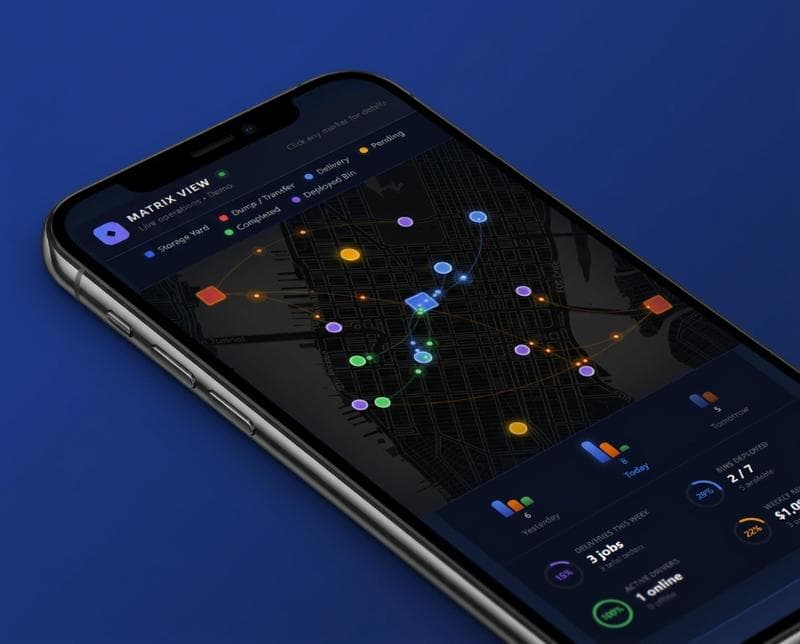
A proper fleet management platform like BinFleet gives you real-time visibility into container locations, driver status, and upcoming appointments. You can dispatch jobs to the nearest driver, optimize routes to reduce fuel costs, send automated SMS updates to customers, and track inventory across multiple yards. This reduces missed pickups, improves customer satisfaction, and ensures drivers spend time earning revenue instead of hunting for dropped containers. Schedule a demo to see how other haulers manage multi-truck operations with confidence.
Build Your Second Truck Operation Around Process Documentation
When you hire your first driver, you have a choice: walk them through every task verbally and answer questions ad hoc, or spend a week documenting your standard operating procedures. The first approach saves time initially but costs you constantly in mistakes, inconsistency, and phone calls asking "what do I do when...?" Documentation takes discipline, but it makes training faster, reduces errors, and creates accountability. Your processes become the business, not you.
Document everything: how to inspect a container before delivery, what to do if a customer isn't home, when to schedule maintenance, how to handle late payments, and what to do if equipment breaks down mid-route. Record video walkthroughs of your truck operations and your software workflows. When your second and third drivers arrive, they ramp up in days instead of weeks. This efficiency matters more as you scale, because your time becomes the real bottleneck—not capital or equipment.
Add a Yard Manager or Dispatcher Before Adding More Trucks
The sequence matters. Many owners buy a third truck too soon because they see revenue opportunity, only to realize they're now managing two drivers, handling customer calls, processing invoices, and maintaining equipment—all alone. You burn out or make costly mistakes. The right sequence is: one truck and owner-operator, add second truck with one driver, hire a dedicated dispatcher or yard manager, then add third and fourth trucks. This person handles daily dispatch, equipment maintenance coordination, and customer support so you can focus on sales and strategy.
A good dispatcher or yard manager also gives you visibility into what's actually happening operationally. They'll tell you if routes are inefficient, if certain containers need maintenance, if a customer is consistently problematic, or if you're missing revenue opportunities. They become your eyes and ears. Expect to pay a solid dispatcher $35,000-$50,000 annually, but they'll easily return their salary in reduced downtime, faster service, and fewer customer complaints. This person is the foundation for healthy growth beyond five trucks.
Expand Geographic Territory Systematically, Not Scattered
One mistake growing haulers make is taking jobs scattered across a 50-mile radius because the revenue looks good. This destroys efficiency. Each scattered job costs you extra drive time, fuel, and complexity. Instead, grow in concentric circles from your base yard. Establish strong market presence in your immediate service area—focus marketing there, build relationships with local contractors and property managers, and dominate that territory. Only expand to adjacent zones once you've optimized your existing area.
When you're ready for a second service yard, choose a location that opens a new geographic cluster, not a random new area. Ideally, this location should be 20-40 minutes from your first yard, far enough to avoid service overlap but close enough to share inventory and resources when needed. This geographic strategy keeps routes efficient, reduces driver idle time, and makes it easier to scale dispatch across multiple yards within a single management system. It's the difference between a fragmented operation and a coherent network.
Automate Payments and Invoicing to Protect Cash Flow
Scaling amplifies cash flow problems. With one truck, you might invoice a few customers weekly and collect payment manually. With five trucks and 80+ active customers, manual invoicing becomes a nightmare. Late payments kill cash flow, and chasing invoices eats time you don't have. Implement automated payment processing immediately. Accept credit cards or ACH payments online, set up recurring billing for predictable customers, and use software that generates and sends invoices automatically.
This isn't just about convenience—it's about math. If you're billing $5,000 monthly and average collection time drops from 30 days to 10 days by automating payments, you've freed up significant working capital with zero extra effort. That capital pays for your next truck or covers seasonal slowdowns. Most waste hauling software includes integrated payment processing. Make sure your platform captures payment data correctly and reconciles it with your accounting automatically, so you're never confused about who owes what.
FAQ: Scaling Questions Haulers Actually Ask
How long should I wait before adding a second truck?
When your first truck is consistently at 70% utilization or higher and you're turning away jobs regularly, you're ready. This typically takes 12-18 months for a well-run operation in a decent market. But before you buy truck two, ensure your dispatch and customer communication processes work smoothly. If you're already struggling to manage one truck operationally, adding another will make it worse, not better.
What's the best software for managing multiple yards?
Look for platforms that give you unified visibility across locations—dispatch, inventory, driver tracking, customer communication, and invoicing all in one place. Multi-yard operations need a single source of truth so you're not jumping between systems. Read our detailed comparison guides to see how different platforms handle scaling, but test with a free trial first to ensure it fits your workflow.
Should I hire a manager or stay hands-on while scaling?
Stay hands-on long enough to understand your business deeply—at least through your first manager hire. This teaches you what to look for and how to set expectations. Once you have one good manager who understands operations, you can step back. But if you hire too early without operational knowledge, you'll make bad decisions and your manager will fail. Know your business before you delegate it.
How do I keep quality consistent as I grow?
Document your standards for customer service, vehicle maintenance, and container inspection. Train every driver on these standards, then inspect their work regularly. Use your software to track metrics like on-time delivery, customer complaints, and maintenance intervals. These numbers tell you if quality is slipping before customers get angry. Regular spot-checks and mystery shopper visits also catch problems early.
Ready to Streamline Your Operation?
See how BinFleet AI helps waste haulers save time, cut costs, and grow.
Request a Free 30-Day TrialRelated Articles
How a Dumpster Rental CRM Transforms Customer Retention & Revenue Growth
How a Dumpster Rental CRM Transforms Customer Relationships Into Revenue Growth