How to Scale a Dumpster Rental Business From One Truck to Multi-Truck Operations
Know Your Capacity Ceiling Before You Hit It
Most dumpster rental owners don't plan for growth—they react to it. You might start with one truck making 6–8 drops a day, generating steady revenue that feels comfortable. But comfort is the enemy of scale. Before you're fully booked and turning away jobs, you need to understand your true operational limits. A single-truck operation typically maxes out around 4,000–6,000 annual orders depending on your market density, container turnover rate, and driver availability. Once you're consistently hitting 80% capacity utilization, growth stops happening naturally.
The decision to scale isn't about revenue alone—it's about whether you can deliver service quality while growing. Many haulers add a second truck reactively, only to discover they lack the dispatch infrastructure, accounting systems, and driver management processes needed to run two vehicles efficiently. Before truck number two arrives, audit your current operations. Are routes optimized? Is your invoicing manual or automated? Can you track inventory across multiple locations? These questions matter because operational debt compounds fast at scale.
Build Systems That Work Without You
The biggest mistake growing haulers make is becoming the single point of failure. As the owner managing dispatch, invoicing, customer calls, and route planning, you're the bottleneck. When you try to manage a second or third truck with spreadsheets and phone calls, chaos happens. Dispatchers miss pickups, customers don't get notified of delays, and collections slip. A modern dumpster rental software platform becomes essential before your second truck rolls out, not after.
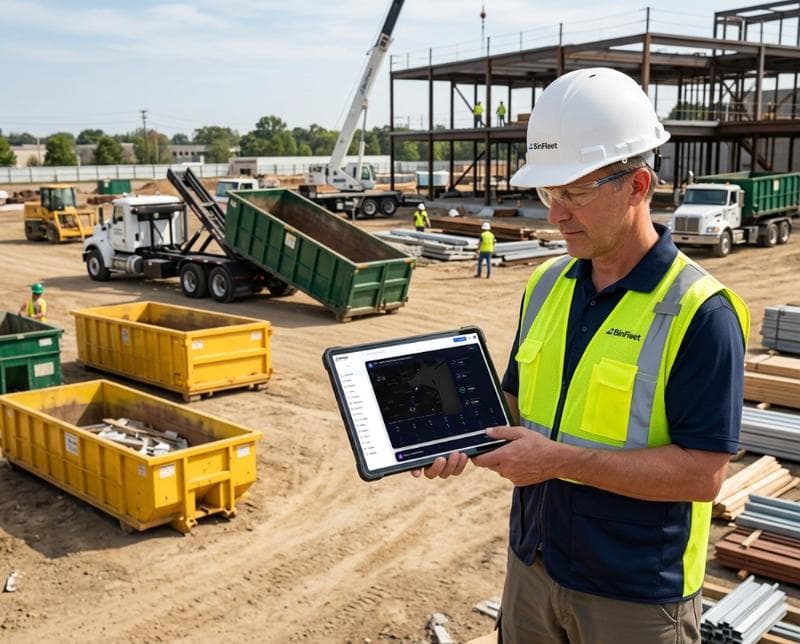
Software like BinFleet handles order management, automated dispatch, real-time GPS tracking, SMS customer updates, and invoicing—all things that would require hiring additional office staff if done manually. The goal is to remove yourself from daily operations so you can focus on growth. When dispatch is automated, your drivers receive jobs in order, customers know when to expect service, and revenue gets documented the moment a container is delivered. This infrastructure lets you scale from two trucks to five trucks without proportionally adding overhead staff.
Strategic Timing: When and Why to Add Capacity
Expansion timing directly impacts profitability. Adding a second truck when you're at 90% utilization makes financial sense. But where should that truck operate? Many owners expand geographically without understanding local market dynamics. A new service area might be 15 miles away—sounds close until you realize your driver spends an extra hour on the road daily. Cluster your expansion in areas that reduce travel time and leverage existing customer density. If most of your current jobs are in a three-mile radius, your second truck should operate in a neighboring area that shares similar density or overlaps strategically.
Financing a second truck is usually a combination of retained earnings, equipment financing, and reinvested revenue from your first vehicle. A used container roll-off truck typically costs $35,000–$60,000, and you need float for containers, deposits, and 90 days of operating expenses. Start with conservative growth: one truck profitably running for 12–18 months before adding the second. This timeline allows you to understand your actual margins, fix operational issues, and prove the business model works beyond the initial honeymoon phase. Scaling too fast exhausts cash, forces poor hiring decisions, and creates quality problems that hurt your reputation.
Hiring and Managing Your First Dispatch and Drivers
Your first hire should be a dispatcher or operations coordinator, not just another driver. A dispatcher manages your fleet, optimizes routes, handles customer communication, and monitors driver behavior. This role is your leverage point for growth. Your second hire is likely a driver, but hiring the right person matters enormously. Look for drivers with CDL licenses, clean records, and customer service orientation—not just mechanical ability. A rude driver cancels your reputation faster than a broken truck. Structure driver pay to reward efficiency and customer satisfaction, not just miles driven. Some operators use bonuses for on-time delivery, zero customer complaints, or containerization efficiency.
As you add a third and fourth truck, you'll need systems for training, compliance, and quality control. Create a driver handbook covering procedures, safety standards, container handling, and customer interaction expectations. Implement a simple pre-trip inspection checklist that drivers complete daily. Use GPS tracking not just for operational efficiency but for accountability—it protects you legally and ensures drivers follow routes and timing. Many haulers resist tracking technology until they deal with the first liability claim or find out a driver is skipping scheduled pickups.
Organizing Multiple Revenue Streams and Locations
At two or three trucks, you might operate from a single yard. By truck four or five, a second yard makes sense if your service area is large enough. Multi-yard operations require clear inventory management and separate P&L tracking per location. You need to know: How many containers are at Yard A versus Yard B? Which location is profitable? Are high-demand areas undersupplied? This visibility requires software that tracks container location, condition, and deployment history. Manual tracking fails instantly once you're managing 80+ containers across two properties.
Beyond standard dumpster rentals, many regional operators add complementary services that leverage existing routes. Junk removal, construction debris cleanup, and portable restroom rentals fit naturally into a waste hauling business because you already have customers, trucks, and logistics infrastructure. These services add revenue per route and increase per-customer lifetime value. The logistics are similar—dispatch, tracking, invoicing, and customer communication follow the same patterns. Introducing new services through the same system avoids creating siloed operations.
Technology Investment as a Growth Multiplier
By 2026, paper and spreadsheet-based operations will put you at a competitive disadvantage. A free demo of BinFleet shows how automated dispatch reduces driver idle time by 20–30% and improves order accuracy. This isn't hypothetical—these gains compound across your fleet. Saving 30 minutes per driver per day on a five-truck operation means 2.5 hours of daily recaptured productivity. That's equivalent to adding partial capacity without adding overhead. Payment processing, automated invoicing, and customer SMS updates reduce back-office labor and improve cash flow. When customers receive invoice and payment links instantly, collection time drops dramatically.
Invest in technology early in your growth journey, not late. Many owners wait until they're drowning in paperwork before implementing software, which means months of implementation chaos while trying to manage growth. The right platform scales with you—what works for two trucks works for twenty. Choose systems designed for waste and hauling operations, not generic business software. Dumpster rental has specific workflows, compliance requirements, and operational patterns that general platforms don't address.
FAQ: Growing From Single-Truck to Multi-Truck Operations
How many containers do I need to buy before expanding to a second truck?
Most operators maintain a 3:1 ratio of containers to trucks—so if a truck can deploy 12 containers daily, you should own 36 containers. This accounts for pickup and delivery gaps, maintenance downtime, and seasonal fluctuations. For a second truck, audit your first truck's utilization data over a full quarter, calculate your peak deployment needs, and add 20% buffer for growth.
Should I buy new or used equipment when scaling?
Used trucks are financially sensible for second and third vehicles—you save $20,000–$30,000 per truck. Prioritize frame condition, engine hours, and maintenance history over cosmetics. New containers, however, are often worth the investment since you'll own them for 10+ years and depreciation is slower for this asset class. Mix used trucks with new or near-new containers for the best economic balance.
What metrics should I track to know when I'm ready to expand?
You're ready for a second truck when current capacity hits 80%+ utilization for three consecutive months, gross margin stays above 50%, and you have 90 days of operating reserves in cash. Additionally, your dispatch and invoicing should be systematized enough that a second truck doesn't require you to work more hours—if you're overworked on one truck, two trucks will break you.
How do I avoid the "growing pains" where quality suffers as I scale?
Document processes before you scale, not after. Create a driver handbook, dispatch procedures, and quality standards when you have bandwidth to think clearly. Implement operational software tools that enforce consistency (GPS tracking, order verification, customer notifications). Train new hires thoroughly on these systems. Growth only hurts quality when you skip these steps and rely on informal processes that don't transfer to new team members.
Making the Leap: Your 2026 Roadmap
Scaling a dumpster rental business from one truck to five trucks is achievable within 2–3 years if you build systematically. The owners who succeed aren't the ones with the most capital—they're the ones who invest in operational systems early, hire deliberately, and expand geographically in clusters that make logistical sense. Your first truck proves the business model. Your second and third trucks test your systems. By truck four or five, you're a regional player competing on efficiency and service quality, not just pricing.
The starting point is simple: understand your current bottlenecks, implement software that removes manual work, and hire people who amplify your capacity rather than just adding headcount. If you're considering growth and haven't yet explored how modern dispatch and management software transforms fleet economics, now is the time. The difference between a manual operation managing three trucks and a software-enabled operation managing three trucks is often the difference between working 60-hour weeks and scaling profitably.
Ready to Streamline Your Operation?
See how BinFleet AI helps waste haulers save time, cut costs, and grow.
Request a Free 30-Day TrialRelated Articles
How a Dumpster Rental CRM Transforms Customer Retention & Revenue Growth
How a Dumpster Rental CRM Transforms Customer Relationships Into Revenue Growth