How to Scale a Dumpster Rental Business from One Truck to Multi-Truck Operations
Assess Your Current Operation's Breaking Point
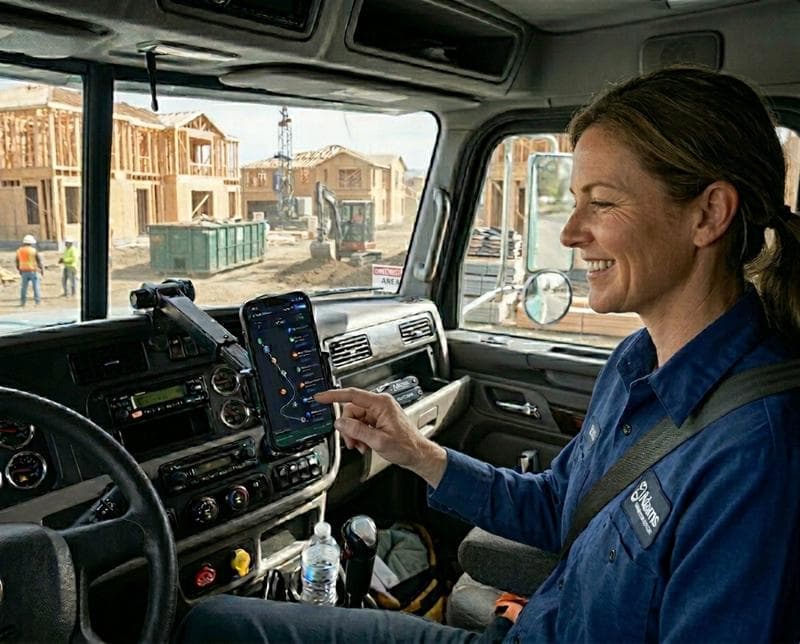
Before you scale, you need to know when your single-truck operation stops making sense. Most solo operators hit a wall around 40–50 active containers per location. At that point, dispatching becomes chaotic, customer response times slip, and your driver burns out. The question isn't whether you're ready to grow—it's whether you're organized enough to grow without collapsing under the weight of it.
Audit your current setup honestly. How many hours per week do you spend on dispatch, scheduling, and customer calls that a system could handle for you? How many potential jobs do you turn away because your truck is booked solid? If you're leaving money on the table and drowning in operational tasks, you've hit the ceiling of a one-person show. That's the right moment to start planning your next move.
Build Systems Before You Build a Fleet
The biggest mistake growing haulers make is buying truck number two before documenting how truck number one actually works. You can't scale chaos. Before hiring a second driver, you need repeatable processes for dispatch, billing, container maintenance, and customer communication. Without systems, adding another truck just multiplies your problems. A software platform like BinFleet AI handles the core operational layer—automated dispatch, real-time tracking, SMS customer updates, and integrated invoicing—so your processes are consistent whether you have one truck or ten.
Write down your current workflow for a typical job: customer inquiry, container drop, pickup schedule, billing, and follow-up. Where are the bottlenecks? Where do you waste time? Where do mistakes happen? These become your system design priorities. Once you document and automate these flows, adding a second driver becomes manageable because both drivers follow the same playbook. You're not creating new processes for new people; you're scaling proven ones.
Hire Your First Driver When You Have the Systems in Place
Your first hire isn't just about adding labor hours—it's about proving you can manage someone else's work without losing quality or money. Many owner-operators rush hiring because they're burned out, then hire the wrong person and blame scaling. The truth is, you hire the right driver only if you have clear expectations, a training plan, and accountability systems already in place. A driver needs to know exactly what route they're running, which containers they're servicing, how to handle customer issues, and what metrics you're tracking.
Start by hiring part-time or contract for your busiest day of the week. This tests whether your dispatch and communication workflows actually work with someone else involved. Can they access the right information? Do they know how to handle a customer callback? Can you track their progress? If this pilot hiring goes well, move to a full-time second driver. If it's messy, you've learned something crucial about your systems before you scale further.
Expand Your Container Inventory Strategically
Growing from one truck to two isn't just hiring a driver—it's acquiring more dumpsters, roll-offs, or compactors. Overbuying inventory strangles your cash flow; underbuying limits your growth. The sweet spot is buying inventory when demand validates it. Track your current utilization rate: if 80% of your containers are deployed regularly, you have room to add stock. If you're running 60% utilization, adding containers too soon wastes capital.
Stagger your inventory purchases with your hiring timeline. Buy enough to keep your new driver consistently busy—typically 15–20 additional containers depending on your market and service frequency. Use software that tracks container location, deployment status, and maintenance schedules so you're not guessing whether your fleet is earning or depreciating. As demand grows and you're near capacity again, that's when you plan truck number three and the inventory to support it.
Plan Your Route and Service Area Expansion
Your second truck doesn't magically serve the same 50-mile radius as your first one. Expanding geographically requires planning. Should you add a second location closer to a growing suburb? Can your current team handle a wider service area, or does scattered geography mean higher drive time and lower job density? The math changes when you're not personally driving every delivery. Idle drive time becomes a real cost.
Use your current customer data to identify geographic clusters. Are most of your jobs grouped in one town or scattered across three counties? If they're clustered, a second truck in that area makes sense—you compress drive time and increase jobs per shift. If they're scattered, you might need to say no to jobs too far out, or you invest in a second location. Software that visualizes your service area and customer density—and helps with route optimization—turns this guesswork into real data.
Lock In Your Financials and Pricing Before You Scale
Scaling reveals every leak in your pricing and cost structure. If you're barely profitable on one truck, adding a second truck at the same margins just gives you two money-losing trucks. Before you hire, audit your pricing: are you charging enough per job to cover labor, fuel, maintenance, and overhead? What's your actual margin per container delivery or pickup? Many small haulers discover they're underpriced only when they try to add another driver and realize there's no margin to pay them.
Review your expenses by category: labor, fuel, vehicle maintenance, container replacement, insurance, and administrative overhead. Calculate what a second truck adds to each category. Then stress-test your pricing—if fuel prices spike 20% or labor costs rise, do you still have room to grow? Once you've confirmed pricing is sustainable, lock it in with a slight increase if the market allows it. Growing under weak margins is the fastest way to grow yourself into bankruptcy.
FAQ
What's the minimum revenue I need before scaling to a second truck?
There's no magic number, but most successful multi-truck haulers had at least $150K–$250K annual revenue on their first truck and were operating at 70%+ capacity before adding a second vehicle. More important than absolute revenue is profit margin and utilization rate. If you're profitable and consistently turning away work, you're ready. If you're barely breaking even, scaling will worsen your position.
Should I hire an employee or a contractor for my second driver?
Employee classification depends on your local laws and the level of control you exert. If you dictate schedule, route, pricing, and how work gets done, that's typically an employee—and you'll owe payroll taxes and benefits. If the driver sets their own hours and uses their own vehicle, contractor rules might apply. Consult a local accountant because misclassifying costs you penalties. Most growing operations move toward employees as they scale because control and consistency matter more than labor costs at that stage.
How do I know if I'm ready for software like BinFleet?
If you're manually dispatching, tracking, and billing—and adding a second driver makes that worse—you're ready. See how BinFleet handles dispatch and invoicing for fleets of any size. The real test: if your biggest scaling bottleneck is operational chaos rather than market demand, software solves that immediately. You'll recover the investment in the time you're not spending on logistics.
What's the biggest mistake haulers make when scaling?
Hiring before systems are in place. A new driver amplifies every organizational gap—unclear pricing, no dispatch process, manual billing, undefined customer protocols. You end up with two drivers doing things different ways, inconsistent service, and customer complaints. Build the system first, then hire people to run it. That's the only way to scale without losing control.
Ready to Streamline Your Operation?
See how BinFleet AI helps waste haulers save time, cut costs, and grow.
Request a Free 30-Day TrialRelated Articles
How Waste Haulers Cut Fuel Costs by 15-25%: Real Strategies That Work
How Dumpster Rental Companies Keep Commercial Accounts and Reduce Churn
