How Waste Haulers Cut Fuel Costs by 15-25%: Real Strategies That Work

Why Fuel Costs Matter Now More Than Ever
Fuel represents 12–18% of total operating costs for most waste hauling and dumpster rental companies. Even with fuel prices moderating from their 2022 peaks, a single percentage-point increase in per-gallon costs can wipe out thousands in quarterly profit. For a mid-sized operation running 15–25 trucks, that difference compounds quickly across maintenance schedules, route efficiency, and driver behavior.
The challenge isn't just the pump price—it's that fuel waste is invisible until you measure it. Inefficient routes, excessive idling, poor vehicle maintenance, and lack of driver accountability all erode margins silently. The good news is that 15–25% reductions are entirely realistic when you address these gaps systematically. Most operators who achieve that level of savings combine three or four of the strategies in this guide.
Optimize Routes Before Anything Else
Route optimization is the single highest-leverage fuel-saving move. A truck burning five gallons per hour while sitting in traffic or backtracking across a service area is hemorrhaging money. When you group pickups and deliveries by geography, minimize dead miles, and sequence stops by time window or container type, fuel consumption per service call drops dramatically. Real-world results show 10–18% fuel savings just from better routing, often within the first month of implementation.
The math is straightforward: if your fleet covers 500 miles per day and you reduce that to 425 miles through smarter sequencing, you've cut fuel use by roughly 15% on that route alone. Dispatch software with built-in route optimization watches for geographic clusters, accounts for traffic patterns, and adjusts sequences in real time when new orders come in. BinFleet's route planning tools help operators see overlapping service areas and suggest consolidation opportunities that manual dispatching misses entirely.
Real-Time Vehicle Tracking Catches Fuel Waste
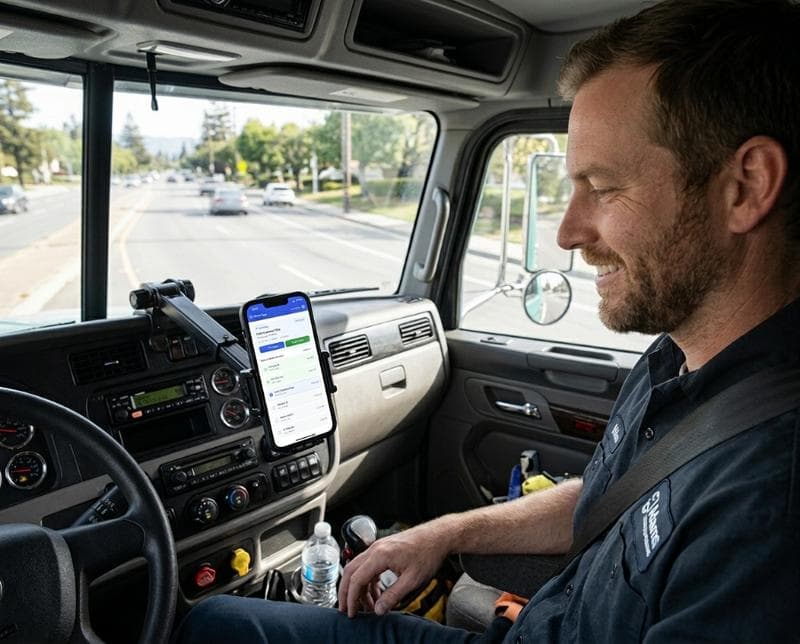
You can't improve what you don't measure. GPS tracking reveals driver behavior instantly—excessive idling, speeding, harsh braking, and unnecessary detours. A driver who idles for 20 minutes per shift is wasting roughly 0.3 gallons daily. Over a year, that's 70+ gallons per driver. With a 15–20 person operation, idle waste alone could cost $1,200–$1,800 annually. Visibility into these patterns lets you coach drivers toward better habits without micromanagement.
Beyond driver coaching, real-time tracking helps you spot operational inefficiencies fast. If a driver is taking a 40-minute lunch break in a neighborhood far from their assigned service area, you know to adjust scheduling. If a vehicle consistently returns to base with lower fuel efficiency, that's a maintenance red flag. Dispatch systems that integrate GPS data automatically flag anomalies, so your operations manager can investigate rather than hoping problems resolve themselves.
Preventive Maintenance Keeps Efficiency High
A truck running on old spark plugs, misaligned wheels, or under-inflated tires uses 5–15% more fuel than one properly maintained. Many haulers focus on major repairs and ignore the small stuff—but that's where efficiency leaks happen. Tire pressure alone can cost you 3–5% in fuel economy if neglected. Engine air filters clogged with dust force engines to work harder. Fuel injectors fouled by poor gasoline quality reduce combustion efficiency silently until you notice lower MPG across the fleet.
A simple preventive maintenance checklist—tire pressure checks weekly, oil changes on schedule, air filter replacements yearly, wheel alignments annually—catches these issues before they compound. Vehicles with consistent maintenance records typically outperform neglected trucks by 8–12% in fuel economy. The upfront cost of preventive work pays for itself in fuel savings within 6–12 months, with the bonus of fewer breakdowns and longer vehicle life.
Driver Training and Accountability Programs
Driver behavior directly controls fuel consumption. Aggressive acceleration, speeding, and hard braking all increase fuel demand. A driver trained in smooth acceleration and steady speeds can improve fuel economy by 10–15% without any equipment changes. The challenge is making training stick and measuring results consistently. One-time safety meetings fade quickly. Ongoing feedback tied to actual performance data keeps drivers engaged and accountable.
Effective programs tie fuel efficiency metrics to driver scorecards, recognition programs, or modest incentives. When drivers see their MPG data and how it compares to peers, most improve naturally. Some operators offer small bonuses—$25–$50 per month—to drivers in the top efficiency quartile. The ROI is massive: a driver who improves fuel economy by just 5% saves the company $3,000–$5,000 annually. Coupled with route optimization and vehicle tracking, driver training becomes the final piece that locks in gains.
Right-Sizing Your Fleet and Vehicle Selection
Running oversized trucks on small routes or underutilized vehicles on light-load days burns fuel unnecessarily. If 30% of your pickups are small residential dumpsters, running full-size 30-yard trucks to every call wastes capacity and fuel. Many operators don't track utilization by vehicle type closely enough to see the opportunity. A dispatch system that flags low-utilization routes can reveal patterns—like consistently sending a 30-yard truck on routes that average 15-yard loads.
Consider whether smaller dedicated vehicles for high-frequency, low-volume routes make sense. Some operations deploy compactor trucks only on commercial routes and reserve roll-off trucks for construction debris. Others use smaller 20-yard containers for residential areas and 30-yard for commercial. This isn't about buying new trucks—it's about matching asset deployment to actual demand, which typically reduces daily fuel burn by 8–12% without service cuts.
Frequently Asked Questions
Can I really cut fuel costs by 20% without new software or equipment?
Yes, but only partially. Better manual routing and driver accountability can save 7–10%, but hitting 15–25% requires visibility. Route optimization software and GPS tracking unlock the full savings because they reveal what's actually happening with your fleet and driving patterns in real time.
What's the fastest fuel savings win for a small operation?
Route optimization by geography and time window. You can implement this manually or with software in days, not weeks. Group adjacent pickups, eliminate backtracking, and watch fuel consumption drop almost immediately. Most operators see 5–8% savings within two weeks just by being intentional about sequencing.
How long does it take to see ROI on a dispatch and tracking system?
For a 15-truck operation, dispatch software typically pays for itself in 4–8 months through fuel savings alone, before accounting for labor efficiency, fewer failed pickups, or reduced overtime. A free demo will show you how BinFleet calculates savings specific to your operation size and current routes.
Should I invest in electric or alternative-fuel trucks?
Electric vehicles and natural gas trucks have lower fuel costs but higher capital requirements and limited service-life data in waste hauling. For most mid-sized operators, maximizing efficiency of existing diesel and gasoline fleets delivers faster ROI. Revisit alternative fuels in 2027–2028 as technology matures and used units become available.
Getting Started: A Roadmap for 2026
A 15–25% fuel reduction doesn't happen overnight, but it's entirely achievable with a structured approach. Start by auditing your current fuel spend and per-mile metrics. Next, map your routes on paper or in a tool to identify obvious inefficiencies—long dead miles, geographic overlap, or frequent backtracking. Then, invest in either dispatch software with built-in optimization or a real-time GPS tracking platform that gives you visibility into driver behavior and idle time.
Pair that visibility with a simple driver accountability program and a preventive maintenance schedule. Over 90 days, you'll likely see 8–12% savings. By month six, combined strategies should deliver 15–20% reductions. BinFleet's platform combines routing, GPS tracking, and reporting in one system, which accelerates the timeline because you're not stitching together three separate tools. If you want to explore how these tools work for your specific operation, request a free demo to see real-world calculations based on your fleet size and routes. The 2026 fuel market will remain tight, but operators who attack waste systematically will outpace those hoping prices drop.
Ready to Streamline Your Operation?
See how BinFleet AI helps waste haulers save time, cut costs, and grow.
Request a Free 30-Day TrialRelated Articles
How Dumpster Rental Companies Optimize Routes to Cut Fuel Costs and Increase Daily Stops
Dumpster Route Optimization: How to Cut Fuel Costs and Maximize Daily Stops