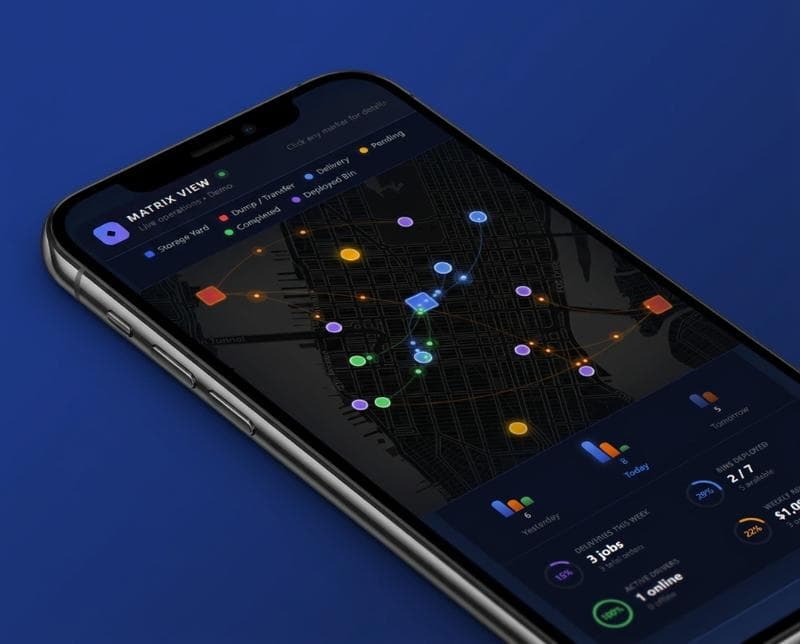
Dumpster Route Optimization: How to Cut Fuel Costs and Maximize Daily Stops
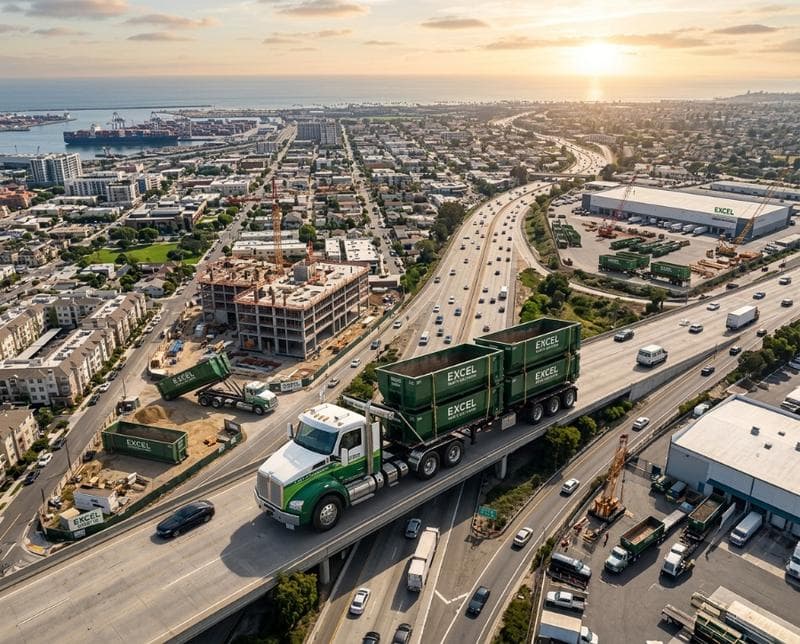
Why Route Optimization Matters More Than Ever in 2026
Fuel costs remain one of the largest operating expenses for dumpster rental companies, often consuming 15-25% of revenue depending on market conditions. A single inefficient route can cost you hundreds of dollars per week in wasted diesel, missed billable stops, and driver overtime. The problem gets worse as fuel prices fluctuate and labor becomes scarcer—every mile counts when margins are tight.
But the real opportunity isn't just cutting waste from your existing routes. It's fitting more stops into the same time window, which means more revenue per driver per day. A hauler running 12 stops on a sprawling route could be running 18 stops with better sequencing, geographic clustering, and real-time adjustments. That difference compounds fast: 6 extra stops per truck per day across a 10-truck fleet equals 300 additional stops per week, or roughly $12,000-18,000 in gross monthly revenue with virtually no added fixed costs.
The Real Problem With Manual Route Planning
Most dumpster rental operators still build routes the same way they did 15 years ago: phone calls, emails, spreadsheets, and driver familiarity. A dispatcher takes today's pickup requests, tries to remember which areas each driver knows, and creates a sequence that feels logical. The result feels organized, but it's almost always suboptimal because humans can't calculate the true cost of every geographic combination in real time.
Manual routing also breaks down the moment you face a change. A customer calls for a rush pickup, a truck breaks down, or weather closes a road—and suddenly your dispatcher is re-jiggering the entire day by phone. Drivers end up backtracking, skipping profitable stops because they're now out of sequence, or finishing hours later than planned. This chaos creates hidden costs: extra fuel, frustrated customers, driver fatigue, and missed revenue that disappears into the noise of daily operations.
How Route Optimization Engines Reduce Fuel Spend
Modern routing software uses algorithms that consider distance, drive time, traffic patterns, vehicle capacity, time windows, and driver availability simultaneously. Instead of sequencing stops one at a time, the system evaluates thousands of possible sequences and selects the mathematically efficient route. The difference is dramatic: a typical optimized route reduces total distance by 10-20% compared to manual planning, which translates directly to fuel savings. If you're running 50 stops per day across your fleet and each stop averages 3 miles of dead time, optimizing that away saves 150 miles daily—roughly 30-40 gallons of fuel per week.
The best routing platforms also integrate with traffic data and weather forecasts, adjusting sequences in real time to avoid congested areas or extended drive times. Some systems learn from your historical data, recognizing which stops take longer than expected or which areas have recurring delays. Over time, these insights make your fleet faster and more predictable, which lets you promise tighter delivery windows and charge premium rates for rush services.
Increasing Stops Per Day Without Overworking Your Team
The most profitable haulers aren't the ones squeezing drivers until they break—they're the ones who orchestrate work so carefully that drivers finish early without rushing. Route optimization makes this possible by eliminating wasted time between stops. A driver who spends 2 hours driving and backtracking on a 10-stop route might complete the same 10 stops in 90 minutes if the route is optimized. Those 30 minutes become available for additional profitable stops, and the driver clocks out earlier without overtime.
Adding 4-6 stops per truck per day isn't about working drivers harder. It's about reducing idle time, eliminating zigzag patterns, and respecting their schedule windows. Drivers appreciate tight, logical routes because they create predictability—they know when they'll finish, they don't worry about traffic chaos, and they can plan their day. This leads to better retention, fewer safety incidents, and fewer customer complaints about missed time windows. See how BinFleet route optimization works by requesting a walkthrough of your actual service area.
Real-World Impact: Metrics That Matter
Consider a 15-truck dumpster rental operation running an average of 50 stops per day fleet-wide. With manual routing, average route distance is 95 miles per truck (fuel consumption: 28-32 gallons per truck at 3-3.5 MPG for typical hauling rigs). A modern optimization system typically reduces this to 82-85 miles per truck, saving 3-4 gallons per truck per day. Across 15 trucks, that's 45-60 gallons saved daily, or roughly $225-300 per day in fuel alone. Annualized, you're looking at $82,000-110,000 in fuel savings—money that flows directly to your bottom line.
The secondary benefit—additional stops—is even more valuable. If optimization lets you fit 3 more stops per truck per day on average, that's 45 additional billable stops daily, or 11,000 per year. At an average dumpster rental margin of $45-60 per stop after fuel and labor, you're adding $500,000-660,000 in annual revenue with no new trucks or permanent hiring. That's transformational growth for a mid-sized operator, and it stems entirely from smarter sequencing and dispatch decisions.
Getting Started: Implementation That Works
The best time to implement route optimization is after you've already digitized your order intake and dispatch process. If you're still taking orders via phone and emailing routes to drivers as PDFs, switching to a proper platform with built-in routing will feel like the future arriving at your warehouse. Start by selecting a solution that integrates with your existing tools—your customer database, payment processor, and driver communication apps. BinFleet handles all of this natively, which means you avoid the cost and confusion of stitching together five different vendors.
Roll out the system to 2-3 routes first, measure the impact over 2-4 weeks, and iterate based on what you learn. Your drivers might initially resist change—that's normal. But when they see that optimized routes mean finishing at 3 PM instead of 5 PM, resistance evaporates. Measure stops per hour, fuel consumption per stop, customer on-time delivery rate, and driver satisfaction before and after. The data will show whether optimization is working and where to fine-tune further. Read case studies from other haulers who've implemented similar strategies to learn what to expect.
FAQ: Common Questions About Route Optimization
Will route optimization force drivers to rush and create safety problems?
No. Optimization eliminates wasted driving and zigzagging, which actually makes routes safer by reducing decision-making stress and fatigue. Drivers know their sequence upfront and can plan safely. The goal is efficiency, not speed. Accidents and injuries are far more costly than fuel savings, so any real platform prioritizes compliance and driver wellbeing.
What if a customer needs a rush pickup in the middle of the day?
Modern routing systems re-optimize in real time when new orders arrive. The algorithm calculates whether the rush stop fits into an existing route without major delays, or whether it's better to assign it to a nearby driver with available capacity. This is much faster and smarter than a dispatcher juggling it manually, and it prevents cascading delays across multiple routes.
How long does it take to see ROI on routing software?
Most haulers see measurable fuel savings and productivity gains within 30-60 days of going live. The payback period is typically 3-6 months when you factor in fuel costs and additional stops combined. If your operation runs high volume (30+ stops per day fleet-wide), ROI often comes in under 90 days.
What if my service area has unpredictable traffic or geography?
Route optimization software actually shines in complex environments because it processes real traffic data, historical patterns, and weather forecasts automatically. Urban areas with heavy congestion and rural areas with long distances between stops both benefit enormously. The algorithm avoids the guess-work that manual routing requires in difficult territories.
Take the Next Step
Route optimization isn't a luxury feature for large operators anymore—it's essential infrastructure for any hauler serious about profitability. The math is clear: saving 10-20% on fuel while adding 20-30% more stops per day means doubling or tripling net margin on your fleet operations. If you're ready to see how much your routes could improve, request a free demo of BinFleet's routing engine using your actual service area and current stop patterns. We'll show you exactly how much fuel and time you can save, and how many additional stops fit into your existing schedule. That data is worth having, even if you're just considering the move to optimization—it's your roadmap to better profitability.
Ready to Streamline Your Operation?
See how BinFleet AI helps waste haulers save time, cut costs, and grow.
Request a Free 30-Day Trial