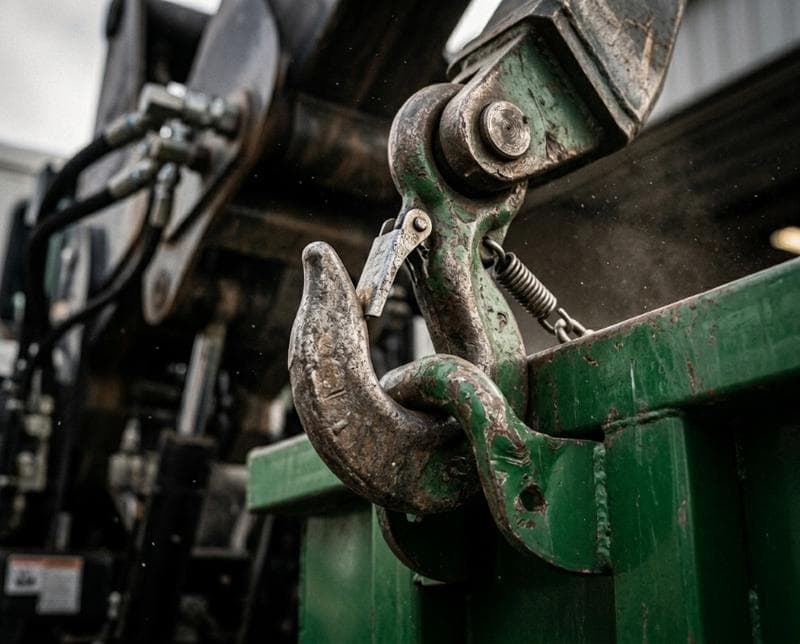
How to Scale Your Dumpster Rental Business from One Truck to a Multi-Truck Operation
Know Your Current Unit Economics Before You Grow
Before you add a second truck, you need to understand exactly how much profit each container generates. Many owners grow too fast without knowing their real numbers, only to discover that more trucks mean more problems. Calculate your average revenue per pull, subtract fuel, maintenance, labor, and the cost of your container, then see what's actually left. If you're not making 35–50% margin per container, you're solving a pricing or efficiency problem, not a growth problem.
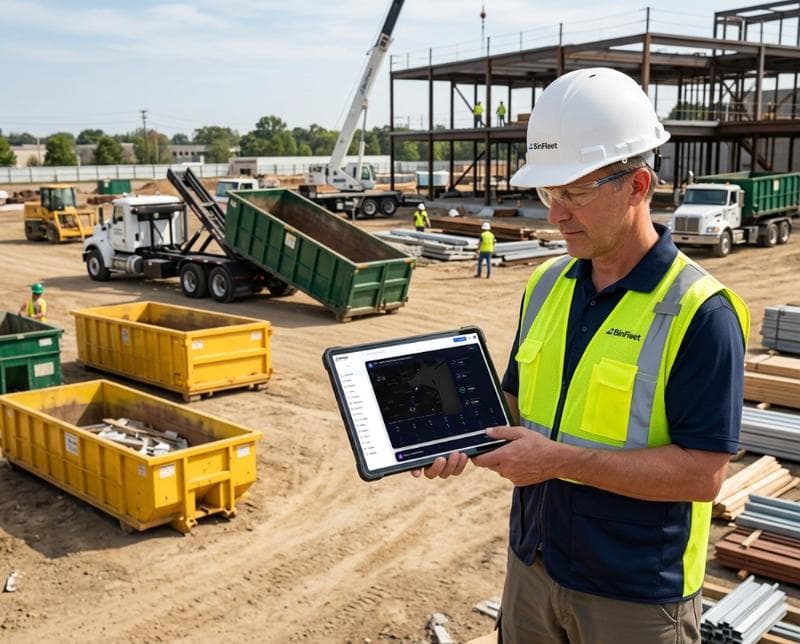
Once you understand your unit economics, you can predict what a five-truck operation will look like. If one truck generates $8,000 per month in profit, five trucks don't automatically generate $40,000—you'll have overhead, management complexity, and coordination costs that eat into that math. Be honest about your margins. If they're thin, reinvest in operational improvements before scaling. This is when technology like BinFleet's dispatch and routing optimization becomes your competitive advantage, compressing fuel costs and labor hours across your fleet.
Build the Operational Foundation First
Scaling fails when owners add trucks before they add systems. If you're managing schedules on pen and paper or sending dispatch instructions via text, adding a third truck will break your operation. You need documented processes for every critical task: how orders flow from customer to driver, how drivers confirm pickups, how payments are collected, how container inventory is tracked. Without these processes, each new truck adds chaos instead of revenue.
This is the moment to implement software that scales with you. A platform like BinFleet handles order management, driver dispatch, GPS routing, customer SMS updates, and payments in one place—so your operation doesn't get tangled in spreadsheets as you add capacity. Start with the software before the trucks arrive. Your first multi-truck month will feel controlled instead of chaotic, and your drivers will have clarity about every job.
Hire and Train Your First Management Layer
Your second truck often means your first hire who isn't a driver. This person could be a dispatcher, a yard manager, or an operations coordinator, depending on your biggest bottleneck. This hire doesn't generate direct revenue, which makes many owners hesitant, but they're essential for scaling. They free you from day-to-day chaos so you can actually think about growing instead of just working harder. Document everything this person needs to know: your safety standards, container maintenance schedule, driver check-in procedures, and customer complaint resolution. Then train them ruthlessly until they can run a day without you.
As you move to four or five trucks, you may need both a dispatcher and a yard/maintenance person. The dispatcher owns schedule optimization and real-time problem-solving. The yard person owns container condition, preventive maintenance, and inventory accuracy. Clear roles prevent work from falling through the cracks and stop drivers from wasting time looking for clean containers. Your management hires should be able to grow with your business—people who can handle 5 trucks today and 15 trucks in three years.
Expand Your Service Area Strategically, Not Everywhere
New owners often think scaling means serving a wider geographic area. But expanding geographically without a second yard creates brutal inefficiency. A truck spending 30 minutes driving between jobs in scattered neighborhoods burns fuel and frustrates drivers. Instead, expand depth-first into one territory until you have enough density to run a tight route, then add a new focused area. If you start in a 5-mile radius around your yard and can fill two trucks per day there, that's your moment to add a second service zone—not before.
When you do enter a new area, consider whether a second yard or transfer point makes sense. Many scaling operations rent small space in a second neighborhood just to stage containers, so drivers aren't traveling 45 minutes between jobs. The rent is usually under $500/month and saves that much in fuel. Geographic clustering lets you run tight, profitable routes and keeps drivers happy because they're not wasting their shift on windshield time. BinFleet's optimization features help multi-yard operations coordinate inventory and dispatch across locations, so adding a second base doesn't multiply your administrative headaches.
Finance Growth Responsibly
The biggest trap in scaling is financing trucks before you've proven you can manage them. Many owners buy a third truck with a loan, only to watch margins compress because they're now paying $1,500/month on equipment they haven't fully utilization. If you're running one truck near capacity, a second truck makes sense. If your second truck sits half-full because you don't have the customer base yet, a third truck is premature. Add revenue first, then add capacity to serve it.
That said, growth often requires capital. The right approach is debt-to-cashflow-positive ratio: only take on a truck loan if you have contracts or a sales pipeline that covers the monthly payment plus a margin of safety. SBA loans, equipment financing, and lines of credit are legitimate tools. But the foundation must be proof that your current operation generates reliable profit. If you're operating at 25% margin with one truck, you can scale confidently knowing that a second truck will add proven revenue. If you're at 10% margin, fix your pricing and efficiency first, then scale.
Track Growth Metrics That Matter
As your fleet grows, you need visibility into what's working. Track containers on rent (total and by status), average revenue per truck per day, customer acquisition cost, repeat customer percentage, and on-time pickup rate. These metrics tell you where to focus. If your repeat customer rate is 40% but your acquisition cost is high, invest in retention. If your pickup rate drops when you add a new driver, you have a training or accountability problem. If average revenue per truck is dropping as you add trucks, you're accepting lower-margin jobs to fill capacity—a warning sign that you need better pricing or customer selection.
Run these numbers monthly, not annually. A quarterly review is too slow when you're scaling—problems compound fast. Many owners find that a simple dashboard showing these metrics (live orders, fleet utilization, revenue trend) helps them catch problems early. This is where software that tracks your actual business operations becomes a strategic tool, not just an administrative one.
FAQ: Scaling Your Dumpster Rental Business
How many customers do I need before adding a second truck?
This depends on your average job frequency and margins, but a practical rule is: your first truck should be generating 2+ container pulls per day consistently, with revenue covering all its costs plus healthy margin. If you're running one truck at 1 pull per day or seeing seasonal gaps, a second truck will sit idle and drain profit. You need a customer base that can keep both trucks moving.
What should I automate first when scaling?
Start with order-to-dispatch workflow and driver communication. Manual dispatch is your biggest operational time-suck as you scale. Automating how customer orders flow to drivers, how drivers confirm jobs, and how you track completion removes hours from your week and eliminates errors that cause customer complaints or missed pickups. Payment processing should be second—collecting cash or checks from customers becomes impossible to track at scale.
Should I hire a dispatcher before or after adding the second truck?
Hire the dispatcher or implement dispatch software just before adding the second truck, or at the same time. Adding two trucks and a new person simultaneously is chaotic, but adding a truck to your current system and assuming you'll manage dispatch as you scale never works. A dispatcher's job is to maximize your fleet efficiency, so their salary should pay for itself by running tighter routes and improving utilization from day one.
What's the typical timeline from one truck to five trucks?
Most sustainable operations take 18–36 months to move from one to five trucks, depending on market demand and capital. Growing one truck per year is a safe pace that lets you refine your systems and build management capability. Trying to add three trucks in 12 months often creates quality and service issues that damage your reputation. Slow, disciplined growth beats fast, chaotic growth every time.
Ready to Scale Smarter
Scaling a dumpster rental business isn't just about buying more trucks—it's about building systems that work with or without you. The companies that successfully scale from one truck to five or ten are the ones that invested in clarity, process, and technology early. They know their numbers, they've documented their operations, and they've chosen tools that grow alongside their fleet. If you're ready to build that foundation, see how BinFleet helps scaling operations manage orders, dispatch, and customer communication across multiple trucks and locations. Start with a free trial and spend the next 30 days proving that the right technology removes operational friction and lets you focus on profitable growth.
Ready to Streamline Your Operation?
See how BinFleet AI helps waste haulers save time, cut costs, and grow.
Request a Free 30-Day TrialRelated Articles
How a Dumpster Rental CRM Transforms Customer Retention & Revenue Growth
How a Dumpster Rental CRM Transforms Customer Relationships Into Revenue Growth