How to Scale Your Dumpster Rental Business: A Step-by-Step Growth Plan
Diagnose Your Current Bottleneck
Most single-truck operators hit a ceiling around revenue productivity because they're doing everything themselves: answering calls, scheduling pickups, managing customer relationships, and often driving routes. Before scaling, identify whether your limitation is demand (customers calling but you can't serve them), operational capacity (systems breaking down under volume), or cash flow (profit stuck in inventory or AR). Walk through your last 30 days of sales data—count how many inbound calls you lost, how many jobs you couldn't schedule because you were booked, and how many hours you spent on admin work that could be delegated. This honest assessment prevents the common mistake of buying a second truck only to realize the real problem was scheduling chaos or poor cash management, not truck count.
The scaling sweet spot emerges when you're consistently turning away customers due to truck availability, not because of poor marketing or service issues. If you're turning away 10-15 jobs per week and your first truck is running 80-90% utilization, a second asset makes sense economically. But if your truck is at 50% utilization and you're struggling to find jobs, adding equipment won't solve the problem—you need marketing and sales discipline first. Use this baseline to set realistic scaling milestones and avoid expensive mistakes.
Build a Systemized Dispatch and Scheduling Foundation
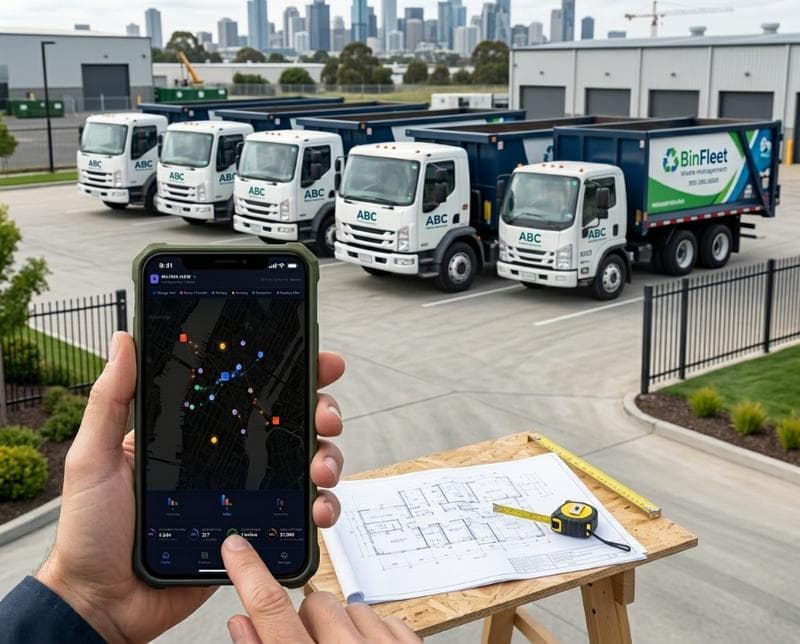
The moment you add a second truck, manual scheduling spreadsheets and text message coordination stop working. You need a centralized system where all jobs, driver locations, customer details, and payment status live in one place. A modern dispatch platform lets you assign jobs to available trucks in seconds, send automatic SMS updates to customers about arrival windows, and track whether drivers are on-time or delayed. Without this layer, you'll spend more time on the phone coordinating than actually growing revenue. The platform becomes your operational backbone—it's not optional, it's the infrastructure that lets two trucks operate as efficiently as one person managed before.
Beyond just assigning jobs, a good system prevents double-booking, tracks empty container inventory across locations, and shows you real-time profitability per job. When you're scaling, visibility into which routes make money and which ones hemorrhage fuel costs becomes critical. Request a demo to see how operators are managing multiple trucks without the chaos of a second job spent on logistics. Investing in software before scaling saves you from hiring a full-time dispatcher prematurely—and it keeps customer experience consistent even as operations get complex.
Hire and Train Your First Crew Members
Scaling means delegating, and that starts with recruiting reliable drivers who represent your brand. Most successful dumpster rental owners hire their first driver before buying the second truck—this lets you validate your operations model with help. Look for people with clean driving records, mechanical aptitude (they'll encounter equipment issues in the field), and customer-facing skills. The initial hire doesn't need to be a long-haul veteran; someone who's driven delivery trucks or worked in field service and is hungry to learn your specific process often outperforms someone with dumpster industry experience but bad habits. Pay competitively, offer clear performance metrics, and make the role feel like growth, not just labor.
Your first crew hire also reveals gaps in your processes that you never noticed working alone. They'll ask questions about dispatch priorities, container maintenance standards, and how to handle customer complaints—and their confusion is a gift because it shows you where documentation and training need to improve. Build a simple one-page operations guide covering daily routine, safety protocols, and customer communication standards. This document scales with you; as you add more drivers, it becomes your training template and performance baseline.
Optimize Your Container Inventory and Maintenance Cycle
A common scaling trap is underestimating the working capital needed for containers and equipment. If you're running at 70% utilization, you need roughly 1.4 containers for every truck—meaning a second truck doesn't just need a second vehicle, it needs 2-3 additional dumpsters to maintain service levels and account for containers in transit, undergoing service, or waiting for pickup. Each dumpster represents capital sitting on a yard or in customer driveways, generating no immediate return. Calculate your inventory carefully: total weekly jobs multiplied by average rental duration divided by number of trucks tells you exactly how many containers you need. Undercounting inventory leads to customer wait times and lost jobs; overcounting ties up cash and yard space.
Maintenance is equally critical as you scale. A single operator can visually inspect and spot-check their truck. With two trucks and growing, you need a basic preventive maintenance schedule—oil changes, tire rotations, brake checks—tracked in your dispatch system or a simple spreadsheet. Unexpected downtime for mechanical repair is the fastest way to break customer trust and lose the revenue advantage of your second truck. Set aside 8-10% of equipment revenue for maintenance reserves, and build relationships with reliable mechanics who can turn work around quickly.
Implement a Payment and Invoicing System That Scales
When you're operating solo, cash or Venmo might work fine. At scale, this approach creates accounting nightmares, cash flow gaps, and customer disputes. Implement a system that lets customers pay at booking, on-demand pickup, or on invoice—with automatic SMS reminders for overdue accounts. This sounds basic, but it's the difference between wondering where money went and having clear cash flow visibility week by week. A scalable invoicing system also automates late-fee tracking, generates aging reports, and flags customers who consistently pay late before they become bad debt problems.
Equally important: separate what you bill customers from what you pay yourself. Create clear P&L structure tracking revenue by service line (pickups, swaps, disposal fees), direct costs (fuel, labor), and overhead (yard rent, insurance, dispatch software). As you scale, you'll need this data to make smart decisions about pricing, which routes to keep or drop, and where to hire next. Use this financial clarity to set scaling milestones—don't buy truck three until truck one and two are both consistently profitable.
Plan Your Second Location Before Truck Three
Scaling geographically is often overlooked until you're serving customers 30+ minutes from your yard, burning fuel and time on drive time. The move from a single yard to a satellite location (even just a leased lot for container staging) usually happens between truck two and truck three. Analyze your current job clusters—where are 70% of your jobs? A geographic analysis might show you're sending trucks far outside your natural territory, which means a secondary yard in that direction could serve more customers, reduce per-job drive time, and improve profitability instantly. This isn't about massive expansion; it's about serving your existing demand more efficiently.
A secondary yard doesn't need to be fancy—it could be a leased paved lot where you stage containers and park trucks overnight. The cost is typically 30-50% of your primary yard rent, and the efficiency gain often pays for itself within months. Once you're managing two locations and multiple trucks, your dispatch system becomes even more critical because drivers need to know which yard to grab containers from, and you need visibility into inventory across both sites.
Measure Growth With the Right Metrics
Revenue growth is vanity; profit per truck is real. As you scale, track these metrics religiously: gross profit per truck per week, average revenue per job, fuel cost as a percentage of revenue, driver utilization (jobs per truck per day), and customer acquisition cost. Most operators scaling from one to three trucks see their per-truck profit initially dip 5-15% as they absorb hiring, system costs, and inefficiencies. This is normal, but it's temporary—when processes mature and truck utilization climbs to 85%+, per-truck profit typically exceeds your original single-truck baseline. If you're not seeing that recovery within 6 months of adding the second truck, something is wrong operationally (over-hiring, poor pricing, or broken dispatch process).
Use these metrics to guide your next move. Don't scale to truck four until you've proven truck three is hitting your target profit margin. This disciplined approach prevents the common trap of growing vanity revenue while profits stagnate.
FAQ: Common Questions From Scaling Operators
How much should I spend on dispatch software when scaling from one truck to two?
A modern dispatch platform typically costs $300-800/month depending on features and job volume. At two trucks doing 40+ jobs per week, the cost is roughly $5-10 per job—less than one poorly routed delivery that burns extra fuel. It's worth it. Without software, you'll hire a part-time dispatcher within 6 months anyway, which costs far more.
Should I lease or buy my second truck and containers?
Leasing preserves cash and flexibility, making it ideal for proving demand in new markets. Buying makes sense once you've validated a route is stable and profitable. Most operators start with one owned asset and one leased asset during scaling, then shift to owning as utilization proves sustainable.
What's the biggest mistake operators make when scaling?
Hiring too fast. One driver can make sense at two trucks; two drivers at three trucks often feels right but tanks profitability if demand isn't there to keep both busy. Validate utilization first, then hire. Temporary overutilization is better than permanent underutilization.
How do I know when to move to a second yard?
When more than 30% of your jobs are 30+ minutes from your primary yard, or when your yard is consistently at 80%+ capacity. A satellite location pays for itself through reduced fuel waste and faster service times. This usually happens between truck two and truck three.
Start Scaling With Systems, Not Just Equipment
Scaling a dumpster rental business from one truck to multi-fleet isn't about buying more equipment—it's about building operations that work without you in every job. The operators who scale smoothly are the ones who implement dispatch systems, hire disciplined crews, and track financial metrics before adding the second truck. They view scaling as a systematic process, not a revenue grab. If you're ready to take the next step, start with a clear operational foundation. Learn how BinFleet helps operators manage the complexity of multi-truck scaling, or schedule a free demo to see the platform in action. Your scaling future depends on the systems you build today.
Ready to Streamline Your Operation?
See how BinFleet AI helps waste haulers save time, cut costs, and grow.
Request a Free 30-Day TrialRelated Articles
How a Dumpster Rental CRM Transforms Customer Retention & Revenue Growth
How a Dumpster Rental CRM Transforms Customer Relationships Into Revenue Growth