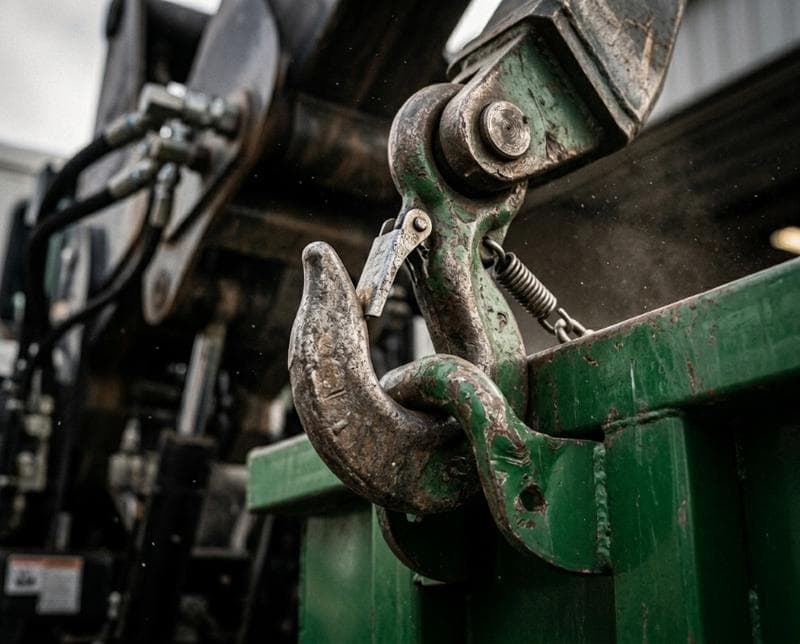
How to Scale a Dumpster Rental Business from One Truck to Multi-Yard Operations
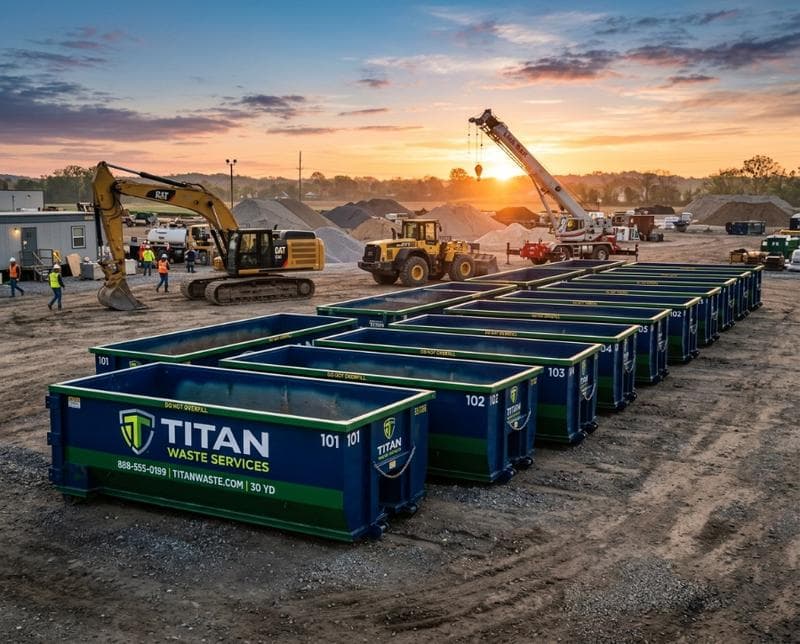
Why Most Dumpster Rental Businesses Plateau at One Truck
Many dumpster rental owners hit a ceiling around $200K–$400K annual revenue without realizing why growth suddenly stops. The owner becomes the dispatcher, the estimator, the driver, and the problem-solver—all at once. Every decision flows through one person, and every mistake costs the owner's time, not someone else's. At this stage, taking on another truck actually feels harder, not easier, because it means hiring the first employee and trusting someone else to represent your business.
The real bottleneck isn't demand or market size; it's operational infrastructure. A solo owner can manage 30–40 active containers because they know every customer, every delivery route, and every piece of equipment by heart. Add a second driver and second truck without systems in place, and you've created chaos. Dispatch becomes guesswork, billing gets delayed, customers complain about delays, and the owner works 70-hour weeks to compensate. This is when most haulers either hire poorly and blame growth or stay small and blame the market.
Build Your Operations Foundation Before You Scale Equipment
The first hire should never be a driver. Before you add a second truck, you need documented processes for dispatching, customer communication, maintenance, and billing. Write down exactly how you route deliveries today, how you follow up with past-due invoices, how you schedule preventative maintenance, and how you onboard new customers. These procedures don't have to be perfect—they just have to exist in writing so someone else can follow them. Most solo operators skip this step because they're trapped in daily survival mode, but this is exactly when you need to invest a few weekends documenting your playbook.
Implement basic software systems before adding headcount. A dumpster rental management platform that handles routing, customer SMS updates, invoicing, and container tracking becomes exponentially more valuable once you have multiple vehicles in the field. Without it, a second driver creates twice the coordination chaos. With it, a second driver simply adds revenue without doubling your stress. Many owners delay technology investment thinking they'll outgrow their current system, but the opposite happens—they become so overwhelmed they never scale to need it.
Hire Your First Employee: The Right Role and Recruit
The first full-time employee should be an operations or dispatch coordinator, not a driver. This person handles customer calls, schedules deliveries and pickups, coordinates maintenance, and manages the fleet calendar. You keep the estimating, the sales, and the relationship-building. A good coordinator immediately frees up 15–20 hours per week of your time, which you reinvest into business development and systems refinement. Look for someone with customer service experience, basic computer skills, and a willingness to learn your business from scratch. This is not a glamorous role, but it's the lever that unlocks everything else.
Compensation matters here because you're asking someone to be your eyes and ears while you're not in the office. A coordinator earning $28K–$38K annually with clear growth potential will outperform a cheap hire who resents the work. Offer stability and a path forward—this person should still be with you in year three if they perform. Many small haulers underpay early employees out of cash-flow fear, then wonder why they get high turnover and poor execution. Your operations coordinator sets the tone for quality; pay accordingly.
Add Your Second Truck with Proven Demand
Never buy a second truck hoping it will generate revenue. Add a second truck only when you're consistently turning away customers or holding delivery requests for 5+ days. If your single truck is booked 80% of available days and you have a waiting list, you have proof of concept. At that point, a second vehicle starts paying for itself immediately because demand already exists. Many owners add capacity speculatively, then discover they don't have the sales, the market, or the operational backbone to fill it.
When you do add that second truck, assign it to your best driver if that's you, or your best technician if you've hired one. The second truck should trace familiar routes or service known accounts to reduce operational variables. You're not trying to conquer new territory immediately; you're trying to prove you can execute the same service level with two units instead of one. Once your coordinator and driver are synced and your systems are handling the volume, then you can explore geographic expansion or vertical growth into a second location.
Implement Dispatch and Routing Software to Scale Without Chaos
Dispatch software designed for waste haulers becomes non-negotiable once you have multiple trucks. Manual spreadsheets and phone calls work for one vehicle but create bottlenecks fast. A platform that lets your coordinator assign pickups and deliveries in real time, tracks container locations on a map, sends customers automated SMS updates, and consolidates all billing in one place transforms how efficiently you operate. The software literally pays for itself through reduced drive time waste, fewer missed appointments, and faster invoice turnaround.
Beyond efficiency, dispatch software gives you visibility that you simply cannot have otherwise. You can see utilization by truck, track repeat customers, identify your most profitable routes, and spot maintenance issues before they become breakdowns. This data becomes increasingly valuable as you scale because it reveals where to focus your next hire, which markets to push harder, and where margins are getting squeezed. Many growing haulers realize too late they've been flying blind operationally, making decisions on gut feel instead of actual numbers.
Optimize Pricing and Margins Before You Add a Third Truck
Growing from two to three trucks exposes margin problems that were hidden at smaller scale. Every additional vehicle magnifies the impact of underpricing or bloated delivery costs. Before adding a third truck, audit your current pricing against your actual cost per delivery. Factor in fuel, driver wages, truck payment, insurance, maintenance, and dispatcher labor. If you're delivering a 10-yard bin for $175 in a market where $225 is standard, and your cost per delivery is $140, you're building a business that fails at scale. One truck with thin margins is survivable; three trucks with thin margins is a death spiral.
Use your historical data to segment customers by profitability. Are residential customers actually more profitable than commercial, or are you just more comfortable with them? Are certain routes underperforming? Is seasonal demand forcing you to carry capacity you can't use year-round? These questions matter more when you're considering a third truck because that vehicle represents a permanent cost commitment. Many owners avoid this analysis because the answers are uncomfortable, but scaling forces the issue—you either tighten operations or you go broke doing it.
Plan Your Multi-Yard Strategy: Where, When, and Why
A second location should only happen when you're operating three to four trucks out of your existing yard and you've exhausted geographic accessibility from that hub. Adding a second yard just to add a second yard is a capital-intensive distraction. Every new location carries overhead—rent, utilities, equipment security, another set of compliance paperwork, another yard manager—that only makes sense if the remote location can immediately run two to three trucks efficiently from day one. Many emerging haulers open a second yard too early with one truck stationed there, and suddenly they're splitting overhead across low utilization instead of consolidating into profitability.
When a second location makes sense, replicate your operational model exactly. Use the same software, the same pricing framework, the same coordinator-first hiring strategy. Many owners treat the second location like a separate business instead of a scaled replica, which creates confusion, inconsistent customer experience, and management overhead. Your goal is to grow predictably by multiplying a proven model, not by inventing new approaches at each location. Learning from operators who've successfully scaled can short-circuit the mistakes that sink second-location attempts.
Frequently Asked Questions
How much cash reserve do I need before adding a second truck?
You should have 6–8 weeks of operating expenses in reserve before buying a second truck—roughly $15K–$25K depending on your location and truck cost. This buffer covers unexpected maintenance, a slow month, and bridge financing if a customer delays payment. Scaling without reserve forces you to make desperate decisions about service quality or pricing when something breaks unexpectedly.
Should I hire a driver or a dispatcher first?
Hire the dispatcher first. A good dispatcher multiplies your existing truck's efficiency while freeing you to focus on sales and strategy. Hiring a second driver without dispatch support just creates confusion and increases your stress, not your revenue. Once your operations are tight with two people, then add drivers as demand requires.
When should I invest in dispatch software versus managing everything myself?
Invest in software the moment you hire your first operations coordinator. Manual systems break down fast once multiple people are coordinating, and the coordinator's time spent on spreadsheets is time not spent on customer communication or scheduling accuracy. Good software pays for itself within three months in reduced wasted drive time and faster billing cycles.
How do I retain customers during the scaling phase?
Maintain service levels obsessively during growth. Customer complaints often spike during transition periods because new staff are learning or systems aren't yet optimized. Set up automated SMS updates, keep response times tight, and personally check in with top accounts as you hire. One dissatisfied customer at scale becomes five through word-of-mouth, so protect your reputation fiercely during growth.
Taking the Next Step
Scaling a dumpster rental business from one truck to multi-vehicle operation is entirely achievable if you build systems before you build headcount. Start with documented processes, add an operations coordinator, prove demand for a second truck, implement dispatch software, and protect your margins. The operators thriving in 2026 aren't the ones with the most trucks—they're the ones running them with the fewest problems and the tightest margins. See how BinFleet helps scaling haulers manage this transition with dispatch, customer communication, and financial visibility built for multi-yard growth.
Ready to Streamline Your Operation?
See how BinFleet AI helps waste haulers save time, cut costs, and grow.
Request a Free 30-Day TrialRelated Articles
How a Dumpster Rental CRM Transforms Customer Retention & Revenue Growth
How a Dumpster Rental CRM Transforms Customer Relationships Into Revenue Growth