How to Scale Your Dumpster Rental Business from One Truck to Multiple Locations
Understand Your Unit Economics Before You Scale
Before adding your second truck, you need absolute clarity on how much money each truck actually makes. Many owners assume they know their unit economics but haven't actually calculated the true profit per container per day, accounting for fuel, maintenance, labor, and overhead allocation. Pull six months of data and calculate your cost per pickup, revenue per pickup, average container utilization, and the percentage of revenue that goes to fuel, insurance, and driver wages. This isn't busy work—it's the foundation of every scaling decision you'll make.
Once you understand your true margin, you can model what happens when you add a second truck. The math should show you whether you're adding profitable capacity or just adding cost. If your first truck operates at 70% utilization and you're still profitable, great. If it's 40% and you're barely breaking even, scaling will only amplify that problem. Use this baseline to set realistic targets for truck two, and don't add it until you've proven the model works.
Get Your Operational Systems in Place First
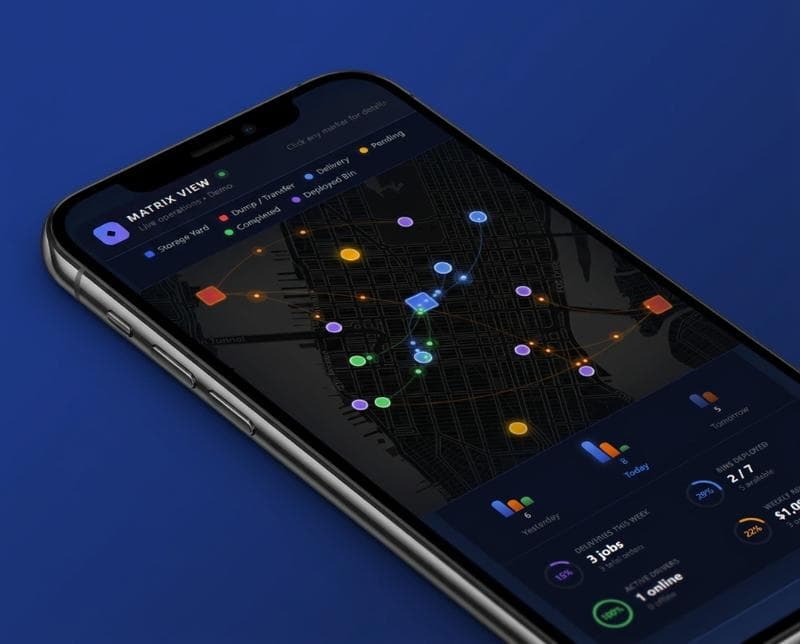
Scaling fails when owners try to manage two trucks the way they managed one. You can run a single truck on a phone call and a spreadsheet, but two trucks demand dispatch optimization, route efficiency, customer communication protocols, and driver accountability. Before hiring a second driver, implement a platform that gives you visibility into where your trucks are, what containers are staged where, and which customers are waiting for service. The operational stress of a second truck without systems isn't just inconvenient—it's the reason many owners sell trucks back or abandon growth plans entirely.
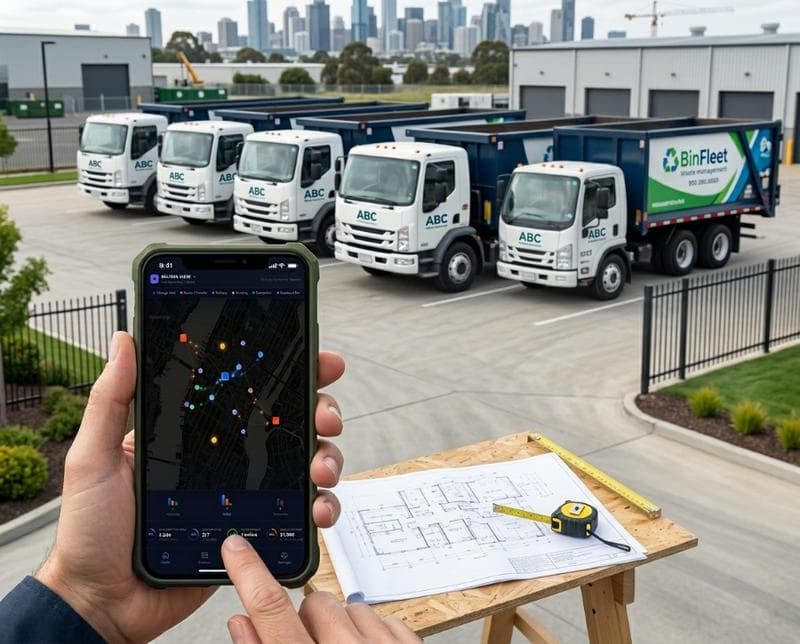
A good operations platform eliminates the panic of "where is my truck" and "did that pickup get scheduled." Real-time dispatch, GPS tracking, and automated SMS updates to customers reduce friction between your team and your customers. When your dispatcher can see available trucks on a map and assign jobs in seconds instead of making phone calls, you're not just becoming more efficient—you're creating the foundation to manage ten trucks the same way you manage two. Start with a free demo to see how routing and dispatch work at scale.
Hire Your First Dedicated Dispatcher Before Your Second Driver
The temptation is to buy the second truck and hire a second driver. But your real bottleneck is dispatch and customer coordination. A dispatcher managing two trucks, scheduling pickups, handling customer calls, and coordinating container placement is worth more than a second driver working an inefficient route. Your first driver should be able to handle 6-8 containers per day with proper routing; your second driver, if you give them an optimized route and a dispatcher who eliminates downtime, should hit similar numbers from day one.
The dispatcher role isn't glamorous, but it's where leverage lives. A good dispatcher knows customer preferences, understands route geometry, manages driver communication, and handles customer exceptions before they become problems. They also own the data you need to make smarter decisions—which neighborhoods need more capacity, where you're leaving money on the table, and which customers are actually profitable. Your second employee should optimize your first truck before you even think about a second truck.
Expand Your Service Area Strategically, Not Everywhere
The second truck tempts you to serve twice as much area. Resist this. Instead, pick one geographic cluster adjacent to your current territory and dominate it. A concentrated fleet in three zip codes beats a scattered fleet across ten. Concentrated service means shorter travel times between stops, better utilization, easier driver management, and the kind of market presence that generates word-of-mouth. When customers in a neighborhood see your trucks twice a week, you own that market perception in a way a scattered operator never will.
Expansion planning should be driven by density, not hope. Look at your best-performing routes and the white space around them. If your first truck operates in a neighborhood with fifty active customers, your second truck should target the five neighborhoods closest to that cluster. This creates a geographic moat that's hard for competitors to break into and makes dispatch significantly simpler. You'll also find that concentrated markets attract better drivers because routes are predictable and daily pay is consistent.
Nail Driver Retention and Culture Before Scaling Further
Your drivers are your brand. A driver who's been with you three years knows every customer's preferences, communicates professionally, and doesn't need constant supervision. A driver who stays three months creates chaos, loses customers, and forces you to re-educate the next hire. Scaling from one truck to two is when owner-operators often realize their driver economics are broken—they're not paying enough, they're not treating drivers well, or they're creating miserable work environments that guarantee turnover.
Before truck three, stabilize your driver situation. This means competitive pay, predictable routes, clear communication of expectations, and treating drivers like the skilled professionals they are, not just bodies in a cab. Calculate what it actually costs to hire, train, and turn over a driver, then compare that to the cost of paying them five percent more to stay. Most owners find that driver retention investments pay for themselves in weeks. Read our operations guide for more on scaling with the right team in place.
Build Financial Cushion and Plan for Growth Capital
Each new truck requires capital: the truck itself, insurance, maintenance reserve, and working capital to carry receivables. The easiest mistake is undercapitalizing growth, taking on a second truck while still paying off the first, and suddenly having a cash flow crisis when a truck breaks down or a major customer delays payment. Before scaling, build a reserve that covers two months of fixed costs plus surprise repairs. This isn't conservative—it's professional management.
Calculate the total investment required for truck two: vehicle cost, insurance, fuel setup, maintenance reserve, and working capital for first month operations. Then build a timeline showing when truck two pays for itself and generates profit. If the math shows two years to breakeven, that's real information. Many owners find that financing the truck makes sense if the unit economics work, but buying trucks entirely from cash while underfunding operations is the fastest way to fail at scaling.
FAQ: Scaling Your Dumpster Rental Operation
How do I know when I'm ready to add a second truck?
Your first truck should be running at 60-70% capacity consistently for at least three months, and you should have a documented pipeline of customers you can't serve. If you're just trying to reduce your workload, that's not a scaling signal—that's burnout. True readiness means your first truck is generating profit, your operations are systematized, and you have proven demand for the additional capacity.
Should I buy or lease my second truck?
That depends on your cash situation and growth certainty. Buying locks in your cost structure and gives you equity, but it requires capital upfront and locks you into fixed payments even if demand softens. Leasing preserves capital and gives you flexibility to return the truck if the market changes, but it's more expensive over time. Most growing operators buy once they've hit three trucks, but lease the second and third while validating demand.
What metrics should I track to manage a multi-truck operation?
Track containers placed, containers picked up, revenue per truck per day, utilization rate (occupied days vs. available days), fuel cost per mile, and customer acquisition cost by geography. Without these metrics, you're flying blind. A good dispatch system like BinFleet surfaces all of this automatically, so you can make decisions based on data, not intuition.
How do I prevent my operations from falling apart as I scale?
Invest in systems before you need them. The time to implement dispatch software, GPS tracking, and automated customer communication is when you have one truck, so scaling to two or three trucks doesn't feel like chaos. Owners who try to implement systems while managing rapid growth end up overwhelmed. Systems should scale with you, not fight against you.
Ready to Streamline Your Operation?
See how BinFleet AI helps waste haulers save time, cut costs, and grow.
Request a Free 30-Day TrialRelated Articles
How to Scale a Dumpster Rental Business from One Truck to Multi-Yard Operations
How to Scale Your Dumpster Rental Business: A Step-by-Step Growth Plan