How to Scale Your Dumpster Rental Business From One Truck to a Multi-Truck Operation
Know Your Current Profitability Before You Expand
Most dumpster rental owners think scaling means simply buying another truck. The reality is harder: you can't scale a broken business model faster and expect different results. Before adding capacity, you need to understand exactly which routes, customer types, and service intervals actually make you money. Many operators discover they're running at thin margins on certain jobs because they underpriced five years ago or never adjusted for fuel costs and labor increases.
Pull your last 12 months of data and analyze profit per truck, per route, and by customer segment. Calculate your true cost per haul including fuel, maintenance, labor, insurance, and overhead allocation. If a single truck is barely breaking even or generating under 20% margins, a second truck amplifies the problem instead of solving it. Use this baseline to set pricing and volume targets that make expansion financially sound.
Build Systems Before You Build Your Fleet
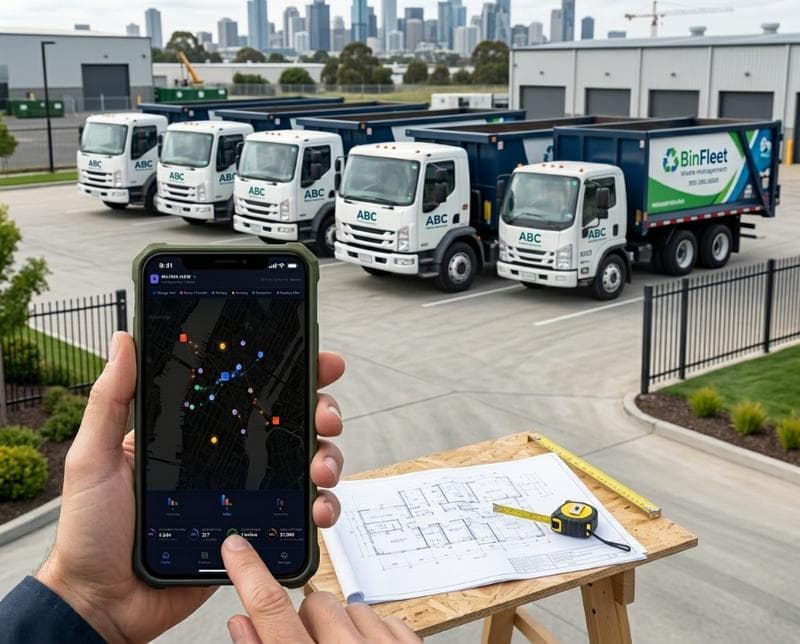
The painful truth: your current way of managing orders, scheduling pickups, and tracking containers works for one truck because you know it inside and out. It doesn't scale. When you hire a dispatcher or a second driver, you can't rely on mental notes, text messages, or sticky notes on a dashboard. You need documented processes, clear communication tools, and real-time visibility into where containers are, which orders are pending, and what your team is actually doing.
This is where software becomes essential, not optional. A platform like BinFleet gives you centralized order management, automated dispatching, driver tracking, and customer communication in one place. Before hiring your second driver, implement the systems that let you manage five. The time you invest now in process documentation and tool selection eliminates the chaos that kills growth—missed pickups, double-booked containers, drivers sitting idle, and frustrated customers.
Price Right, Then Buy Your Second Truck
Pricing is the single biggest lever in scaling. Too many owners underprice because they're competing on fear—afraid to lose a customer or unsure of their value. When you add a second truck, those thin margins become impossible to manage. You need pricing that covers your rising labor, equipment, and operational costs while leaving real profit for growth.
Review your current pricing against local market rates and your cost structure. If you're below market, start raising prices on renewals and new customers immediately. A 10-15% increase hurts less than you think when communicated clearly—most customers understand inflation and value reliable service more than they obsess over price. Once your first truck runs at healthy margins (25-35%), the second truck investment becomes a logical, safe decision backed by proven unit economics.
Hire and Train Your Dispatcher First, Not Your Driver
New owners think scaling means hiring a second driver. Wrong. You need a dispatcher before you need a second truck. A good dispatcher optimizes routes, manages customer communication, tracks inventory in real time, and keeps drivers moving efficiently. Without this layer, your new driver sits idle, takes inefficient routes, and you lose the margin gains you're counting on. Your business owner hat gets heavier, not lighter, when you're juggling two drivers yourself.
Look for someone with phone skills, organizational ability, and customer service instinct—not necessarily waste industry experience. Train them on your processes, your software, and your service standards. Give them authority to problem-solve and make decisions within guardrails. A strong dispatcher can often add 30-40% more revenue from your existing trucks before you need that second vehicle. When you do hire a second driver, your dispatcher is ready to manage both efficiently, and you can focus on growth instead of operations.
Invest in the Right Equipment and Location Strategy
Buying a second truck isn't just about the truck. Consider whether your current yard can handle two vehicles, maintenance equipment, and container storage. A cramped, inefficient yard becomes a bottleneck fast. You might need expanded yard space, better container organization, a quick-lube bay, or a wash station. These are expensive surprises that derail scaling if you haven't planned for them. Talk to yard operators who've grown to your target size and ask about their space regrets.
On equipment, resist the temptation to buy used trucks cheap. A newer vehicle with better reliability, fuel efficiency, and warranty support actually costs less per year when you factor in downtime and repairs. Consider whether a second location or satellite yard makes sense for your geography. Some markets support multiple yards that operate semi-independently; others do better with a central yard and longer routes. This decision shapes your team structure and operational complexity, so think it through before committing.
Track Metrics That Actually Matter for Growth
Once you're managing multiple trucks, you can't rely on gut feel anymore. You need dashboards showing revenue per truck, average hauls per day, idle time, customer acquisition cost, and retention rate. These metrics tell you if your second truck is working hard or becoming an expensive mistake. Many owners add capacity and never measure whether it's actually profitable, then keep throwing money at problems that data would have caught early.
Set up weekly reviews of key metrics with your dispatcher. Which routes are most profitable? Which customers generate repeat business? What's your actual cost per service call? This data-driven approach separates scaling that works from scaling that drains cash. Tools like BinFleet give you these insights automatically, so you're not spending hours building spreadsheets. You're spending time acting on what the numbers tell you.
FAQ: Common Questions From Growing Haulers
When should I add a second truck if I'm running one truck at capacity?
Add a second truck when your first truck generates healthy profit margins (25-35%) and you have consistent demand from existing and incoming customers to fill it reasonably well. The worst time to scale is when you're busy but unprofitable—more volume just loses more money. If you're at capacity but running thin, raise prices first, optimize routes, and increase hauls per day before buying more equipment.
How much should I budget for adding a second truck and related costs?
Beyond the truck purchase, budget for a dispatcher salary (typically $35-50k annually), yard space expansion if needed, insurance increases, additional containers or roll-offs, and software tools. Total first-year cost is often $80-150k depending on your market and truck type. Build a financial model showing when that investment breaks even based on your pricing and projected hauls per month.
What software should we use if we're scaling beyond one truck?
You need dispatch and order management software that lets you see all jobs, optimize routes, track containers, communicate with customers via SMS, and manage payments and invoicing in one place. BinFleet offers a demo so you can see how it simplifies multi-truck operations without the chaos of manual scheduling and spreadsheets.
How do I know if my current pricing is holding back growth?
If you're consistently at capacity with strong margins, you might be underpriced—competitors are likely charging 10-20% more. If you're at capacity but struggling to profit, you're definitely underpriced. Survey your local market, talk to equipment sales reps, and benchmark against regional haulers. Then increase prices strategically on renewals and new customers, and watch whether you maintain volume. Most haulers find they lose less business than they fear.
The Path Forward: Scaling With Confidence
Scaling a dumpster rental business from one truck to multiple trucks isn't complicated, but it requires discipline. Understand your true profitability, build repeatable systems and processes, price to support growth, hire the right people in the right order, and measure what matters. Too many owners skip these steps and wonder why growth feels chaotic and unprofitable instead of exciting and sustainable.
The businesses that scale successfully treat operations like a science, not an art. They know their numbers, document their processes, invest in software and tools before they become bottlenecks, and make hiring decisions based on where the business actually needs support. If you're ready to grow but your current tools are holding you back, learn how BinFleet helps haulers manage multi-truck operations or start exploring how our platform can support your scaling plans with a free trial.
Ready to Streamline Your Operation?
See how BinFleet AI helps waste haulers save time, cut costs, and grow.
Request a Free 30-Day TrialRelated Articles
How a Dumpster Rental CRM Transforms Customer Retention & Revenue Growth
How a Dumpster Rental CRM Transforms Customer Relationships Into Revenue Growth