How to Scale Your Dumpster Rental Business from One Truck to Multi-Truck Operations
Growing a dumpster rental business from a single truck operation to a multi-vehicle fleet represents one of the most challenging transitions in the waste management industry. The leap from handling every customer call yourself to managing drivers, dispatchers, and multiple service areas requires fundamental changes in how you operate. Many owner-operators struggle with this transition because they try to scale without building the proper foundation first.
The difference between successful scaling and business failure often comes down to timing and preparation. Companies that grow too fast without proper systems collapse under their own weight, while those that move too slowly miss market opportunities. Understanding the right sequence of investments—from operational software to additional equipment—determines whether your expansion strengthens your business or creates operational chaos.
Building Your Foundation Before Expanding
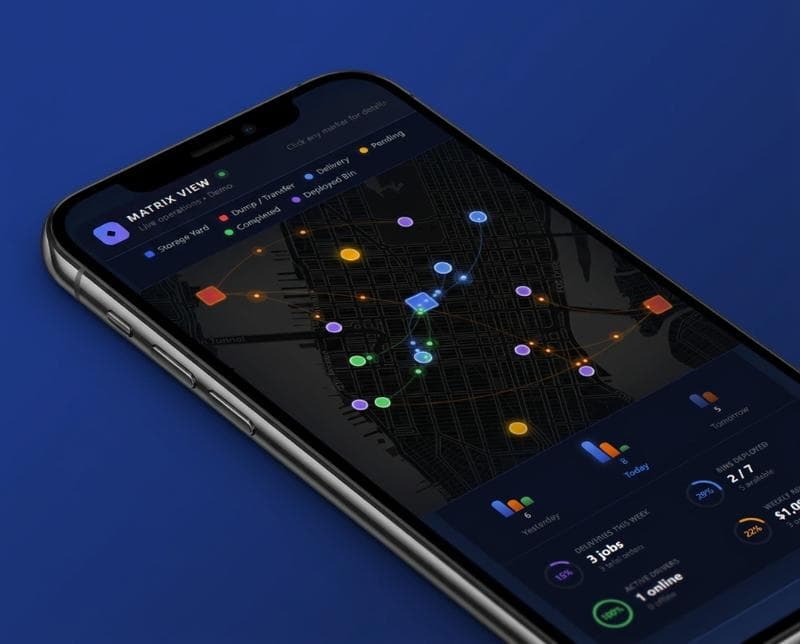
Before adding your second truck, you need systems that can handle increased complexity without requiring your constant oversight. Most single-truck operators manage everything through phone calls, text messages, and handwritten notes, but this approach breaks down quickly when you're coordinating multiple drivers and dozens of daily pickups. The foundation starts with route management software that can automatically optimize driver schedules and track container locations in real-time.
Your customer communication systems need equal attention during this foundational phase. Manual customer updates become impossible when you're managing 50-100 containers instead of 10-20. Automated SMS notifications for delivery confirmations, pickup reminders, and service updates free you from constant phone management while improving customer satisfaction. This technological foundation allows you to focus on strategic decisions rather than daily operational firefighting.
Strategic Equipment Investment Timing
The timing of your second truck purchase determines your financial flexibility during the critical early scaling phase. Many operators rush into equipment purchases before their first truck generates consistent positive cash flow, creating debt service pressures that limit operational flexibility. Smart operators wait until their utilization rates consistently exceed 80% and they have established customer contracts that justify additional capacity.
Container inventory expansion follows similar principles but requires more careful calculation. Each additional container represents both revenue opportunity and carrying cost, so your expansion should align with proven demand patterns rather than optimistic projections. Successful operators track their container turn rates by service area and customer type, using this data to determine optimal inventory levels before committing to large container purchases that tie up working capital.
Hiring and Training Your First Drivers
Your first driver hire represents a fundamental shift from technician to manager, requiring skills that most owner-operators haven't developed. The driver you hire needs more than CDL certification—they need reliability, customer service skills, and the ability to represent your brand without direct supervision. This means developing clear protocols for customer interactions, safety procedures, and problem resolution before putting anyone behind the wheel.
Training systems become crucial when you can't personally oversee every delivery and pickup. Successful companies create driver checklists for common scenarios, establish communication protocols for unusual situations, and implement GPS tracking to monitor route efficiency and customer service quality. Your training investment in the first driver creates the template for all future hires, so cutting corners here multiplies problems as you continue scaling.
Managing Multi-Location Service Areas
Expanding beyond your original service area requires careful market analysis to avoid overextending your operational capabilities. Each new service area adds complexity to route planning, increases driver travel time between jobs, and may require different pricing strategies based on local competition. Smart expansion focuses on adjacent areas where you can achieve reasonable route density rather than scattered locations that create logistical nightmares.
Service area management becomes significantly easier with proper dispatching software that can account for traffic patterns, driver locations, and customer time windows simultaneously. Modern fleet management platforms handle these calculations automatically, but you need to understand the underlying principles to make strategic decisions about market expansion. The goal is creating service routes that maximize revenue per truck while maintaining reliable customer service across all areas.
Financial Planning for Sustainable Growth
Cash flow management becomes exponentially more complex as you scale, with equipment payments, payroll, insurance, and maintenance costs creating multiple financial obligations that must be balanced against variable revenue streams. Many growing companies fail because they focus on gross revenue growth while ignoring the working capital requirements of increased operations. Successful scaling requires maintaining 90-120 days of operating expenses in reserve to handle seasonal fluctuations and unexpected equipment costs.
Pricing strategy evolution supports sustainable growth by ensuring each new customer contributes positively to your fixed cost structure. As you add trucks and drivers, your cost per delivery changes, requiring regular pricing analysis to maintain profitability. Companies that fail to adjust pricing during scaling often find themselves with impressive revenue numbers but deteriorating profit margins that threaten long-term viability.
Technology Integration for Operational Efficiency
The technology that supports a single-truck operation differs fundamentally from what you need to manage a fleet. Manual scheduling, paper-based tracking, and phone-only customer communication create bottlenecks that prevent efficient scaling. Integrated software platforms that handle scheduling, dispatching, customer communication, and financial tracking become essential investments rather than optional upgrades when you're coordinating multiple vehicles and drivers.
Implementation timing matters as much as technology selection. Introducing new systems during rapid growth creates training burdens and potential service disruptions that can damage customer relationships. Successful operators implement scalable technology before they desperately need it, allowing time for proper training and system optimization while operations are still manageable. This proactive approach ensures technology supports growth rather than creating additional complexity during critical scaling phases.
Growing your dumpster rental business from one truck to a multi-truck operation requires systematic planning, strategic investments, and operational discipline. The companies that succeed treat scaling as a methodical process rather than an opportunistic rush, building each component of their expanded operation on solid foundations that support continued growth.
FAQ
How long should I wait before buying my second truck?
Wait until your first truck consistently operates at 80% utilization and you have 90 days of operating expenses in reserve. This typically takes 12-18 months of steady operations. Rushing this purchase creates cash flow pressure that limits your ability to handle unexpected challenges during the scaling process.
What's the biggest mistake when hiring your first driver?
The biggest mistake is hiring based solely on CDL certification without evaluating customer service skills and reliability. Your first driver represents your company without your direct oversight, so personality and work ethic matter more than just technical driving ability. Poor first hires can damage customer relationships and create operational problems that are expensive to fix.
How many containers should I buy when scaling up?
Plan for 1.5-2 containers per truck for steady operations, but start with minimum viable inventory and expand based on actual demand patterns. Monitor your container turn rates closely—containers that sit unused for more than two weeks represent poor capital allocation that could limit growth opportunities.
When should I invest in fleet management software?
Invest in fleet management software before adding your second truck, not after. The complexity of coordinating multiple drivers, optimizing routes, and maintaining customer communication increases exponentially with each vehicle. Software implementation takes 30-60 days, so start the process while you can still manage operations manually if needed.
Ready to Streamline Your Operation?
See how BinFleet AI helps waste haulers save time, cut costs, and grow.
Request a Free 30-Day TrialRelated Articles
How to Scale Your Dumpster Rental Business: A Step-by-Step Growth Plan
How to Scale Your Dumpster Rental Business from One Truck to Multi-Truck Operations