How to Start a Dumpster Rental Business: A Practical Playbook for 2026
Understand Your Market and Validate Demand
Before you buy a single container, spend time understanding your local market. Drive through your target service area and look for construction sites, property management companies, demolition contractors, and commercial facilities. Talk to five to ten potential customers—contractors, property managers, landscapers—and ask what they currently pay for dumpster rentals and what frustrates them about their current provider. This isn't about perfect market research; it's about confirming that people actually need your service and will pay for it.
Your local economics matter enormously. Landfill tipping fees, fuel costs, and labor rates vary by region and directly impact your margins. A profitable operation in a rural area might struggle in an expensive metro market, or vice versa. Call your local landfill or transfer station, ask about tipping fees and operating hours, and map out your service radius realistically. If your nearest disposal point is 45 minutes away, your unit economics look very different than if it's ten minutes down the road.
Secure Licensing, Permits, and Insurance
This is unglamorous but critical. You'll need a business license from your city or county, and most states require a waste hauler permit or similar authorization. Some jurisdictions require environmental permits, particularly if you plan to operate a yard or staging area. Call your state's environmental agency and your local health department to understand what applies to your operation. Don't skip this step—fines and shutdown orders are expensive ways to learn you needed a permit.
Insurance is non-negotiable. You need general liability coverage, commercial auto insurance for your haul trucks, and workers' compensation if you hire employees. Get a pollution liability policy as well, since container rental involves transporting waste. A good insurance broker familiar with waste management can guide you, but expect to budget $3,000 to $8,000 annually for basic coverage when you're starting out. This cost scales as you grow, but it protects your entire business if something goes wrong.
Choose Your Equipment and Container Strategy
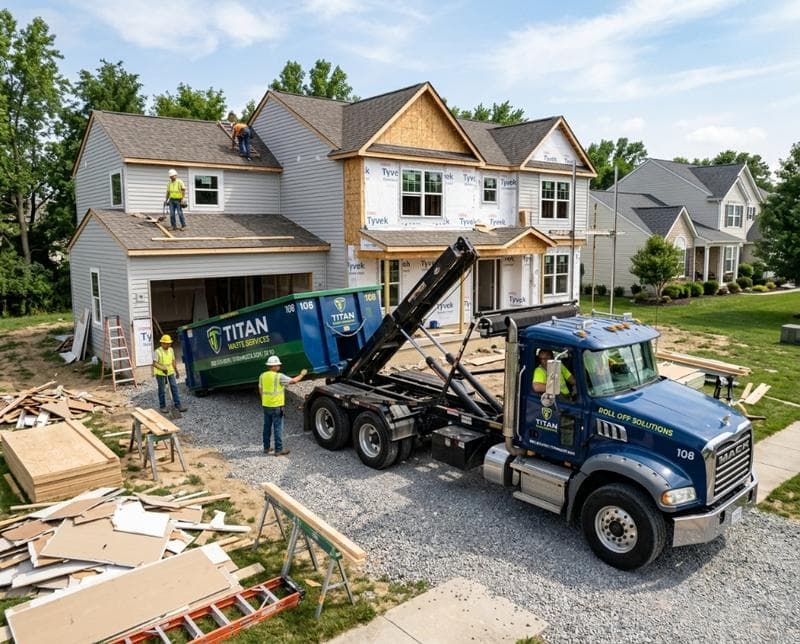
Most roll-off dumpster businesses start with a mix of 10-, 15-, and 20-yard containers. Ten-yard boxes work well for residential cleanouts and small renovation jobs. Fifteen-yard containers are the workhorse for mid-size construction projects and commercial debris. Twenty-yard boxes handle larger demolition and commercial jobs. Buy used containers to start—a used 20-yard container runs $1,500 to $3,000, while new ones cost $5,000 to $7,000 each. Quality matters; inspect for rust, structural integrity, and safe door operation before you buy.
You'll also need at least one roll-off truck (a flatbed with a hydraulic lift system). Used trucks in working order run $15,000 to $35,000, depending on age and condition. A newer truck might cost $45,000 to $65,000 but will have fewer breakdowns during your critical launch phase. Some operators lease trucks initially to preserve cash flow, though ownership usually makes sense once you reach consistent utilization. Calculate how many containers you need based on your target revenue and average rental duration—if customers keep bins for 7 days on average and you want $5,000 weekly revenue, you'll need roughly 10-12 containers in circulation.
Set Pricing That Protects Your Margins
Pricing is where many new haulers stumble. They undercut competitors to win business, only to discover they're losing money after accounting for fuel, labor, maintenance, and disposal costs. Start by calculating your true all-in cost per haul: container depreciation, truck fuel, driver labor, tipping fees, maintenance, insurance, and overhead. If your cost to deliver, empty, and retrieve a 20-yard container is $200, your price needs to be at least $300-$350 to cover that cost plus profit margin and unexpected expenses.
Research what local competitors charge, but don't anchor your entire strategy to them. Pricing varies widely based on market, service quality, and customer type. Residential customers often accept higher prices than construction contractors who compare bids intensely. Consider offering tiered pricing: a standard rate for standard rental durations, discounts for multi-week rentals or high-volume contractors, and premium pricing for expedited service or difficult access locations. Your pricing should reflect the value you deliver—fast response times, reliable pickup, and professional communication all justify a premium over the cheapest competitor.
Build an Operational System from Day One
The difference between a struggling one-truck operation and a scalable business is systems. You need a way to take orders that doesn't require you to answer the phone 24/7. You need to dispatch your driver efficiently so routes make sense and fuel costs stay reasonable. You need to track which containers are where and when they need pickup. You need invoicing and payment processing so you actually collect money. Many starting haulers run this on spreadsheets and phone calls, which works temporarily but breaks down as you grow beyond ten to fifteen active rentals.
This is where dispatch software becomes critical to your success. BinFleet handles order intake via web and SMS, automatic route optimization for your driver, GPS tracking of containers, and seamless invoicing and payment collection. Instead of managing customers manually, you spend your time on business development and profitability. Even in your first year, software eliminates the chaos that kills young businesses. You can request a demo to see how the platform handles dispatch, routing, and customer communication in practice.
Start with a Clear Marketing Strategy
Your first customers will come from local networking and search presence. Join your local chamber of commerce and construction associations. Call contractors, property managers, and landscapers directly and introduce yourself. Ask for referrals from your first ten customers, and deliver exceptional service so they become repeat clients and advocates. Referrals are the cheapest and most reliable customer acquisition channel for waste services.
Build a simple website and claim your Google Business Profile. When contractors search "dumpster rental near me," you want to show up. Include your service area, container sizes, pricing, phone number, and how to book a rental. Local SEO (getting found in map searches) matters far more than national brand awareness when you're a regional service business. As you grow, invest in digital marketing, but start with fundamentals: a working website, Google presence, and a reputation for reliability.
Manage Cash Flow Aggressively in Year One
Dumpster rental requires upfront capital for containers and equipment, but revenue comes weeks later. This timing gap stresses new businesses. You collect payment after delivery in many cases, or net-30 terms for contractors, meaning you're funding operations out of pocket while waiting for invoices to be paid. Start with conservative container counts so you're not over-capitalized in inventory you can't move quickly. Focus on fast cash turnover—same-day or next-day payment from residential customers, and aggressive collection on contractor accounts.
Bootstrap your launch if possible. Borrow money only if the numbers clearly support it; taking a $50,000 loan to buy equipment you can't generate revenue from creates anxiety and pressure that leads to poor decisions. Start small with 3-4 containers and one truck, prove the unit economics work, and reinvest profits to scale. This approach takes longer but builds a stable business without financial stress.
FAQ
How much capital do I need to start a dumpster rental business?
Most small operations can launch with $15,000 to $30,000 in capital if you buy used equipment and containers strategically. A used truck ($20,000), 4-5 used containers ($8,000), insurance, licensing, and initial marketing ($2,000-$3,000) is realistic for a lean startup. If you want to scale faster with new equipment, budget $50,000 to $75,000 for professional presentation and reliability.
Do I need a CDL to operate a roll-off truck?
Requirements vary by state and truck weight rating. Most roll-off trucks fall under Class B, which doesn't require a CDL in many states, but you must verify your state's regulations and your truck's GVWR. Check with your state's DMV or licensing department before buying your truck to confirm licensing requirements. Insurance carriers will also verify your driver's qualifications.
How long does it take to break even in dumpster rental?
With disciplined operations and consistent customer acquisition, many haulers break even within 12-18 months. This depends heavily on capital efficiency, utilization rates, and pricing discipline. If you're buying expensive equipment you can't deploy profitably or pricing too low to sustain operations, breakeven takes much longer.
Should I invest in dispatch software as a new business?
Yes. Many new operators think they'll outgrow spreadsheets later, but the operational chaos from manual systems actually prevents growth. Dispatch software improves efficiency, reduces errors, and frees you to focus on revenue. The cost ($200-$500/month) is minimal compared to the labor hours it saves and the customer experience it enables.
Ready to Streamline Your Operation?
See how BinFleet AI helps waste haulers save time, cut costs, and grow.
Request a Free 30-Day TrialRelated Articles
How Waste Haulers Cut Fuel Costs by 15-25%: Real Strategies That Work
How Dumpster Rental Companies Keep Commercial Accounts and Reduce Churn
