How Modern Billing Software Transforms Waste Hauler Cash Flow
The Hidden Cost of Manual Billing in Waste Hauling
Most waste haulers still manage billing the old way: drivers scribble pickup notes, office staff transcribe them into spreadsheets, invoices get sent weeks later, and payment reminders chase customers for months. This workflow doesn't just waste time—it directly delays cash flow and creates blind spots in your receivables. When an invoice takes two weeks to generate and customers get 30 days to pay after that, your business is effectively funding operations on borrowed time while capital sits uncollected.
The operational friction compounds quickly. A dispatcher spends 3–5 hours weekly on billing admin instead of optimizing routes or managing driver schedules. Mistakes creep in: duplicate charges, missed services, inconsistent rates. Some customers dispute invoices because they never received them or don't recognize what they were charged for. Each dispute becomes a back-and-forth conversation that delays payment further and erodes customer relationships built on trust and clarity.
How Digital Invoicing Accelerates Payment Collection
Digital billing software generates invoices automatically the moment a job is completed. Rather than waiting for paperwork to cycle through your office, invoices land in customer inboxes within hours—often the same day service was delivered. Customers see exactly what they paid for: the pickup date, container type, weight, and price. This transparency eliminates confusion and reduces dispute frequency by as much as 30–40% because both parties have the same record of what happened.
When invoices reach customers faster, payment follows faster. A typical waste hauler moving from manual to automated billing cuts their average days-to-payment from 45–60 days down to 20–30 days. Some customers pay within a week because the invoice appears immediately on their own accounting radar. Over the course of a year, accelerating payment cycles by just 15 days can free up tens of thousands of dollars in working capital that was previously tied up in receivables. That's capital you can reinvest in new equipment, additional trucks, or expansion without taking on debt.
Payment Processing That Fits Your Customer Base
Not all of your customers will pay the same way. Commercial accounts might prefer ACH transfers or credit card payments integrated with their accounting software. Smaller businesses and residential customers often want to pay by credit card or even text-based payment links. A modern billing platform accepts all of these methods within a single interface, eliminating the need to maintain separate payment processors or ask customers to call with their credit card details over the phone.
Offering multiple payment options removes friction from the payment process itself. Customers are more likely to pay quickly when they can use their preferred method. Additionally, digital payment processing provides automatic reconciliation—when a payment arrives, it's matched to the correct invoice and deposited into your account without manual intervention. This eliminates the tedious work of matching checks to spreadsheets and following up on transfers that went to the wrong vendor. Your accounting team gets accurate, real-time visibility into what's been paid and what's outstanding, reducing the time spent chasing down payment status.
Real-Time Visibility Into Your Receivables
One of the biggest advantages of digital billing software is that you can see your cash position at a glance. A dashboard shows you exactly how much is outstanding, how much is overdue, and when payments are expected based on your terms. You can instantly identify which accounts are slow to pay, which invoices haven't been opened by customers, and which payments cleared that day. This visibility transforms billing from a reactive chore into a strategic business function.
Armed with this data, you can take smarter actions. If a high-value account tends to pay slowly, you can adjust their terms or reach out proactively before their balance becomes problematic. If an invoice sits unopened for a week, you can send an automated reminder or a personal follow-up message. If a customer consistently pays in 10 days, you know you can count on that cash arriving on schedule. This predictability makes budgeting, equipment financing, and growth planning far more accurate. Many waste haulers report that better receivables visibility alone improved their ability to manage seasonal cash flow swings and plan quarterly investments.
Integration With Your Dispatch and Operations Workflow
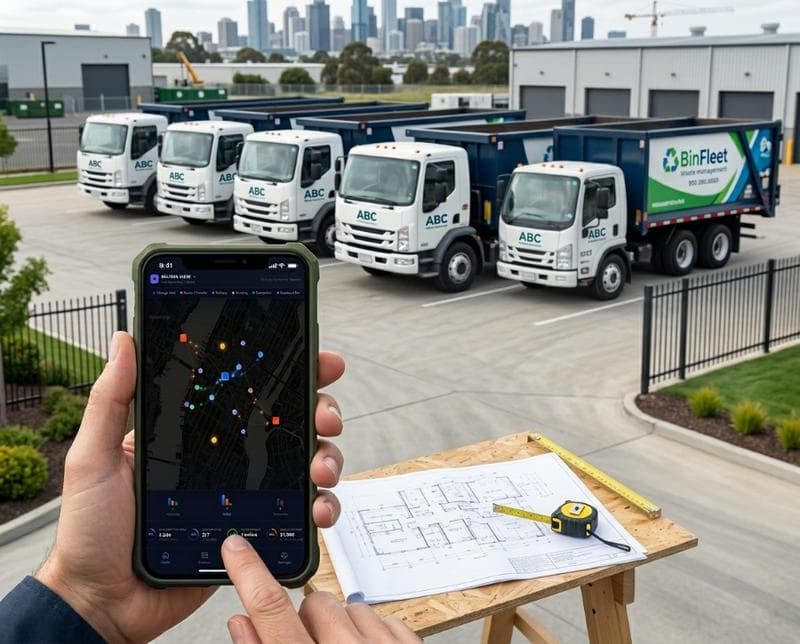
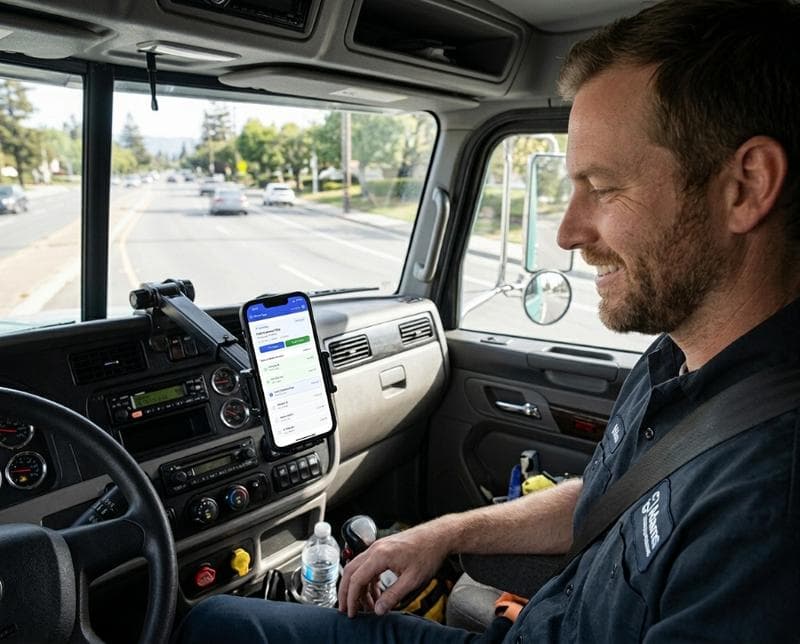
The real power of modern billing software emerges when it's woven into your existing operations platform. When your dispatch system, container tracking, and billing system speak to each other, data flows in one direction instead of being re-entered multiple times across different tools. A driver completes a pickup in the field—the job is logged with weight, time, and customer details automatically captured. That same data feeds directly into the invoice that goes out that evening. No transcription errors, no delays, no manual data entry.
This integration also prevents billing disputes before they start. If a customer was promised a weekly pickup and they only received three that month, the billing data makes that immediately apparent—you can adjust before sending the invoice rather than dealing with a complaint after the fact. Some platforms even let customers see their usage patterns and billing in real time through a mobile portal, which builds confidence and reduces inquiries. The less time your team spends on billing disputes and clarifications, the more they can focus on service quality and customer retention.
Why 2026 Is the Year to Modernize Your Billing
Competition in waste hauling is intensifying, and customers increasingly expect digital interactions and transparent pricing. Companies that still rely on manual billing are losing customers to competitors who offer online bill pay, clear itemization, and instant receipt confirmation. Younger account managers and decision-makers at commercial accounts simply expect to manage their waste vendor through a digital portal, not through monthly phone calls and printed invoices.
The technology is also more affordable and easier to implement than it was even three years ago. Modern waste hauler platforms like BinFleet bundle billing, invoicing, payment processing, and dispatch into a single integrated system, eliminating the need to cobble together multiple vendors and manage separate contracts. The investment typically pays for itself within months through reduced administrative overhead and improved cash flow alone. Waiting another year or two to modernize means leaving money on the table and falling further behind competitors who've already made the shift.
Frequently Asked Questions
How quickly can we implement billing software without disrupting our current operations?
Most waste hauler billing platforms can be set up in a matter of days to a couple of weeks, depending on your customer database size and integration complexity. Many providers offer guided onboarding and can import your existing customer list and billing history to minimize manual setup. You can often run the new system in parallel with your old one for a month or two to ensure accuracy before fully switching over, so there's no abrupt operational disruption.
Will customers resist switching to digital invoicing and online payment?
Initial resistance is usually minimal because digital invoicing is actually more convenient for customers—they get clearer documentation, faster delivery, and easier payment options. Most customers appreciate the transparency and the ability to download invoices directly rather than waiting for them to arrive by mail. After the first 30–60 days, you'll typically see adoption rates of 80%+ for digital delivery, with a small subset still requesting printed invoices if needed.
What if a customer disputes a charge—how does billing software help?
Digital billing software creates a clear audit trail of every service delivered: the date, the container, the weight, the price, and the terms. When a dispute arises, you have instant documentation to reference rather than digging through notes or trying to remember what happened months ago. You can also flag disputed invoices in the system and track the resolution, ensuring nothing falls through the cracks and that your team has visibility into patterns that might indicate systemic issues.
Does billing software really improve cash flow, or is that just marketing hype?
Improved cash flow is measurable and real. By automating invoicing, accepting digital payments, and reducing collection friction, most waste haulers see payment cycles shorten by 15–20 days within the first three months. If you invoice $100,000 monthly, that 15-day improvement frees up roughly $50,000 in working capital—money that was previously tied up waiting for payment. The ROI is straightforward math, not marketing.
Take the Next Step
If you're still managing billing manually or through disconnected spreadsheets and email, you're leaving cash on the table and overcomplicating your operations. Modern billing software is designed for waste haulers and integrates seamlessly with dispatch, container tracking, and customer management. The faster you get paid, the faster you can reinvest in your business and stay competitive in 2026. If you'd like to see how it works, schedule a brief demo to explore a platform built specifically for waste hauling operations. Or dive deeper into operational best practices on our resource blog.
Ready to Streamline Your Operation?
See how BinFleet AI helps waste haulers save time, cut costs, and grow.
Request a Free 30-Day Trial