How Modern Billing Software Transforms Waste Hauler Cash Flow
The days of hand-written invoices and waiting weeks for checks in the mail are costing waste haulers thousands in delayed cash flow. In 2026, forward-thinking operators are discovering that modern billing software doesn't just streamline paperwork—it fundamentally transforms how quickly money flows into their business. The difference between a 45-day payment cycle and a 7-day cycle can mean the difference between struggling to meet payroll and having the capital to expand your fleet.
Digital invoicing and automated payment processing have evolved far beyond simple online bill pay. Today's waste hauler billing platforms integrate directly with dispatch systems, automatically generate invoices from completed jobs, and process payments while your trucks are still on the road. This seamless integration eliminates the manual data entry that creates bottlenecks and delays, while giving customers multiple convenient ways to pay immediately.
The Hidden Cost of Manual Billing Processes
Traditional billing workflows in waste hauling typically involve drivers completing paper tickets, office staff manually entering data into spreadsheets, creating invoices days or weeks later, mailing them out, and then waiting for checks to arrive and clear. This process alone can stretch payment cycles to 30-60 days, during which fuel costs, payroll, and equipment payments continue to drain cash reserves. The administrative overhead of managing paper trails, following up on overdue accounts, and reconciling payments consumes hours that could be spent growing the business.
The ripple effects extend beyond just delayed payments. Manual processes create gaps where invoices get lost, amounts get entered incorrectly, or billing gets delayed because drivers forgot to turn in tickets. These operational inefficiencies compound into cash flow problems that force operators to rely on credit lines or delay important investments in their fleet. When payment processing takes weeks instead of minutes, every aspect of business growth gets constrained by cash availability.
Automated Invoicing: From Job Completion to Payment
Modern waste hauler billing software eliminates the gap between service delivery and invoice generation by automatically creating bills the moment a job is marked complete in the system. When drivers use mobile apps to update job status, the billing system instantly generates accurate invoices based on predetermined rates, service types, and any additional charges. This real-time invoicing capability means customers receive bills within hours of service completion, when the value is fresh in their minds and payment is most likely.
The automation extends beyond just invoice creation to include intelligent routing of bills based on customer preferences and payment history. High-volume commercial accounts might receive detailed PDF invoices via email, while residential customers get simplified SMS payment links. The system tracks delivery confirmations, payment attempts, and customer interactions to optimize the billing process continuously. This level of automation reduces billing-related labor costs by up to 75% while dramatically improving payment speed and accuracy.
Digital Payment Processing That Actually Works
The key to accelerating cash flow lies not just in faster invoicing, but in making payments effortless for customers. Modern billing platforms offer multiple payment channels integrated into a single system—credit cards, ACH transfers, mobile payments, and even text-to-pay options that let customers settle bills with a simple SMS response. The friction between receiving an invoice and making payment determines how quickly money flows into your account, and every additional step or complicated process adds days to your payment cycle.
Payment processing technology has also evolved to handle the unique challenges of waste hauling businesses. Systems now support recurring billing for regular service customers, split billing for shared dumpsters, and automatic payment retries for declined transactions. Real-time payment notifications keep your team informed of incoming funds, while integrated dispute resolution tools handle billing questions without involving office staff. These capabilities transform payment processing from a monthly headache into a smooth, predictable revenue stream.
Integration with Dispatch and Operations
The most effective billing software doesn't operate in isolation—it connects seamlessly with dispatch, routing, and customer management systems to create a unified operational workflow. When dispatch assigns a job, the billing system already knows the customer rates, service details, and payment preferences. As drivers complete work and update job status through mobile apps, invoices generate automatically with accurate service details and photos for verification. This integration eliminates the data entry bottlenecks that typically delay billing by days or weeks.
Advanced platforms like BinFleet take integration further by using operational data to optimize billing strategies. The system can identify customers who consistently pay quickly and offer them preferred pricing, or flag accounts with payment issues for collection attention. Route optimization data feeds into billing to ensure accurate mileage charges, while container tracking ensures customers are only billed for services actually provided. This level of integration creates a feedback loop where better operations lead to faster payments, which fund better operations.
Measuring and Improving Cash Flow Performance
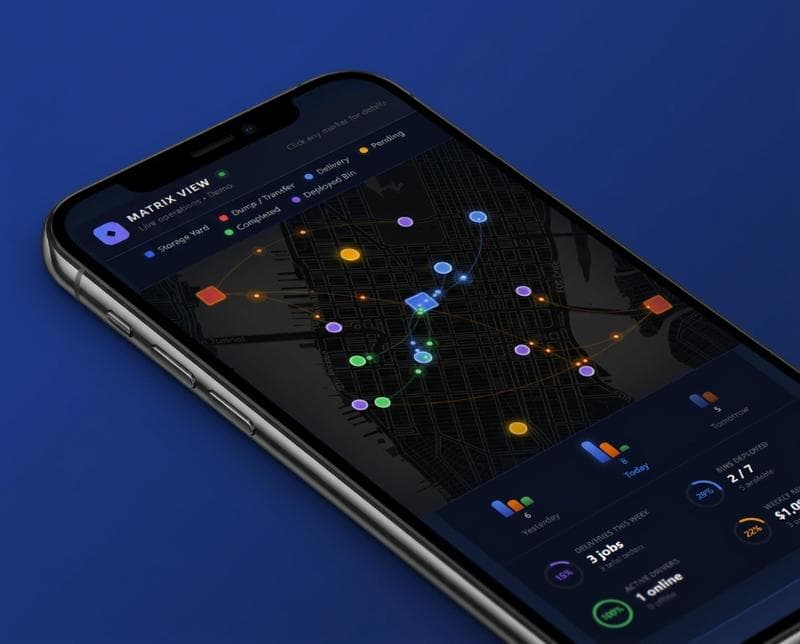
Digital billing systems provide unprecedented visibility into cash flow patterns that manual processes simply can't match. Real-time dashboards show average payment times by customer segment, identify bottlenecks in the billing process, and track the effectiveness of different payment methods. This data allows operators to make informed decisions about credit terms, payment incentives, and collection procedures. Understanding which customers pay fastest and why enables strategic pricing and service decisions that optimize cash flow.
The analytics capabilities extend to predictive insights that help operators plan for seasonal cash flow variations and identify growth opportunities. Systems can forecast weekly cash receipts based on billing patterns, alert managers to unusual payment delays, and recommend optimal billing timing for different customer types. These insights transform cash flow management from reactive crisis handling to proactive business optimization, giving operators the financial predictability needed to invest in growth confidently.
Implementation and ROI Considerations
Transitioning to digital billing software requires careful planning, but the implementation process has become much smoother as platforms mature. Most modern systems offer guided setup processes that import existing customer data, configure billing rules based on current practices, and provide training resources for staff adaptation. The key to successful implementation lies in choosing software designed specifically for waste haulers, with features that address industry-specific challenges like variable pricing, route-based billing, and container tracking integration.
The return on investment typically becomes apparent within the first month of operation. Operators commonly see average payment times drop from 35-45 days to 10-15 days, while billing-related labor costs decrease by 60-80%. The improved cash flow often pays for the software investment within 90 days, after which the ongoing benefits directly impact profitability. Schedule a demo to see how digital billing can transform your specific operation's cash flow performance.
Frequently Asked Questions
How quickly can digital billing software reduce our payment cycles?
Most waste haulers see payment cycles drop from 30-45 days to 10-15 days within 60 days of implementation. The exact timeline depends on your customer mix and which payment methods you enable, but the improvement typically becomes noticeable within the first month.
Will our customers adapt to digital invoicing and payment methods?
Customer adoption rates are consistently high because digital payments are more convenient than writing checks or calling with credit card information. Most systems allow customers to choose their preferred payment method and billing format, ensuring a smooth transition that actually improves customer satisfaction.
What happens to customers who still want to pay by check?
Modern billing systems accommodate all payment preferences while encouraging faster methods through convenience and incentives. Customers can still pay by check if they prefer, but most migrate to digital payments once they experience the convenience. The key is offering options while making digital payments the easiest choice.
How does billing software integration affect our existing dispatch workflows?
Integration typically improves rather than disrupts existing workflows by eliminating duplicate data entry and manual handoffs between systems. Your drivers continue using familiar dispatch processes, but billing happens automatically in the background. Most operators find their workflows become more efficient rather than more complicated.
Ready to see how modern billing software can accelerate your cash flow? Explore our resources or start your free trial to experience the difference digital invoicing makes for waste hauling operations.
Ready to Streamline Your Operation?
See how BinFleet AI helps waste haulers save time, cut costs, and grow.
Request a Free 30-Day Trial