How Mobile Driver Apps Transform Waste Hauling Operations
The Real Cost of Drivers Without Mobile Tools
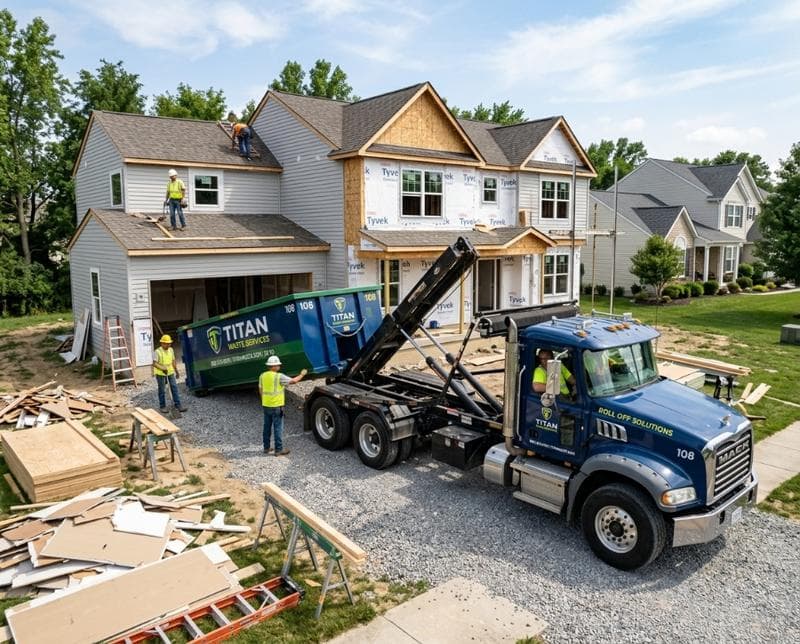
Most waste haulers still rely on paper routes, radio dispatch, and phone calls to manage their drivers. This fragmented workflow costs time, creates accountability gaps, and leaves customers in the dark about pickup ETAs. A driver finishing a stop has no quick way to confirm completion or alert dispatch that they're running ahead or behind schedule—so the next customer gets left waiting, or the driver wastes fuel and time driving to a pickup that's already been completed by another crew.
When a customer disputes a charge or claims a missed pickup, haulers have no documented proof of service. Drivers remember stops differently than customers do, leading to refund arguments and lost reputation. A mobile driver app solves this at the source: real-time stop confirmation, timestamped photo evidence, and automatic customer notifications create an undeniable record that protects both your business and your customer relationships.
Stop Management and Route Accountability
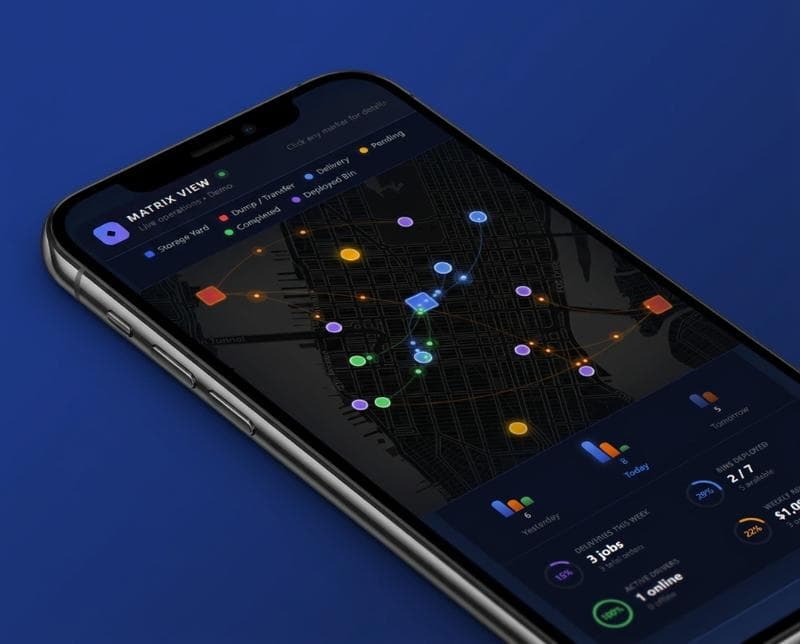
A driver app lets your crew check in and check out of each stop with a single tap, automatically updating dispatch and customers simultaneously. Instead of guessing whether a driver is at stop five or stop seven, your dispatcher sees live location and knows exactly who's where. When a driver marks a stop complete with a photo, the system timestamps it and flags any issues—like an attempted pickup at a wrong address—before the driver leaves the property. This real-time visibility eliminates the back-and-forth radio chatter that slows down dispatch and frustrates drivers.
Route accountability also means you can measure actual productivity. You'll see how long each stop took, how many miles between pickups, and where routes can be optimized. Over time, this data reveals patterns: maybe stop 12 always takes longer because the customer isn't ready, or a particular street is adding 20 minutes to the route. Armed with this insight, you can adjust schedules, consolidate stops, or train customers on prep—all decisions backed by real operational data, not gut feeling.
Photo Capture and Damage Documentation
Photos are your liability shield. When a driver snaps a picture of a dumpster before pickup, you have proof of its condition. If a customer later claims you damaged their property or disposed of hazardous material improperly, that timestamp-locked photo is evidence. The same applies for after-pickup photos: did the driver leave the area clean? Did they place the bin correctly? A mobile app makes capturing these moments frictionless—no extra steps, no excuses about forgetting the camera. The photo syncs immediately to your backend, so your office has a documented visual record of every interaction.
Damage disputes drop dramatically when drivers know their work is being photographed. It creates accountability without micromanagement. Customers also appreciate seeing a photo confirmation that their pickup was completed—it's proof you showed up. Some haulers use photo proof in their SMS notifications to customers, turning documentation into a service differentiator. When a pickup is problematic (overweight, hazardous material detected, access issues), the driver captures evidence on-site and sends it to dispatch immediately, allowing the office to handle customer communication before the driver leaves the lot.
Real-Time Status Updates and Customer Communication
Customers no longer accept radio silence. They want to know when the truck is arriving, whether their pickup was completed, and what the charge will be—all in real time. A driver app with integrated SMS or push notifications gives customers visibility without your office handling dozens of manual calls. When a driver arrives at a stop, the system can automatically send a notification: "Your pickup is scheduled in the next 30 minutes." When complete, another notification goes out with a timestamped confirmation. This transparency reduces complaint calls by 30-40% because customers see the work happening in real time.
For dispatchers, status updates flowing from drivers mean you can proactively communicate delays to upcoming customers. If a driver is running 45 minutes late, you don't wait for complaints—you send a notification to the next three stops on the route. Repeat customers recognize this professionalism and trust your company more. Drivers also feel supported when dispatch sends them real-time information about traffic, route changes, or last-minute add-ons. Instead of discovering a new stop when they arrive at their last scheduled location, they see it in the app and can adjust their time accordingly.
Integration With Dispatch and Back-Office Systems
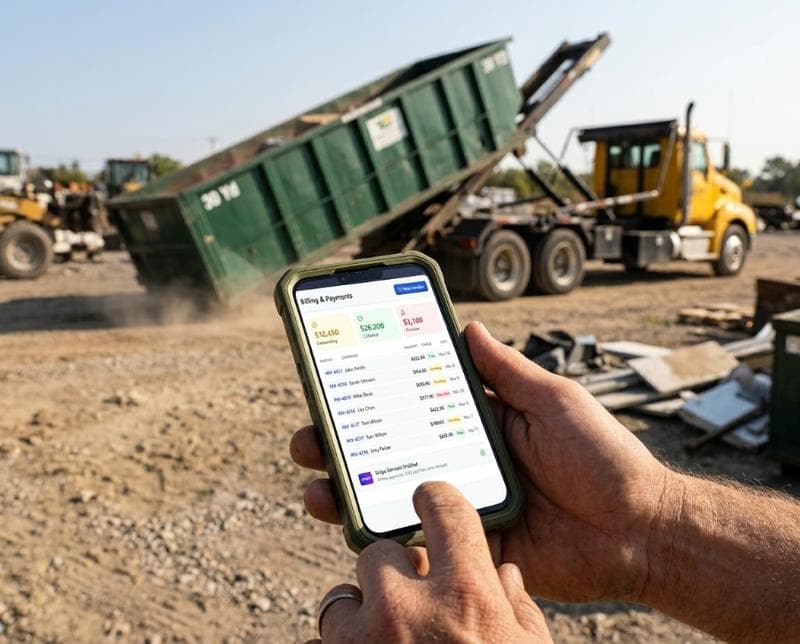
A driver app isn't useful if it exists in isolation. It needs to sync with your dispatch system, invoicing software, and customer database so one source of truth flows through your entire operation. When a driver completes a stop in the app, that data should automatically update your dispatch board, mark the job as completed for billing, and trigger an invoice. If a customer disputes a charge next week, your office pulls the driver's timestamped stop record, photo, and weight captured in the app—no manual digging through old emails or notebooks. This integration eliminates double entry and data drift that plagues disconnected systems.
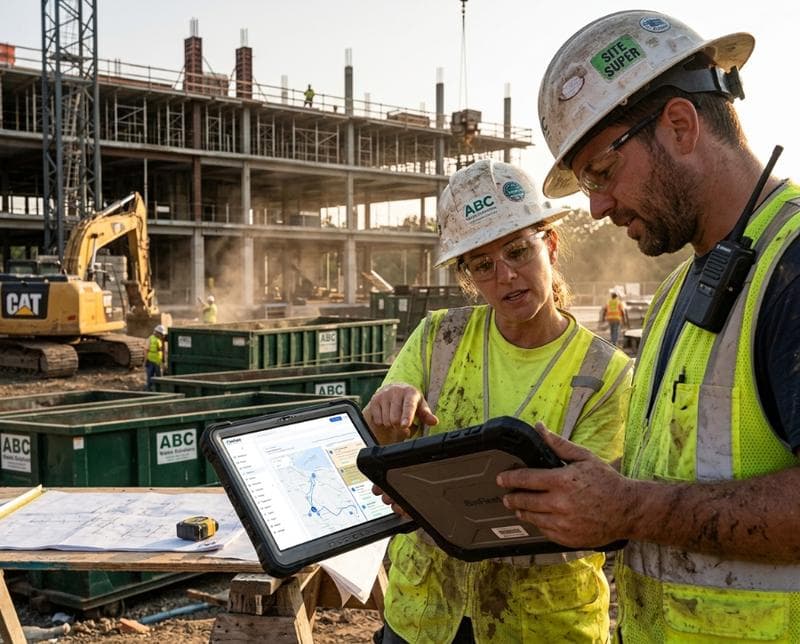
BinFleet's driver app connects directly to your dispatch console and customer portal, so when a driver snaps a photo or marks a stop complete, it flows to billing, customer notifications, and your analytics dashboard instantly. This means your office team spends less time chasing down driver confirmations and more time solving actual operational problems. New drivers onboard faster because the app walks them through the proper process for every stop, reducing errors and rework. Request a demo to see how this integration works in practice.
Reducing Operational Friction and Driver Satisfaction
Drivers hate bad tools. If your app is slow, crashes, or requires 10 steps to complete a simple task, they'll find workarounds—which defeats the purpose. A good driver app is intuitive: tap arrival, take a photo, confirm weight or volume, tap complete, move to next stop. It loads fast, syncs reliably, and works on spotty 4G because not every industrial lot has good coverage. When drivers trust the app, they use it consistently. When they see that completion data helps dispatch run smoother routes and gets them home earlier, adoption is voluntary, not forced.
Driver satisfaction also comes from transparency. A driver app that shows real-time traffic, estimated arrival times at upcoming stops, and any urgent messages from dispatch makes them feel like part of the team, not isolated on a route. They can see feedback on their route efficiency or photo quality without waiting until their next performance review. This feedback loop builds accountability and pride in the work. Haulers who implement strong driver apps report higher retention rates and fewer customer complaints because drivers are engaged and informed, not just following orders blindly.
Frequently Asked Questions
What if my drivers work in areas with poor cellular coverage?
A robust driver app uses offline mode to cache data, allowing stops to be marked complete, photos captured, and notes added even without signal. Once connectivity returns, all data syncs automatically. This is critical for rural routes or industrial parks where coverage is spotty. The app should queue actions in order and ensure nothing gets lost when the connection drops temporarily.
How does photo capture actually improve billing accuracy?
A timestamped photo of the dumpster before and after service serves as proof of service. If a customer claims you picked up the wrong unit or missed their stop, you have visual evidence. Photos also document weight or volume for accurate billing when those factors apply. Disputed invoices drop because the photo eliminates guesswork about what was actually completed.
Can small fleets use a driver app, or is it only for large operations?
Driver apps work at any scale. A 3-truck operation benefits just as much from real-time stop confirmation and photo documentation as a 50-truck fleet. The efficiency gains—fewer missed stops, less dispatcher time on radio chatter, faster invoicing—apply regardless of fleet size. Start with a basic setup and scale features as your business grows.
How long does it take drivers to adopt a new app?
Good adoption takes 2-3 weeks of consistent training and support. The key is demonstrating the benefit early: show drivers how the app helps them get routes done faster and more efficiently. Pair early rollout with one-on-one training for drivers who are less tech-comfortable. After a month, most crews prefer the app because it removes friction from their day.
Getting Started With Driver Apps
The waste hauling industry is moving toward mobile-first operations by 2026, and companies that implement driver apps early gain competitive advantage in service quality and operational efficiency. Real-time stop management, photo documentation, and customer communication aren't future nice-to-haves—they're current expectations. If your drivers are still working blind with paper routes and radio dispatch, you're losing time, accuracy, and customer trust daily. Learn how BinFleet helps waste haulers deploy modern driver tools or explore more operational guides to find the right approach for your fleet.
Starting a driver app deployment is straightforward if you choose a platform built specifically for waste hauling. The app should be intuitive for drivers, integrate seamlessly with your existing dispatch and billing systems, and provide real value from day one. A free trial lets you test workflows with your team before committing. The sooner you move from reactive dispatch to real-time visibility, the sooner you'll see reduced operational costs and improved customer satisfaction.
Ready to Streamline Your Operation?
See how BinFleet AI helps waste haulers save time, cut costs, and grow.
Request a Free 30-Day Trial