Roll Off Container Maintenance: A Preventive Strategy for 2026
Why Roll Off Container Maintenance Matters to Your Bottom Line
A broken container isn't just out of service—it's revenue loss, frustrated customers, and dispatch chaos. When a 40-yard roll off fails a safety inspection or develops a hydraulic leak mid-route, you're looking at emergency repairs that cost three times what preventive work would have run. Most waste haulers discover this the hard way: one unexpected failure cascades into delayed pickups, rescheduled routes, and customer complaints that could have been prevented with simple, systematic checks.
The real cost isn't the repair bill alone. It's the asset sitting idle while you scramble to cover that route with another container, the driver sitting idle, and the customer waiting for service. Over a year, deferred maintenance on a 20-container fleet can cost tens of thousands in lost productivity and emergency labor. Haulers who implement preventive maintenance schedules don't just save on repair costs—they improve dispatch reliability, extend container lifespan by 40-50%, and maintain the professional reputation that keeps customers loyal.
Building a Preventive Maintenance Schedule That Works
Effective maintenance isn't guesswork—it's a structured rhythm based on hours, miles, and seasonal conditions. A typical roll off container should be inspected before every deployment, with comprehensive checks every 500 operating hours or quarterly, whichever comes first. This includes hydraulic system pressure tests, structural integrity checks, hinge and latch function, and safety light operation. The frame should be inspected for cracks or welding stress, the container bed for rust or punctures, and all moving parts for wear or leakage. A simple monthly walk-around that takes 15 minutes per container can catch 80% of problems before they become failures.
Seasonal factors matter too. Winter requires extra attention to hydraulic systems (cold thickens fluid and reduces responsiveness), while summer heat stresses seals and fasteners. Spring is ideal for deep structural inspection after winter stress, and fall is the right time to address rust spots before moisture accelerates decay. The schedule doesn't have to be complicated—what matters is consistency and documentation. Tracking every inspection, every repair, and every replaced part creates a maintenance history that reveals patterns: if a particular container's hydraulic seal keeps failing, you have data to justify replacement rather than endless repairs.
Digital Tracking: The Tool That Makes Maintenance Stick
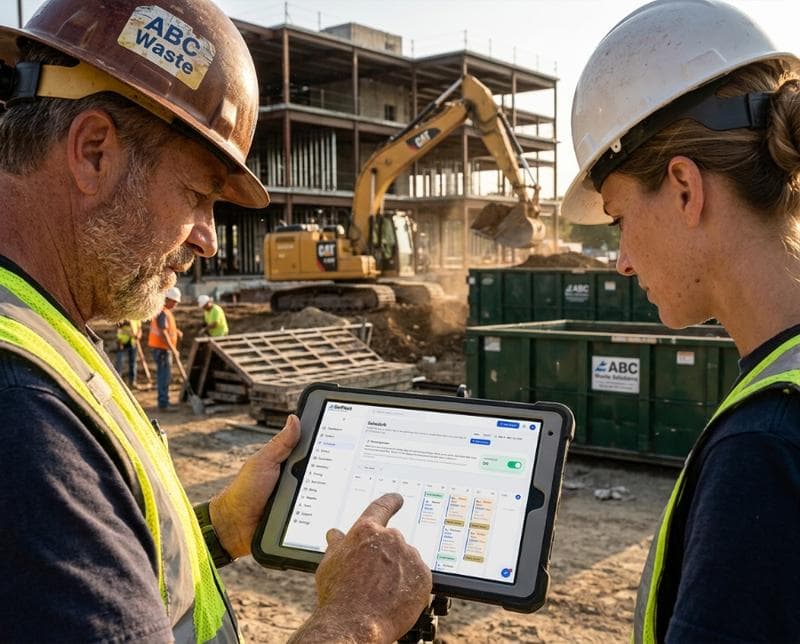
Maintenance schedules fail when they're written on paper or locked in someone's head. Digital tracking systems create accountability and visibility. Modern fleet management platforms like BinFleet let you log inspections in real time, set automatic reminders for next service dates, track parts inventory, and flag containers that need attention before dispatch. When a driver checks a container out at 7 a.m., they see a maintenance status—green if all checks pass, yellow if minor issues need attention, red if the container is out of service. This prevents the dangerous scenario where a questionable unit gets assigned anyway because information wasn't visible.
The data layer is where digital tracking earns its keep. You can see which containers require the most repairs, which parts fail most frequently, and which months generate the highest maintenance costs. If electric brakes are failing consistently on older units, you can plan a replacement cycle rather than enduring constant emergency fixes. You can schedule preventive maintenance during slower business periods, keeping your team productive and avoiding the panic of rush-hour breakdowns. Digital records also protect you during inspections—regulators see detailed maintenance logs that prove you're operating safely and professionally.
Common Maintenance Failures and How to Prevent Them
The hydraulic system is the most critical and most neglected component on roll off containers. Leaks start small—a weeping seal—but grow fast. Fluid loss reduces pressure, meaning slower lifts, incomplete dumps, and eventual system failure. Monthly fluid level checks and pressure tests cost almost nothing and prevent thousands in repair bills. Keep a record of fluid changes (typically every 2,000 hours or annually), and don't let a contractor just "top it off." If fluid is disappearing, something is leaking, and adding more fluid masks the problem. A pressure gauge test takes 10 minutes and tells you if the system is degrading.
Structural corrosion is the other major threat, especially for containers working near coast regions or wet environments. Small rust spots turn into large holes within 18 months if left untreated. Establish a protocol: if rust is surface-level, have it ground down and treated with rust-inhibiting primer immediately. If rust has created holes or structural thinning, the container needs welding repair or retirement. Walk the perimeter of every container monthly, looking for discoloration, flaking paint, or visible corrosion. This visual discipline catches problems at stage one, not stage three when the repair is expensive or the container is condemned.
Staffing and Training for Maintenance Excellence
Maintenance quality depends on people, and those people need training and accountability. Your lead mechanic or maintenance supervisor should have formal training on hydraulic systems, welding inspection, and safety standards—not just years of experience. Frontline drivers need to understand basic pre-use checks: fluid level, visual damage, light function, and safe operation. Many fleets create a simple checklist that drivers complete at the start of their shift; this catches problems before they cause customer issues or safety hazards. When drivers know they're accountable for reporting problems, and when they see those reports generate action, the quality of information improves dramatically.
Consider bringing in an external auditor once yearly to inspect your fleet and review maintenance records. This catches blind spots and gives you a professional assessment of your operation's safety and compliance standing. It's also valuable documentation if you're ever audited by regulators or face a liability question. Investment in training pays for itself through reduced downtime and fewer catastrophic failures. A 20-minute safety briefing for new drivers on container operation and care costs nothing but prevents the kind of misuse (overloading, improper tilting, forcing damaged latches) that creates expensive repairs.
Building Your Maintenance System in 2026
Modern fleet management platforms now integrate maintenance scheduling directly with dispatch, making it easy to keep units in service and maintenance records visible to the whole team. The best systems let you assign maintenance tasks to specific dates or service hour thresholds, track parts and labor costs, and pull maintenance history with a single report. If you're managing multiple yards or a growing fleet, this digital infrastructure isn't luxury—it's the only way to maintain consistency and catch problems across all locations. The days of handwritten logs and remembered conversations are gone; professional operations run on data.
The real competitive advantage in 2026 is predictability. Fleets that maintain containers reliably suffer fewer emergency repairs, deliver better customer experience, and retain drivers because breakdowns don't create chaos. Start by documenting your current fleet's maintenance history over the next 90 days—every repair, every inspection, every replacement part. This baseline gives you real data to build a preventive schedule around. Then implement a system (digital or hybrid) that tracks inspections consistently. Within six months, you'll see the payoff in reduced downtime and lower overall maintenance spend. Request a demo of BinFleet to see how container tracking integrates with your maintenance workflow, or explore our operations blog for additional fleet management strategies.
FAQ: Roll Off Container Maintenance
How often should I inspect roll off containers?
Pre-deployment inspection every time is essential—a 5-minute walk-around that checks hydraulics, structural damage, lights, and latches. Beyond that, plan comprehensive checks every 500 operating hours or quarterly, whichever comes first. This includes pressure testing the hydraulic system, detailed structural inspection, and any repairs identified during routine checks.
What's the most common reason roll off containers fail?
Hydraulic system leaks top the list, followed by structural rust and electrical issues with lift mechanisms. Most failures are preventable with monthly fluid checks, visual corrosion inspection, and proper operation (no overloading or forcing damaged parts). The containers that fail catastrophically are almost always the ones where minor warning signs were ignored for weeks.
Can I use a spreadsheet to track maintenance, or do I need software?
A spreadsheet works for very small fleets (under five containers), but it breaks down fast as you scale. You'll miss reminders, lose historical data, and struggle to see patterns. Digital fleet management software like BinFleet automates reminders, centralizes records, and gives you reports that actually guide decisions. The time saved (and problems prevented) pay for the system within weeks.
How do I know if a container should be repaired or retired?
If repair cost exceeds 40-50% of the container's current value, retirement usually makes financial sense. Structural damage (cracks in the frame, significant rust, or bent axles) is riskier than it's worth, even if repairable. A maintenance log helps here—if a container needs major repairs twice in a year, it's telling you something is fundamentally wrong, and retirement may be smarter than another repair cycle.
Ready to Streamline Your Operation?
See how BinFleet AI helps waste haulers save time, cut costs, and grow.
Request a Free 30-Day TrialRelated Articles

Construction Dumpster Rental Best Practices: A Guide for Waste Haulers

Waste Hauler Fleet Management: Run Multi-Yard Operations Like a Pro