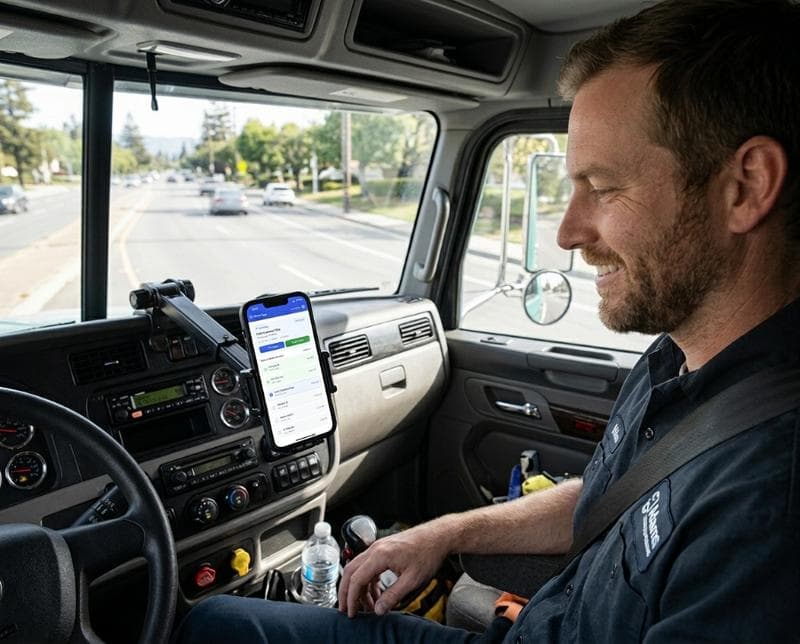
Waste Hauler Fleet Management: Run Multi-Yard Operations Like a Pro
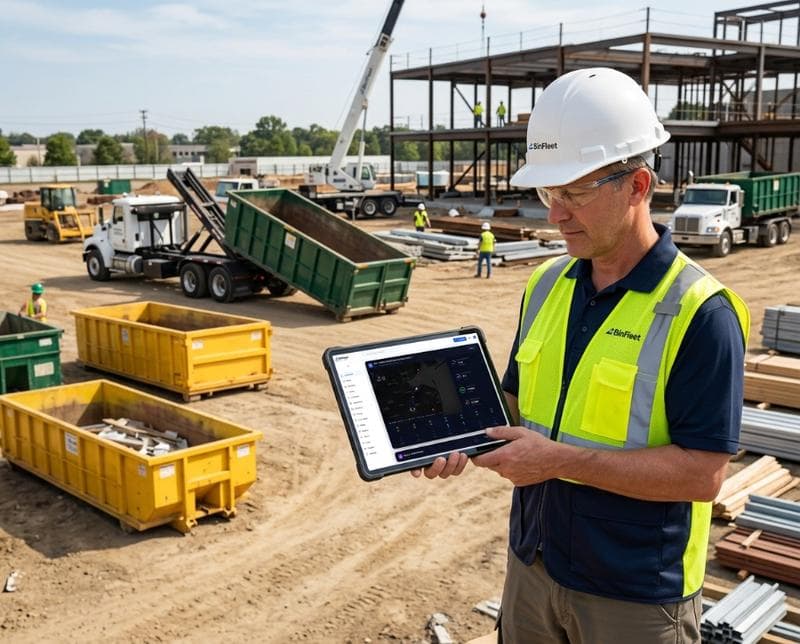
The Real Cost of Managing Waste Hauling Without a System
Most small to mid-size waste hauling operations run on spreadsheets, phone calls, and institutional knowledge. A dispatcher knows that Jimmy drives Tuesday pickups on the north side, Maria handles roll-offs, and the Riverside yard has three broken compactors this week. When someone calls in sick or a customer changes their service day, the whole operation scrambles. This chaos doesn't just frustrate your team—it erodes margins through inefficient routing, duplicate trips, and missed pickups that trigger service credits.
The hidden costs add up fast. A driver taking an inefficient route wastes 10 to 15 percent more fuel than necessary. Multiple yards managing separate inventory means you don't know which container is actually available or where it is. Double bookings happen. Customers wait longer than promised, generating complaints that require manager time to resolve. Without visibility into driver activity, you can't optimize stops per day or identify why some routes take twice as long as others. What feels like a "people problem" is actually a systems problem.
What Multi-Yard Fleet Management Actually Solves
A centralized fleet management platform gives you a single source of truth for all operations: which driver is assigned to which route, where every container lives, what maintenance each truck needs, and how many stops your team completed today. Instead of calling drivers to ask their location, you see them on a map in real time. When a customer requests a service change, you don't flip through a notebook—you pull up their account, check truck availability across all yards, and reassign the load in seconds. This transparency transforms dispatch from reactive firefighting into strategic planning.
Real efficiency gains come from visibility plus automation. You route trucks based on actual geography, not guesswork. The system suggests pickup sequences that minimize backtracking. Drivers receive mobile notifications with updated sequences, so they don't waste time calling the office for directions. When a truck breaks down, you reassign its remaining stops to the nearest available unit before customers even notice. Container inventory syncs across yards, so you never overcommit or underutilize equipment. These aren't marginal improvements—haulers using centralized systems typically report 12 to 18 percent fuel savings and 15 to 20 percent more stops per vehicle per day.
Dispatch Efficiency: From Phone Calls to Real-Time Assignment
Traditional waste hauling dispatch relies on experience and assumption. A dispatcher mentally maps neighborhood geography, recalls which truck serviced which customer last week, and hopes traffic conditions haven't changed. The moment something breaks that mental model—a truck gets delayed, a driver calls out, or a new customer books an urgent pickup—the entire day becomes reactionary. Drivers are sitting idle or overshooked, customers are calling with complaints, and you're bleeding money on wasted labor and fuel.
Modern routing algorithms solve this by running thousands of permutations instantly. The system considers distance, traffic patterns, service windows, truck capacity, and driver shift limits simultaneously. When you input a new pickup or a vehicle drops offline, the algorithm recalculates optimal routes for affected trucks and suggests reassignments. Drivers see updated stop sequences on their mobile phones, not handwritten tickets. This reduces communication overhead, cuts fuel waste from poor routing, and lets dispatchers manage more trucks with less stress. A dispatcher managing eight trucks manually might manage twenty with a proper system—not because they work harder, but because the software does the logical work.
Driver Accountability and Mobile Visibility
Drivers resist GPS tracking when it feels punitive. But when positioned correctly—as a tool that protects them from false customer claims and ensures fair workload distribution—adoption improves dramatically. A driver with a mobile app showing their assigned route knows exactly what stops are next, gets proof-of-pickup photos automatically logged, and can see the day's progress without calling dispatch. This eliminates radio chatter and reduces the chance of missed stops from miscommunication.
Visibility also protects your business legally and financially. Photo-based proof of service defends against claims that trash was never picked up. GPS breadcrumbs show when a driver arrived and left each stop, confirming service window compliance and documenting efficiency. You can identify which drivers complete their routes fastest, which ones take extended breaks, and which ones are exceeding safe shift limits. This data feeds into training and hiring decisions, protecting your liability while helping good drivers improve. For many haulers, accurate documentation alone eliminates 5 to 10 percent of dispute-related refunds.
Container and Inventory Management Across Locations
Waste hauling relies on knowing where every container is and whether it's actually available. A mid-size operation with three yards and two hundred containers spread across town often can't answer simple questions: Do we have a roll-off available on the east side today? How many residential carts are in the shop? Which customer still has our equipment from last season? Spreadsheets lag behind reality, and communication between yards breaks down. This leads to overspending on equipment to cover the uncertainty, making rush purchases because a container is missing, or losing customer revenue because you claim unavailability when the container exists but nobody knows where.
A unified inventory system tracks container status (deployed, available, in maintenance, missing) and location across all yards in real time. When a customer requests a container, you see instantly whether you can fulfill it from existing stock or need to stage a new one. Maintenance schedules are coordinated so trucks don't leave for pickups with depleted fuel tanks or overdue oil changes. Depreciation and replacement planning become data-driven instead of reactive. You reduce dead inventory, catch missing equipment faster, and optimize capital deployed in containers rather than guessing.
Financial Transparency and Multi-Yard Profitability
Many multi-yard waste hauling operations treat each location as a profit center but struggle to compare their performance fairly. One yard might have lower fuel costs due to geography, another might have older trucks with higher maintenance. Without clear cost allocation, you can't spot which yard is truly efficient and which is hiding waste. Management spends hours manually building reports from different systems, and by the time the data is compiled, it's already outdated. Decisions get made based on incomplete information.
Centralized fleet management platforms consolidate financial data automatically. You see fuel spend per truck, maintenance costs by vehicle, revenue per stop, and profit margins by yard or service line. This clarity lets you identify high-performing yards and replicate their practices elsewhere. You spot trucks that are underperforming on fuel efficiency and schedule targeted maintenance. You can calculate the true cost of servicing different zones and adjust pricing or routing accordingly. For example, a hauler might discover that their north yard is 18 percent more profitable not because the team is better, but because a different truck mix and route design minimize empty miles. That insight, once visible, becomes replicable across the fleet.
Getting Started Without a Painful Migration
The biggest barrier to adoption isn't software complexity—it's fear of disruption. Your team has worked out a system that mostly works, and switching software feels risky. In reality, modern platforms are designed to live alongside your existing processes. You don't have to go live with your entire fleet on day one. Start by onboarding one yard or one driver group, running parallel operations until your team is confident, then expand. Data import typically takes days, not months. Request a demo to see how straightforward the transition is and ask questions specific to your operation.
Training and adoption take weeks, not months, because these systems are built for people who dispatch trucks, not software engineers. Drivers learn the mobile app through hands-on sessions, not manuals. Dispatchers realize within the first week that their workload actually drops because the system handles routing and vehicle assignment. The ROI often appears within 60 to 90 days as fuel efficiency improves, stops per day increase, and dispute-related refunds drop. If you're skeptical, start with a 14-day free trial focused on one specific problem you're trying to solve—like improving route efficiency or reducing duplicate customer calls.
FAQ
How much can I really save by using fleet management software?
Savings vary by operation, but waste haulers typically report 12 to 18 percent fuel savings from optimized routing, 8 to 15 percent fewer customer disputes through proof of service, and 15 to 20 percent higher productivity per driver. Over a 50-truck operation, that compounds to six figures annually in the first year alone, before accounting for improved retention and faster billing cycles.
Do my drivers actually use the mobile app, or will it sit on their phones?
Adoption depends on positioning and training. If drivers see the app as surveillance, adoption is slow. If positioned as a tool that helps them manage their day and protects them from false claims, adoption is typically 80 to 90 percent within two weeks. Many haulers find that drivers appreciate not having to call dispatch or remember addresses—the app does it for them.
Can I start with one yard and expand later?
Yes. Most platforms allow you to onboard one yard, yard group, or driver team at a time. Running parallel operations for a few weeks lets your team build confidence before full rollout. This phased approach reduces risk and lets you troubleshoot on a smaller scale first.
What if our dispatch process is unique to our business?
Most waste hauling operations have similar underlying needs—route optimization, driver tracking, customer updates, inventory management—even if the details look different. Visit the BinFleet blog to see how other haulers solved similar challenges. A demo call with our team can also map your specific workflow to the platform's capabilities.
Ready to Streamline Your Operation?
See how BinFleet AI helps waste haulers save time, cut costs, and grow.
Request a Free 30-Day TrialRelated Articles
Construction Dumpster Rental Best Practices: A Guide for Waste Haulers
Roll Off Container Maintenance: A Preventive Strategy for 2026