How to Scale a Dumpster Rental Business from One Truck to Multi-Truck Operation
Start with Rock-Solid Unit Economics
Before you buy a second truck, understand what your first one actually earns. Too many operators scale by gut feeling rather than data. Calculate your per-pickup revenue, average container dwell time, fuel costs per route, and maintenance spend. If your single truck isn't consistently profitable after all expenses—including your salary—adding more units won't fix broken fundamentals. It will only spread the problem across more assets.
Document three months of your current operation. Track every job, every mile, every repair. Know your break-even point and your target margin. This becomes your operating model for the next truck. If your first unit generates $8,000 monthly profit on $15,000 revenue, you have a replicable business. If margins are thin or inconsistent, you need to adjust pricing, reduce waste routes, or improve customer retention before scaling.
Build a Dispatch System Before Adding Trucks
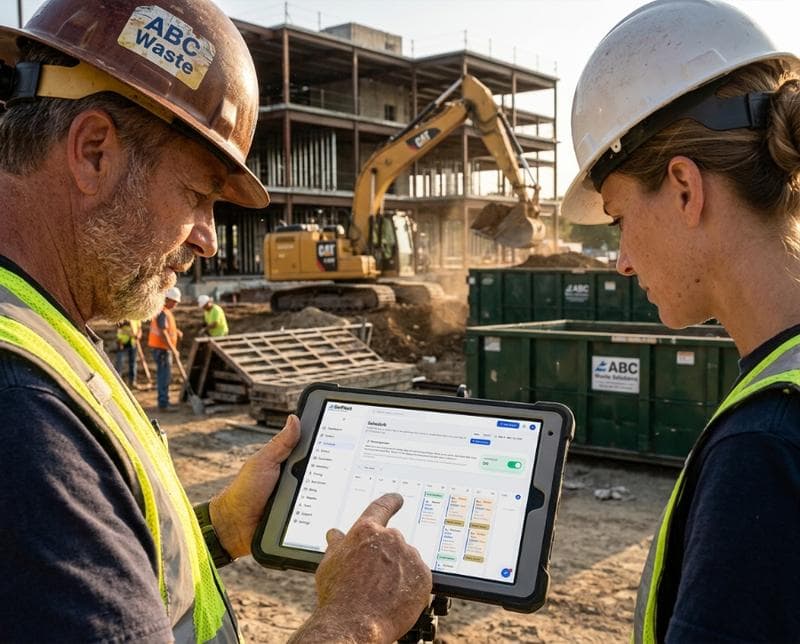
Manual dispatch works fine when you're driving yourself. It falls apart fast once you have two trucks competing for the same jobs, or drivers uncertain about their routes. Before hiring your second driver, implement a dispatch platform that tracks orders, assigns jobs intelligently, and communicates with drivers in real time. This prevents double-booking, reduces idle time, and ensures consistent customer experience as you grow.
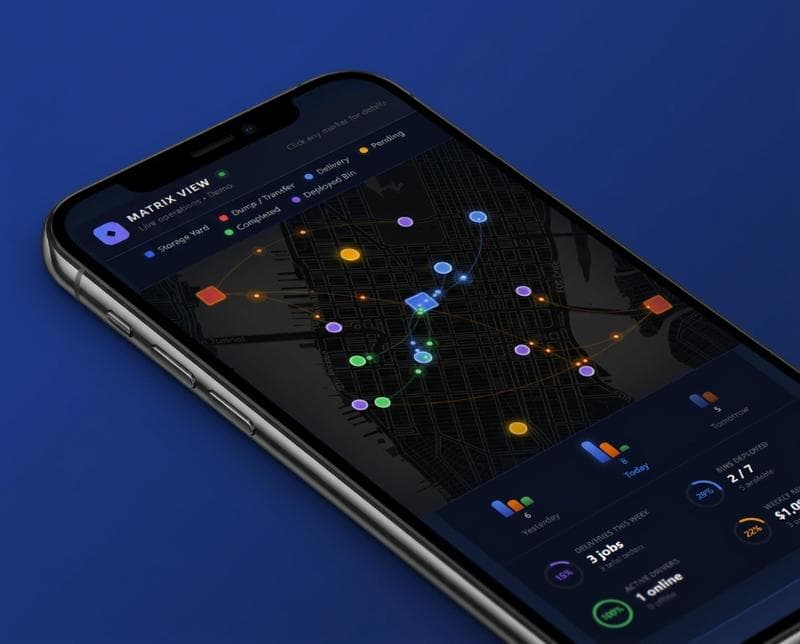
Systems like BinFleet let you see all active containers, pending pickups, and available capacity across your fleet instantly. When a new order comes in, you know which truck can handle it fastest. Your drivers see their route on their phone, not a printed list. You send SMS updates to customers automatically. Without this infrastructure, your second truck becomes a headache instead of a profit center, and your third truck compounds the problem.
Hire Your First Driver Before Your Second Truck
The gap between owner-operator and multi-truck business is your first hire. This person should be reliable, customer-facing, and detail-oriented—not just someone who can drive. They become the foundation of your culture and your operational consistency. Hire them 4-6 weeks before purchasing the second truck so they can learn your routes, meet your customers, and understand your standards while you're still in the truck with them.
Pay competitively and be clear about expectations. A driver earning $22-28/hour with gas cards and decent equipment is cheaper than losing customers to poor service or high turnover. Consider offering a small bonus for on-time pickups or customer feedback scores. Your first driver sets the tone for every driver who comes after them. If they're professional and solution-oriented, they'll help recruit and train the second hire. If they're cutting corners, that becomes your company culture.
Finance Expansion Strategically
Most dumpster rental operators finance trucks through equipment loans, SBA loans, or equipment leasing. The math is straightforward: a new 30-yard roll-off costs $60,000–$80,000, and a used cab-over runs $40,000–$55,000. A five-year equipment loan at 8% interest on a $65,000 truck costs roughly $1,300/month. Your new truck needs to generate at least $2,000+ monthly profit to justify the debt and leave room for downtime, repairs, and growth reinvestment.
Don't stretch too far, too fast. Lenders like to see 12 months of profitable operations before approving expansion financing. Some operators bootstrap the second truck by reinvesting profits from the first. Others use a line of credit against their existing equipment. The slowest path is often the safest: buy one truck, run it tight, prove the unit economics, then finance the next. This approach keeps your debt service manageable and prevents cash-flow crises that kill young companies.
Implement Accountability Systems Now
When you're the only driver, accountability is automatic. You see what happens. Once you have employees, you need systems. Use GPS tracking on all vehicles. Require photo confirmation of pickups and deliveries. Log maintenance in a shared system so everyone knows what's been done and when the next service is due. Set up weekly route reviews with your drivers to discuss efficiency, customer feedback, and safety.
A good dispatch platform includes most of these tools. Schedule a demo of BinFleet to see how operators track driver performance, vehicle health, and profitability in real time. This data matters especially as you add a third and fourth truck. You'll spot which driver is averaging 6 pickups per shift and which is stuck at 4. You'll see which vehicle needs preventive maintenance before it breaks down. You'll know exactly which account is profitable and which is draining time.
Scale Customer Acquisition Alongside Capacity
Having extra trucks means nothing if your sales pipeline doesn't match your capacity. As you add equipment, increase your customer acquisition spend. Hire a part-time sales coordinator or allocate more time to inbound leads and contractor relationships. Calculate your customer acquisition cost (total marketing spend divided by new customers per month) and make sure it stays below 6-8 months of average customer lifetime value.
Digital marketing and local partnerships often pay off faster than traditional advertising for rental companies. Local contractors know who moves roll-offs efficiently. They'll recommend you if you show up on time, communicate clearly, and price fairly. Google Local Services ads let contractors find you right when they need a dumpster. Email campaigns to past customers about seasonal cleanups or multi-container discounts reactivate dormant revenue. Your second truck won't sit idle long if your sales team is working.
Plan for the Third Truck (Don't Just React to It)
By the time you're thinking about truck number three, you should have documented processes, trained drivers, and a working dispatch system. The scaling jump from two trucks to three is when many operators realize their owner-driven model breaks down. You can't oversee all three operations personally. You need a dispatcher, a shop manager, and clear standard operating procedures.
Start building these roles before you buy truck three. Maybe your shop manager is part-time at first, handling maintenance scheduling and equipment checks. Your dispatcher might start half-time, handling route optimization and customer communication while you still manage sales. By the time the third truck arrives, your organization is ready to absorb it without chaos. Companies that scale successfully think two steps ahead. Companies that limp from crisis to crisis add trucks reactively and end up burning out.
FAQ: Common Questions About Scaling
When should I hire a dispatcher instead of doing it myself?
When you can't respond to a new order within 15 minutes, or when you're spending more than 3-4 hours per day on dispatch logistics, it's time to hand it off. A dedicated dispatcher (even part-time) costs $18-24/hour but frees you to focus on sales, maintenance planning, and driver management. You'll recover that salary through better route efficiency and higher customer satisfaction within 3-4 months.
What's the minimum number of jobs per truck to stay profitable?
That depends on your market and pricing, but most operators target 15-20 pickups per truck per week. A truck generating 60 pickups monthly at $150 average revenue brings in $9,000. After fuel, maintenance, and driver pay, you should clear $2,500+ monthly profit per unit. If you're not hitting those numbers with your first truck, slow down and optimize before scaling.
How do I prevent driver turnover as I grow?
Pay above market rate, offer consistent schedules, invest in good equipment and tools, and recognize outstanding performance. Drivers who feel undervalued or overworked will leave, and recruiting replacements costs time and money. At scale, a stable driver team is worth a 10% higher payroll spend. Use your dispatch system to monitor driver workload fairly so one person isn't getting 8 jobs while another gets 3.
Should I lease or buy my second and third trucks?
Leasing is appealing because it's predictable and lowers upfront capital. But once you've proven the model with one owned truck, financing additional purchases often makes more sense economically over 5+ years. Leases tie up cash flow permanently with no equity buildup. Most successful multi-truck operators own 60-70% of their fleet and lease the rest for seasonal surge. Find the balance that fits your market and cash position.
Next Steps: Build Systems That Scale
Scaling a dumpster rental business isn't about buying more trucks. It's about building systems that let you manage more trucks without proportionally increasing your stress and working hours. The operators crushing it in 2026 aren't the ones with the most equipment. They're the ones with documented processes, trained teams, and technology that gives them visibility and control.
Start by auditing your current operation. Know your numbers. Implement a dispatch system if you haven't already. Hire your first driver and train them right. Then—and only then—buy truck number two. Read case studies of rental companies that scaled successfully, or see how BinFleet handles multi-truck operations in action. Growth that's planned beats growth that's chaotic every single time.
Ready to Streamline Your Operation?
See how BinFleet AI helps waste haulers save time, cut costs, and grow.
Request a Free 30-Day TrialRelated Articles
How to Scale a Dumpster Rental Business from One Truck to Multi-Yard Operations
How to Scale Your Dumpster Rental Business: A Step-by-Step Growth Plan