The Technology Trends Reshaping Waste Hauling Operations in 2025 and Beyond
The Shift Toward AI-Powered Dispatch and Route Optimization
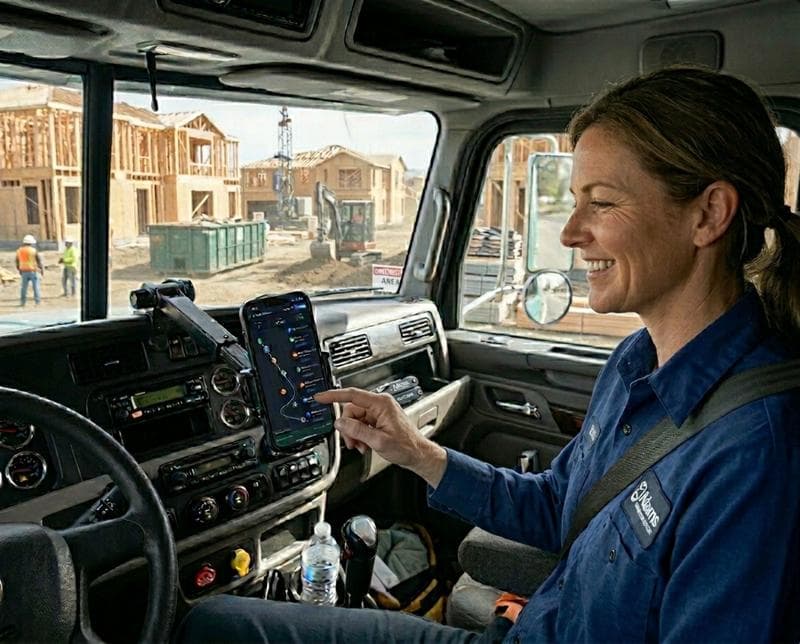
For decades, waste haulers relied on experience and spreadsheets to plan routes and assign jobs. That approach still works, but it leaves money on the table. Modern AI dispatch systems now analyze hundreds of variables in seconds—vehicle capacity, driver location, traffic patterns, customer priority, and fuel costs—then generate routes that cut drive time by 10 to 20 percent. This isn't theoretical; fleets using intelligent routing are seeing measurable fuel savings and completing more pickups per shift.
What makes this different from older GPS systems is the learning component. These platforms improve over time by analyzing completion data, identifying bottlenecks, and adjusting recommendations. When a driver consistently finishes a route faster than predicted, the system recalibrates. When traffic patterns shift seasonally, the algorithm adapts. For operations managers juggling multiple yards and shifting demand, this automation reduces manual dispatch work and lets teams focus on customer issues and driver management instead of drawing lines on maps.
Real-Time Container Tracking and IoT Integration
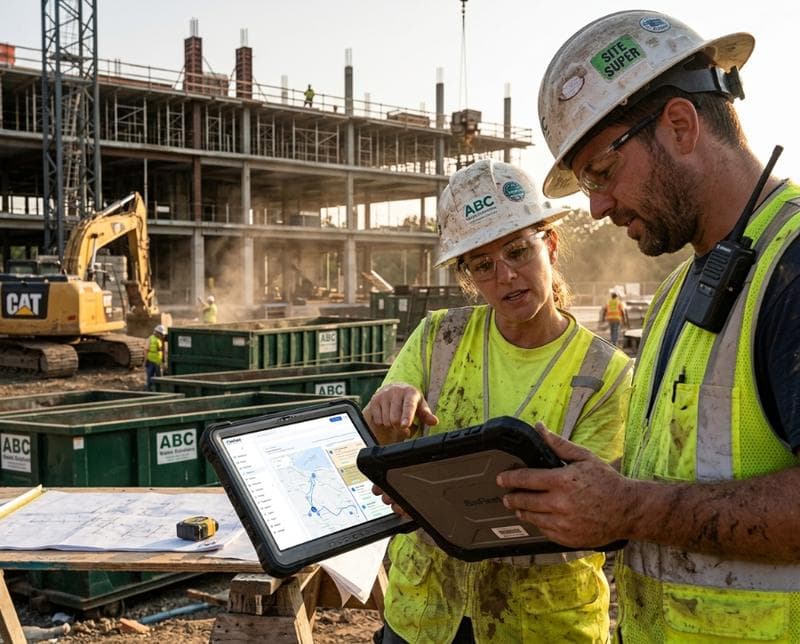
Lost or misplaced bins represent operational blind spots that can wreck profitability. IoT sensors attached to containers now provide live location data, fill-level alerts, and service history in a unified dashboard. Managers can answer customer questions instantly—"Is my dumpster coming today?"—instead of calling the yard or checking paperwork. Fill-level sensors also prevent costly overfilled pickups and optimize collection schedules by identifying which containers actually need service versus which customers just haven't used them yet.
Beyond logistics, this data feeds directly into billing and maintenance workflows. When a sensor shows a container hasn't moved in 30 days, the system can flag it for outreach or termination. When a bin triggers damage alerts, maintenance crews get notified before a minor issue becomes a customer complaint. BinFleet and similar platforms integrate this sensor data with dispatch and invoicing, creating a closed loop where every container's journey is tracked, managed, and monetized.
Mobile-First Driver Experience and Real-Time Communication
Drivers are increasingly tech-native, and they expect modern tools. Mobile apps now replace clipboards and radio chatter, showing drivers their assigned route, confirming pickups with photos, capturing customer signatures, and updating completion status in real time. This reduces data entry errors that used to cascade into invoicing problems and customer disputes. Drivers also receive job details before arrival—special instructions, weight limits, hazardous material warnings—so they can work safely and efficiently without hunting for information.
Two-way SMS and app notifications keep customers informed without burdening your team. Automated messages confirm upcoming pickups, alert customers to delays, and prompt payment—all without a dispatcher making phone calls. For routes running behind schedule, real-time updates prevent unnecessary customer service complaints. Many haulers are finding that transparency actually reduces call volume because customers feel informed, not abandoned.
Integrated Billing, Payments, and Financial Visibility
Fragmented systems create invoicing nightmares. A container gets picked up, but the data lives in dispatch. The customer calls, and billing doesn't have current info. Payment comes in, but it's not matched to the right invoice. Modern waste management platforms consolidate order data, container history, and service completion into a single billing source of truth. When a pickup is confirmed, invoices auto-generate. When a customer pays online or via SMS, it settles immediately. This reduces days sales outstanding and eliminates the reconciliation headaches that plague multi-yard operations.
Automated billing also surfaces profitability blind spots. Dashboards show which customers are most profitable, which routes generate margin, and which services are commoditized. With this clarity, managers can confidently decide where to focus growth efforts or where to adjust pricing. Online payment portals reduce manual check handling and ACH processing delays. For customers, the ability to pay via phone or web during business hours increases compliance and reduces the friction around account management.
Predictive Maintenance and Equipment Lifecycle Management
Trucks breaking down in the field cost thousands in lost productivity and emergency repairs. IoT sensors on vehicles now track engine metrics, fuel efficiency, tire pressure, and maintenance intervals, sending alerts before failure occurs. Predictive maintenance schedules service based on actual component wear, not just calendar dates, extending equipment life and reducing unplanned downtime. For large fleets managing dozens of vehicles across multiple yards, this visibility prevents cascading breakdowns during peak season.
Equipment tracking also improves asset utilization. When every dumpster and compactor has an ID and location history, managers see which assets sit idle and which ones are overused. This data informs purchasing decisions and prevents the common mistake of underutilizing expensive equipment. Smaller operations benefit too—knowing exactly where every container is makes cycle counting accurate and prevents duplicate purchases or unnecessary rentals to cover for "lost" bins.
Sustainability Reporting and Compliance Automation
Regulatory requirements around waste diversion, emissions reporting, and environmental compliance are tightening. Technology platforms now automate data collection for landfill reports, recycling tracking, and carbon footprint calculations. Instead of manual spreadsheets compiled by employees, compliance data flows automatically from service records. This reduces error, speeds audit preparation, and ensures accuracy. Many waste haulers are also finding that transparency around environmental impact is becoming a selling point with environmentally conscious customers and municipalities.
Detailed reporting also unlocks operational insights. By tracking material types, routes, and disposal destinations, managers can identify opportunities to shift more waste to lower-cost processing facilities or recycling partners. These aren't one-time optimizations—as mix and demand change, the data tells you where to adjust. Marketing teams also use this data to communicate sustainability achievements to customers and win bids from companies with ESG commitments.
Frequently Asked Questions
What's the biggest technology barrier for small waste haulers?
Implementation complexity and cost are real concerns, but modern platforms like BinFleet offer scaled solutions for operators of all sizes. Many vendors now use cloud-based models with per-unit pricing, so you only pay for what you use. Starting with core features like dispatch and invoicing, then layering in IoT and advanced analytics, makes adoption manageable without a massive upfront investment.
How long does it take to see ROI on waste hauler technology?
Most fleets see measurable savings—fuel reduction, faster invoicing, fewer lost pickups—within 60 to 90 days. Route optimization alone typically delivers 10-15 percent fuel savings, which on a fleet paying $20,000 monthly in fuel covers platform costs quickly. Customer retention improvements and reduced administrative overhead extend payback even faster.
Do I need to replace my entire tech stack to adopt these trends?
No. Modern platforms integrate with existing systems via APIs, so you don't need a complete rip-and-replace. Many haulers start with a core platform like dispatch and billing, then gradually connect IoT sensors, add customer portals, or integrate with accounting software. This phased approach reduces disruption and lets you validate impact before expanding investment.
How do I know if my team is ready for new technology?
Readiness depends less on technical skill and more on leadership commitment. Teams resist tools that make their jobs harder, but tools that eliminate busywork—like manual dispatch or data entry—tend to gain adoption quickly. Early wins matter: deploy dispatch and mobile apps first to show value, then expand. Many platforms include training and support to ease the transition, so lack of internal IT expertise shouldn't be a blocker.
Taking the Next Step
The waste hauling industry is in the middle of a technology shift. Operators who move now—whether by upgrading dispatch, adding IoT tracking, or integrating billing—will outcompete those still running on spreadsheets and intuition. The good news is that proven, affordable solutions exist. Start with a demo of BinFleet to see how modern platforms handle order management, dispatch, and customer communication for waste haulers. Many operators find that just one or two features solve enough pain points to justify adoption, and the rest follows naturally from there. For more insights on waste hauling operations, check out our blog for detailed guides on specific challenges your team might face.
Ready to Streamline Your Operation?
See how BinFleet AI helps waste haulers save time, cut costs, and grow.
Request a Free 30-Day TrialRelated Articles
How Dumpster Dispatch Software Eliminates Manual Scheduling and Cuts Operational Errors

How Dumpster Rental Accounting Software Transforms Your Bookkeeping