How Driver Apps Transform Waste Hauling Operations in 2026
Why Waste Haulers Need a Purpose-Built Driver App
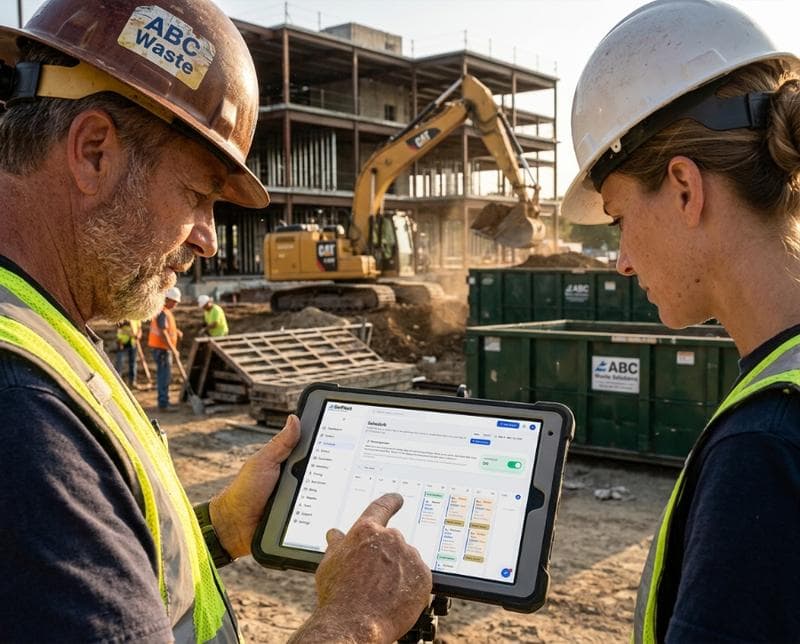
Traditional dispatching methods—radio calls, paper clipboards, and manual route sheets—create invisible friction in every shift. Drivers waste time confirming stops, supervisors spend hours trying to locate vehicles, and customers receive no updates until the job is done. A purpose-built driver app eliminates these gaps by putting route information, customer details, and proof-of-service tools directly in your driver's pocket.
The waste and dumpster rental industry has unique demands that generic delivery apps don't address. Your drivers need to see container weights, confirm pickup conditions before pulling away, photograph damage claims, capture customer signatures, and instantly notify dispatch of route changes or delays. A driver app purpose-built for waste hauling handles all of this while remaining simple enough that experienced drivers adopt it immediately.
Real-Time Stop Management and Route Visibility
Every minute a driver spends searching for an address or confirming a stop is a minute lost to revenue. A mobile driver app displays optimized routes with turn-by-turn navigation, customer contact information, special instructions, and service history at a glance. Drivers tap "Arrive" when they reach a location, and dispatch sees the update in real time. This transparency means supervisors can answer customer calls instantly with accurate ETAs instead of guessing when the driver will arrive.
Route changes happen constantly in waste hauling—emergency pickups, customer cancellations, mechanical issues. A good driver app lets dispatchers reassign stops on the fly without radio back-and-forth, and drivers see the updated route within seconds. This agility protects revenue because missed or delayed pickups directly impact customer satisfaction and can trigger service credits or disputes.
Photo Capture and Damage Documentation
Photos are your defense against damage claims and billing disputes. When a driver documents a dumpster's condition before pickup and again after service, you have irrefutable proof of what happened on site. A driver app with built-in photo tools makes this effortless—drivers snap pictures with timestamp and location data, attach them to the service record, and the image is immediately stored in your system. This workflow takes 30 seconds per stop and eliminates thousands of dollars in annual claim losses.
Beyond defense, photos drive accountability and quality. If a driver consistently leaves containers damaged or improperly serviced, photo history reveals the pattern. Conversely, excellent drivers can point to documentation that proves their professionalism. Some haulers use photo documentation as a training tool, reviewing images with drivers to reinforce proper handling techniques and identify equipment issues early.
SMS Updates and Customer Communication
Customers hate uncertainty. A driver app that automatically sends SMS status updates—"Your pickup is scheduled for 2 PM," "We're 10 minutes away," "Service complete"—transforms the customer experience without requiring manual texts. These automated notifications reduce no-answer calls by 40 percent because customers already know the driver is coming. When unexpected delays occur, drivers or dispatchers can send a one-tap custom update explaining the situation, managing expectations before frustration sets in.
The secondary benefit is reduced dispatch overhead. Instead of fielding "Where's my driver?" calls all day, your team answers fewer inbound inquiries because customers have real-time visibility. This frees dispatch staff to focus on optimization, customer service issues, and problem-solving rather than acting as a constant information switchboard.
Streamlined Invoicing and Payment Collection
A driver app that captures service completion and allows on-site payment collection directly from the truck accelerates cash flow and reduces billing disputes. Drivers can scan account details, enter custom charges, apply discounts, and send an invoice summary before leaving the site. Some customers pay immediately via mobile payment, others receive the invoice via email within minutes. This eliminates the two-week billing lag that traditional office-based invoicing creates.
Payment on completion also reduces accounts receivable headaches. A customer who receives an invoice at the truck is more likely to pay promptly than one who waits for a bill in the mail. For drivers, faster invoicing means faster payouts if they're compensated based on stops completed, which improves morale and productivity.
Data Integration and Decision-Making
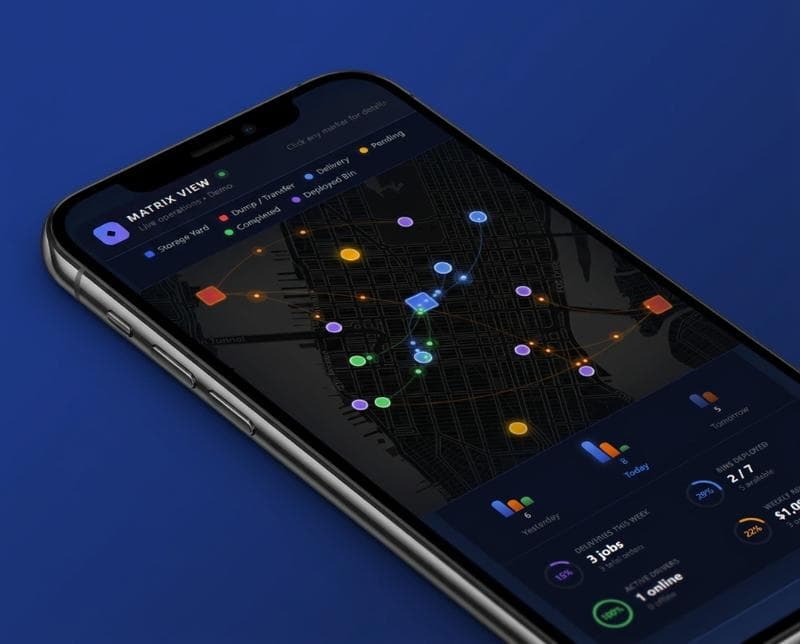
A driver app doesn't live in isolation—it feeds data into your central operations platform. Every completed stop, photo, customer interaction, and payment becomes a data point that improves future decisions. Over time, this data reveals which routes are most profitable, which service types take longer than expected, which customers have recurring issues, and which drivers consistently deliver excellence. Dispatchers use this intelligence to optimize scheduling, and management uses it to forecast growth and identify efficiency opportunities.
In 2026, the businesses winning market share are those using data to operate proactively rather than reactively. A driver app that integrates with a full fleet operations platform creates a complete picture of your operation, from first customer contact through final payment and performance analysis.
FAQ: Driver Apps for Waste Haulers
Will my experienced drivers adopt a mobile app?
Adoption depends on design simplicity and perceived value to the driver. Apps built for waste hauling, not generic delivery, are adopted faster because drivers see immediate benefits—less manual data entry, easier navigation, and proof of work that protects them in disputes. Starting with a pilot group and gathering driver feedback during rollout also builds buy-in.
What if a driver loses signal on remote routes?
A mature driver app syncs data before the driver goes offline and uploads automatically when signal returns. Critical information like addresses, customer details, and special instructions are cached on the phone, so drivers never lose access to their route. This offline-first design ensures service disruptions don't halt operations.
How quickly can we see ROI from a driver app?
Most haulers see measurable improvements within the first month: reduced billing disputes through photo documentation, faster invoicing, and fewer missed stops due to better navigation and communication. Within three months, route optimization data typically reveals opportunities to consolidate stops or adjust territories, directly boosting profitability. A quick demo can show you specific metrics for operations your size.
Is a driver app secure for customer data?
Enterprise-grade driver apps use bank-level encryption, role-based access controls, and regular security audits. Customer phone numbers, addresses, and payment information should be encrypted in transit and at rest, with audit logs tracking who accessed what and when. Compliance with data protection regulations is non-negotiable for any platform handling waste hauling operations.
Ready to Streamline Your Operation?
See how BinFleet AI helps waste haulers save time, cut costs, and grow.
Request a Free 30-Day Trial