How Driver Apps Transform Waste Hauling Operations in 2026
Why Waste Haulers Need Modern Driver Apps
The waste hauling industry operates on thin margins and relies on field teams to execute hundreds of stops accurately every week. Traditional paper manifests and manual photo documentation create gaps—missing photos at critical stops, illegible notes, delayed customer updates, and invoice disputes that cost you time and money. When a driver loses paperwork or forgets to photograph a container condition before pickup, you have no evidence to resolve customer complaints or justify charges.
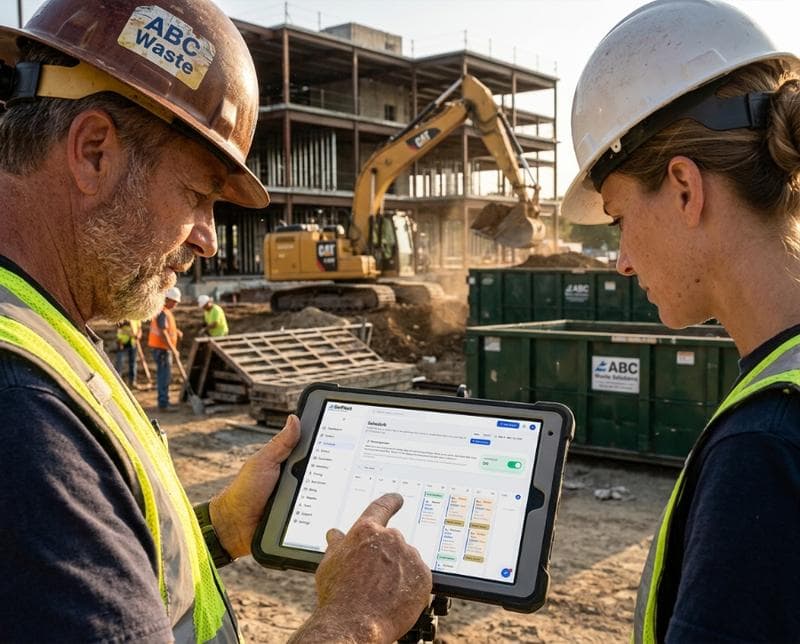
A mobile driver app eliminates these operational blind spots by putting order management, photo capture, and real-time communication into one tool drivers already carry. Instead of returning to the yard to file paperwork, drivers complete stops digitally, attach timestamped photos, and send customer notifications automatically—all while still on the road. This shift from reactive paperwork to proactive digital operations is why leading haulers are adopting driver apps as standard practice.
Real-Time Stop Management and Route Optimization
Drivers using modern apps don't just know their route order—they see live GPS feedback, traffic delays, and dynamic reordering that keeps them on schedule even when circumstances change. When a customer reschedules a pickup or a driver encounters unexpected congestion, the app recalculates the most efficient stop sequence in minutes rather than hours. This flexibility means fewer missed appointments and faster completion of daily runs, which directly translates to more stops per vehicle and better resource utilization.
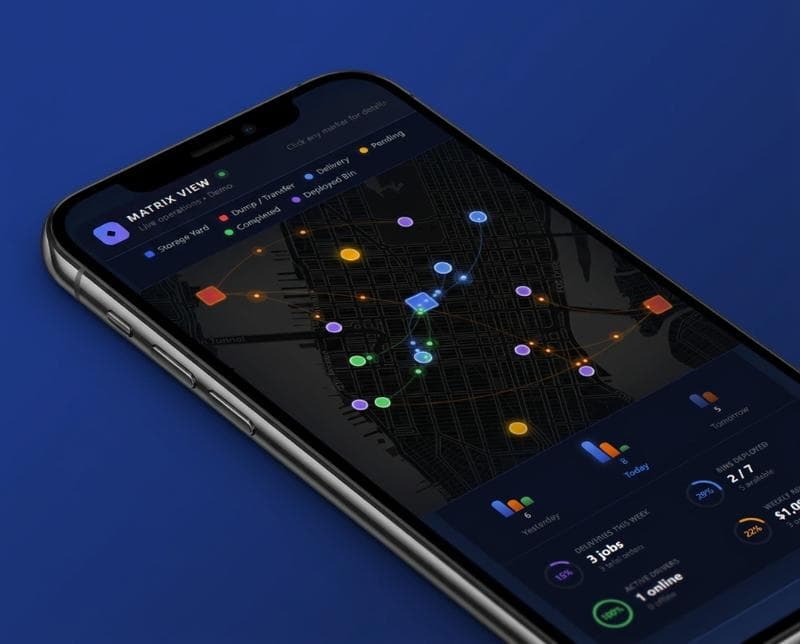
From the dispatcher's perspective, real-time stop tracking provides visibility into exactly where each driver is, which stops are complete, and which are pending. If a stop takes longer than expected or a driver needs guidance, dispatchers can communicate instantly without relying on phone calls. This two-way visibility reduces downtime, prevents duplicate trips, and creates accountability—drivers know their progress is visible, which naturally encourages efficiency and focus on the job.
Photo Capture and Proof of Service at Every Stop
Requiring drivers to photograph containers before and after pickup might seem time-consuming, but it's the most valuable protection against customer disputes and compliance violations. When a hauler picks up a container with visible damage and doesn't document it, you're liable if the customer later claims you caused the damage. Similarly, photos prove you actually serviced a location, which eliminates "I was never there" disputes and provides evidence for invoicing accuracy. Modern driver apps make photo capture friction-free by letting drivers snap, review, and attach photos directly within the order—no separate apps or emails required.
Photos also serve as internal quality control feedback. Dispatchers and operations managers can review photographic evidence of the condition of containers, yard cleanliness, and customer property at each stop. This visibility helps identify recurring issues—like containers that need replacement or sites with consistent access problems—so you can address them proactively. Over time, your photo library becomes a valuable reference for training new drivers and settling disputes with confidence.
Automated Customer Updates and Communication
Customers expect status updates—they want to know when their bin will be picked up, when it's been dropped off, or when a specialty service is complete. Without automation, sending these updates falls on your office staff, who manually text or email each customer after checking with dispatch. Driver apps eliminate this bottleneck by allowing drivers to trigger customer SMS and email notifications directly from the app when they arrive, complete service, or encounter delays. Customers receive instant, accurate updates without any manual intervention, which dramatically improves satisfaction and reduces complaint phone calls.
Real-time notifications also reduce coordination failures. If a driver completes a service early or runs late, customers get notified immediately instead of waiting for the original estimated time and wondering if you're coming. This transparency builds trust and positions you as a professional, organized operation—a competitive advantage in a market where customer experience often drives contract renewals and referrals.
Streamlined Invoicing and Payment Processing
Traditional workflows force drivers to return to the office, fill out timesheets, and let admin staff manually reconcile what was completed against contracts. Errors slip through: a driver might miss documenting an extra haul, or office staff might misread notes and bill the wrong service. Driver apps close these gaps by requiring drivers to complete every stop digitally, capture service details in real time, and flag any variations (like a customer requesting an extra pickup). This data flows directly into your invoicing system, so billing reflects exactly what was completed and when.
Payment processing also benefits from mobile documentation. When customers have proof that service was completed—timestamped photos, GPS location records, and digital completion confirmation—they're more likely to pay promptly and less likely to dispute invoices. Some driver apps integrate directly with payment systems, allowing drivers to collect digital signatures or cards at the point of service for one-time jobs or deposits. This real-time revenue capture improves cash flow, especially critical for smaller operations managing seasonal fluctuations.
Integration With Dispatch and Yard Management
A driver app isn't a standalone tool—it's part of a complete operational ecosystem that includes dispatch software, inventory tracking, and invoicing. When your driver app syncs with your yard management system, dispatchers see which containers are available for delivery before assigning stops, preventing failed jobs due to missing equipment. When a driver marks a container as damaged or unusable, that information updates inventory in real time, so the next dispatcher doesn't assign that container to another customer. This integration prevents costly errors and keeps operations moving smoothly across all shifts and locations.
For multi-yard operations managing containers across several pickup and drop-off locations, integrated driver apps provide unified visibility that paper-based systems can never match. A driver working from your downtown yard can pick up containers delivered to your satellite yard, and the transfer happens in the app automatically—no manual transfer forms or lost containers. This operational clarity is especially valuable as your business scales across multiple service areas.
Frequently Asked Questions
Do drivers actually use mobile apps, or do they resist the change?
Most drivers adapt quickly when the app simplifies their work rather than adding steps. If the app speeds up stop completion, eliminates paperwork, and works offline when service is spotty, drivers see the benefit. Initial resistance usually comes from complex interfaces or apps that require drivers to do twice the work—so implementation quality and training matter. When done right, drivers appreciate the accuracy and reduced office conflicts.
What happens if a driver's phone dies or loses signal?
Modern driver apps work offline by storing orders and photos locally, then syncing when the phone reconnects to the network. This means drivers can complete stops without cellular service and upload all data—photos, signatures, completion status—once they're back in range. Offline capability is essential in rural service areas or inside large facilities with poor signal, so make sure your app provider supports it.
How do we ensure drivers actually take photos at every stop?
The best driver apps make photos a required field that drivers must complete before marking a stop as done. If a photo is missing, the app won't let them advance, which creates a natural incentive to capture evidence while they're at the location. Some platforms also allow you to set rules—like requiring photos only for damage claims or new customers—so you're not creating unnecessary busywork.
Can a driver app reduce fuel costs and overtime?
Yes. Route optimization and real-time stop management typically reduce drive time by 10-15% because drivers spend less time figuring out stop order and more time executing them efficiently. GPS tracking also helps dispatchers identify excessive idling or inefficient routing patterns, which are corrected over time. The time savings translate directly to lower fuel costs and reduced overtime, which compounds as your fleet scales.
Getting Started With Driver Apps Today
If you're managing routes manually or relying on paper and spreadsheets, a driver app is one of the highest-ROI investments you can make in your operation. Start by defining your most painful problem—whether that's missed photo documentation, customer communication delays, or invoicing errors—and choose a platform that solves that immediately. You don't need every feature on day one; focus on clean implementation of core capabilities like stop management, photo capture, and customer notifications.
The right platform should integrate seamlessly with your existing dispatch and yard management systems so data flows automatically without double entry. Training is important, but modern driver apps are designed to be intuitive—most drivers are productive within a week. If you're ready to see how a complete driver app solution works in practice, request a demo with BinFleet to watch the system in action or explore how we help waste haulers streamline operations. You can also browse more on our blog for other operational insights that help you stay competitive in 2026 and beyond.
Ready to Streamline Your Operation?
See how BinFleet AI helps waste haulers save time, cut costs, and grow.
Request a Free 30-Day Trial