How a Driver App Transforms Waste Hauling Operations
The Real Problem With Pen-and-Paper Dispatching
Most waste haulers still rely on printed manifests, handwritten notes, and end-of-day phone calls to track what actually happened in the field. A driver grabs a route sheet at 6 AM, completes 40 stops by noon, and the office has no idea if a customer's bin was picked up correctly, damaged, or missed entirely until the driver returns and reports verbally. By then, it's too late—the customer has already called with a complaint, and you're scrambling to respond with incomplete information.
This gap between field reality and office visibility costs time, money, and customer trust. When dispatchers can't see real-time status, they double-book drivers, miss follow-up service calls, and waste fuel on inefficient routes. A driver app closes that gap by putting proof, location data, and live updates directly in your office dashboard. The result is faster problem resolution, fewer customer disputes, and smarter dispatch decisions.
Real-Time Stop Management and Proof of Service
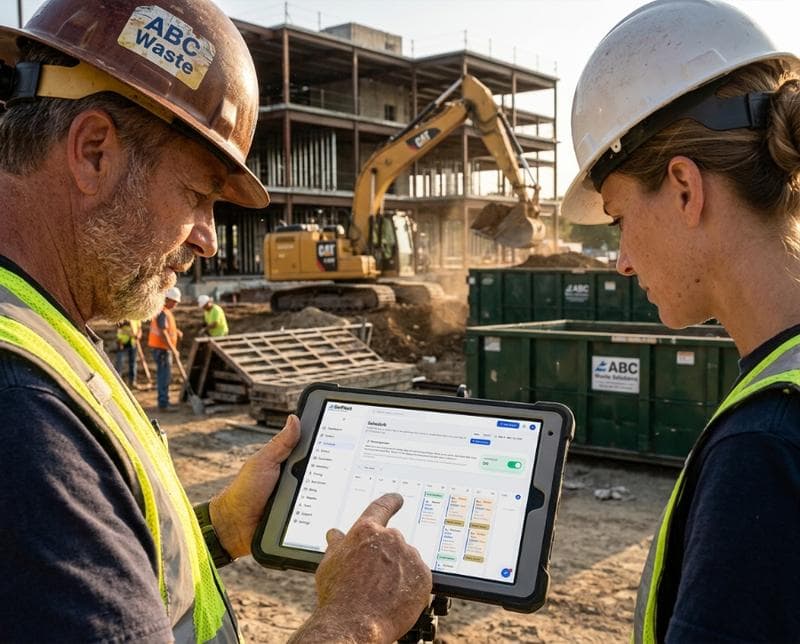
A mobile driver app lets haulers capture photos, notes, and timestamps at every stop, turning guesswork into documented fact. When a driver arrives at a customer location, they can snap a photo of the bin condition before pickup, confirm the job was completed, and mark it done—all within seconds. That photo and timestamp become permanent proof if a customer later claims the bin was damaged or the job was never performed. No more "he said, she said" disputes.
This real-time documentation also helps with service quality. If a driver consistently misses parts of a service area or handles bins roughly, you can see it immediately through the app's stop history and photos rather than waiting for customer complaints to stack up. Dispatchers can coach drivers faster, adjust routes based on actual performance data, and route repeat calls to the most reliable team members. The transparency builds accountability and gives you concrete data to train and improve operations.
GPS Tracking and Route Optimization
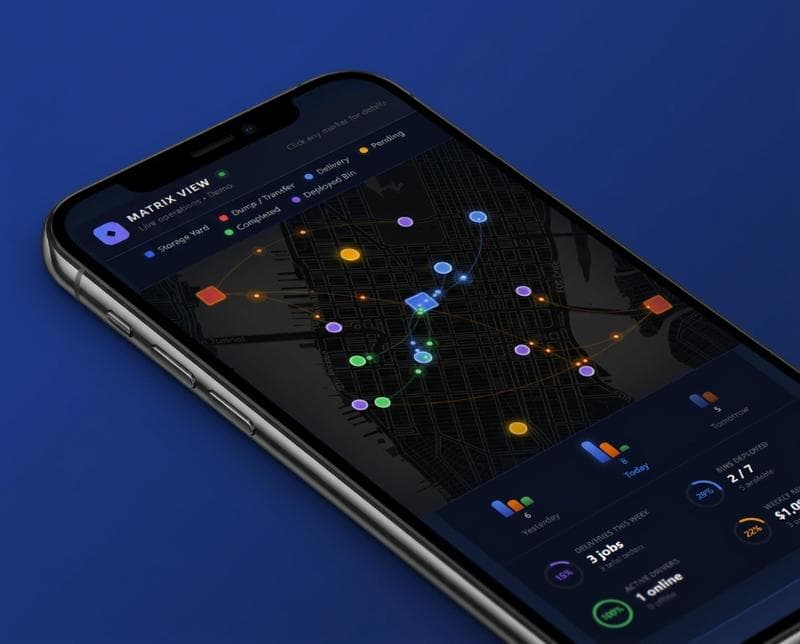
A driver app with built-in GPS shows you where every vehicle is in real time, eliminating the need to call drivers asking "where are you?" and freeing up radio chatter. When a customer calls with an urgent service request or a missed pickup, you can see exactly which driver is closest and route them there directly. You also gain visibility into how much time drivers actually spend at each stop, which helps you plan more realistic daily routes and estimate arrival windows for customers.
Over time, GPS data reveals patterns: which routes are bottlenecks, where traffic regularly delays pickups, and which neighborhoods cluster best for efficiency. A modern driver app can even suggest optimized route sequences to minimize miles and fuel costs. This isn't theoretical—haulers using route optimization typically see 10–15% fuel savings and faster daily completion times, which translates directly to lower per-stop costs and happier customers.
Automated Customer Notifications and Status Updates
When a driver confirms a stop in the app, you can automatically send a text or push notification to the customer saying their bin was picked up, their yard was cleaned, or their roll-off was dropped. Customers no longer have to wonder if their service happened; they get proof within minutes. This reduces inbound customer service calls and builds confidence that your team is reliable and professional.
The automation also works the other way. If a driver encounters a problem—a bin is locked, a driveway is blocked, or a customer requests a change—they can send an instant message or photo to dispatch, which then alerts the customer with an explanation. Instead of a missed pickup followed by an angry call hours later, you've already communicated the issue and found a solution. This proactive communication dramatically improves customer satisfaction and reduces churn.
Streamlined Invoicing and Payment Processing
Driver apps that integrate with your back-office system can generate accurate invoices directly from completed stops, eliminating data-entry errors and the time lag between service delivery and billing. If a customer is on-site and requests an additional service, the driver can add it to the invoice in real time, ensuring nothing falls through the cracks. Payment information is captured cleanly, and billing reflects exactly what was delivered.
This integration also simplifies reconciliation. Finance teams no longer have to cross-reference handwritten tickets with recorded stops or chase drivers for clarification on what was actually completed. The single source of truth—the driver app—feeds directly into your accounting system, speeding up invoicing cycles and improving cash flow.
Reducing Operational Friction and Driver Burnout
Field teams often feel frustrated by inefficient routing, unclear instructions, and the burden of manual paperwork at the end of the day. A well-designed driver app removes that friction. Routes are clear and sequenced logically, stop details are just a tap away, and the app handles documentation instead of requiring drivers to fill out forms or take photos manually after hours. Drivers focus on the job itself, not admin work.
This matters more in 2026, when recruiting and retaining drivers is harder than ever. Drivers who use modern tools feel supported and professional, and they're less likely to burn out or leave for competitors. Investing in a driver app is a recruiting and retention tool, not just an operational one. Teams that use them report higher driver satisfaction and lower turnover than those still managing jobs on paper.
Choosing the Right Driver App for Your Hauling Company
Not all driver apps are built the same. Some are bare-bones GPS trackers; others are full-featured platforms that connect dispatch, invoicing, customer communication, and driver workflows into one system. Look for an app that integrates with your existing software stack—dispatch system, accounting, payment processing—so data flows smoothly and you're not manually syncing information between tools.
Key features to prioritize include intuitive stop management (photo capture, notes, timestamps), real-time GPS with accurate geofencing, two-way driver-to-dispatch messaging, and automatic customer notifications. If you manage multiple yards or service territories, the app should support multi-yard operations so each location has its own view and drivers can be assigned across locations without confusion. Request a demo of BinFleet to see how a modern driver app can integrate with your entire operation—from dispatch to final invoice—in one platform.
FAQ: Driver Apps for Waste Haulers
Do driver apps actually save time, or do they just add another tool drivers have to learn?
A poorly designed app will slow drivers down, but a well-built one cuts 15–30 minutes per day of paperwork and admin work. Drivers don't fill out forms or take photos after their shift; the app guides them through each stop in real time and captures everything automatically. Once drivers are trained—usually within a week—they work faster and with fewer errors because routes are optimized and they don't have to remember details or call dispatch with questions.
What happens if a driver's phone dies or they lose signal in the field?
The best driver apps work offline. Stops, photos, and notes sync to the server as soon as connectivity returns, so no data is lost. Drivers can complete their route without worrying about staying connected, and dispatch still gets the information at the end of the day. This is essential for rural routes or areas with spotty coverage, and it's standard in enterprise-grade hauling apps.
Can a driver app really reduce customer service complaints?
Yes, because it eliminates the biggest source of disputes: unclear communication about whether a job was completed. When customers get instant proof (a photo and timestamp) that their service happened, complaints drop significantly. You also catch service issues faster because you can see photos and notes immediately, so you can fix problems before customers even call. Many haulers report 20–40% fewer complaint calls after deploying a driver app.
How do driver apps handle multi-yard operations where drivers work across different locations?
A modern driver app designed for waste haulers supports multi-yard dispatch, so office managers at different locations can assign routes to drivers, and drivers see all their stops in a single app regardless of which yard they're based at. Billing and invoicing roll up correctly by location, and dispatch visibility stays clean across the entire operation. Read more about scaling multi-yard operations to see how other haulers use technology to manage growth.
Ready to modernize your driver workflow? BinFleet's driver app integrates with your entire dispatch, invoicing, and payment system so your office has real-time visibility and your drivers spend less time on paperwork. Start a free trial today to see how it works with your team.
Ready to Streamline Your Operation?
See how BinFleet AI helps waste haulers save time, cut costs, and grow.
Request a Free 30-Day Trial