How a Driver App Transforms Waste Hauling Operations
Why Waste Haulers Need a Mobile Driver App
Paper routes and radio communication worked decades ago, but they cost waste hauling companies thousands every month in lost efficiency, missed pickups, and customer complaints. When drivers work off printed route sheets and rely on phone calls to report status, dispatchers lose visibility into what's happening in the field. A customer calls asking about their pickup, and the dispatcher has no idea if the driver is five minutes away or running two hours late. This gap between what's actually happening and what the back office knows creates friction, frustration, and ultimately lost revenue.
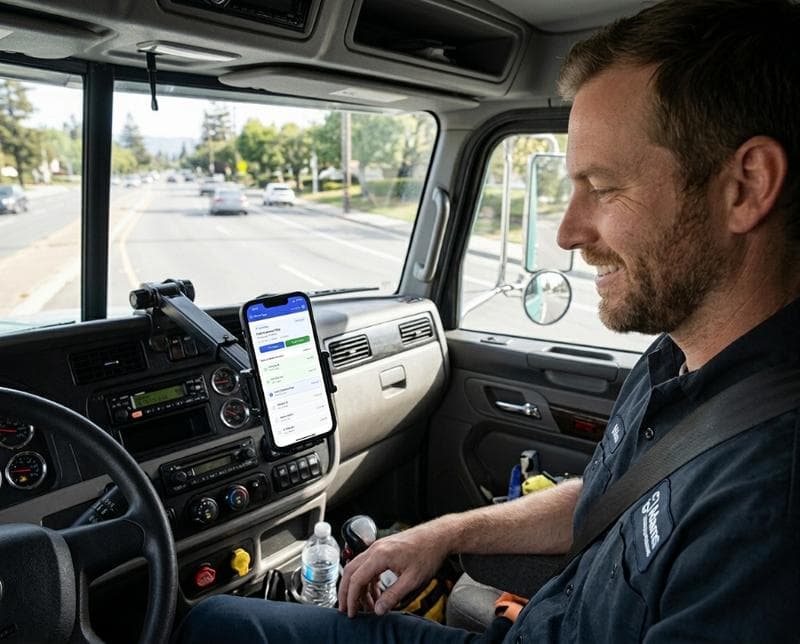
A driver app designed for waste hauling bridges that gap by putting real-time information in the hands of both drivers and dispatchers. Drivers can see their optimized route, navigate to each stop, confirm arrival, snap photos of the container condition, log notes about the job, and mark it complete—all from their phone. Dispatchers see every action instantly. This transparency doesn't just reduce confusion; it builds trust with customers, speeds up billing, and gives operations managers the data they need to make better decisions about scheduling, staffing, and route planning.
Real-Time Stop Management and Route Visibility
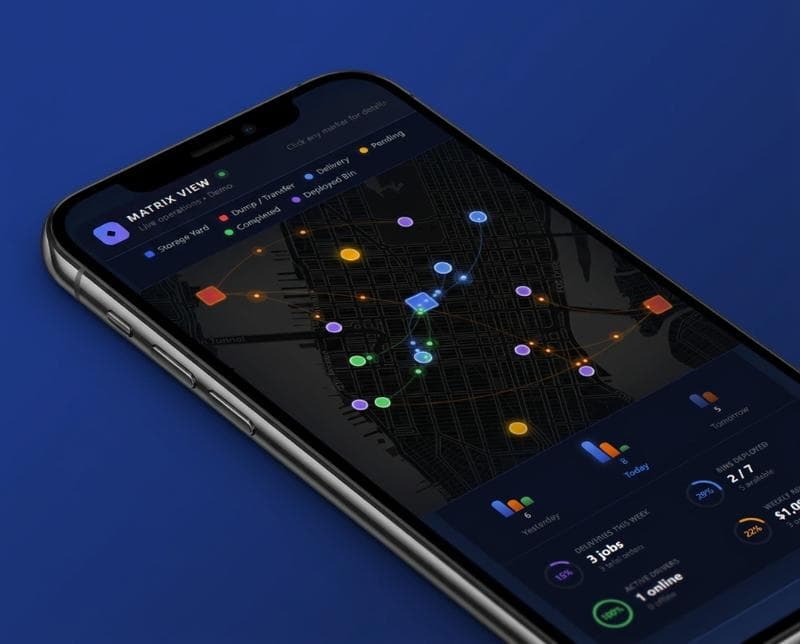
One of the biggest operational headaches in waste hauling is knowing where drivers actually are during their shift. Without mobile visibility, dispatchers rely on driver calls or text messages—communication that comes too late to handle a customer question or reroute a driver to an emergency pickup. A driver app solves this by showing every driver's location on a map as they move through their route, letting dispatchers see in real time which stops are complete, which are in progress, and which haven't been touched yet.
Beyond location tracking, a good driver app lets operators assign stops dynamically and optimize routes on the fly. If a new urgent job comes in, dispatchers can add it to the nearest driver's route and send a notification instantly. If a driver encounters a problem—a locked gate, a missing container, a hazardous spill—they can flag the stop, add notes, and alert the office without stopping to make a phone call. This responsiveness turns what would have been a day-long headache into a five-minute resolution, and it keeps customers from calling back in frustration.
Photo Capture and Proof of Service
Disputes over whether a pickup actually happened, what condition a container was in, or why a job took longer than expected are common friction points in waste hauling. Without documentation, it becomes a he-said-she-said situation between driver and customer. A driver app with built-in photo capability eliminates this problem by making it easy and automatic for drivers to capture evidence at each stop. Drivers can snap photos before pickup, after pickup, or in cases where they can't access a container. These images are automatically tied to the job in the system, creating an irrefutable record.
This photo-based proof of service also accelerates invoicing and dispute resolution. If a customer claims they weren't serviced or claims damage to their property, you have photographic evidence. If there's a question about why an extra fee was charged, the photos explain it. Beyond protection, this documentation builds credibility. Customers feel more confident that their waste is being handled professionally when they can see that their containers are being properly inspected and serviced each week. Over time, this reduces dispute-related support costs and improves customer retention.
Real-Time Status Updates and Customer Communication
Customers increasingly expect to know when their service is happening. An old-school waste hauler tells customers "we'll come sometime between 7 AM and 5 PM," which isn't good enough anymore. A driver app enables automatic customer notifications—arrival alerts, completion confirmations, and even photos when appropriate—that keep customers informed and reduce the "where are you?" calls that clog up dispatch phone lines. When customers feel informed, they feel valued, and that translates to higher satisfaction scores and lower churn.
For operations teams, automated status updates also reduce the burden on dispatch staff. Instead of answering phone calls from customers asking for an ETA, dispatchers can send automated SMS or app notifications that tell customers exactly when the driver will arrive, based on real-time GPS data. This shift from reactive call-handling to proactive communication improves the customer experience while freeing dispatch staff to focus on route optimization, problem-solving, and growth initiatives rather than being stuck fielding repetitive status questions.
Integration With Back-Office Dispatching and Billing
A driver app that exists in isolation—separate from your dispatching software, your route planner, and your billing system—creates more problems than it solves. Data has to be entered twice, reconciliation becomes a nightmare, and you lose the insights that come from seeing the full picture of your operation. The best driver apps integrate seamlessly with your back-office systems so that information flows naturally from dispatch to driver to billing without manual re-entry or gaps.
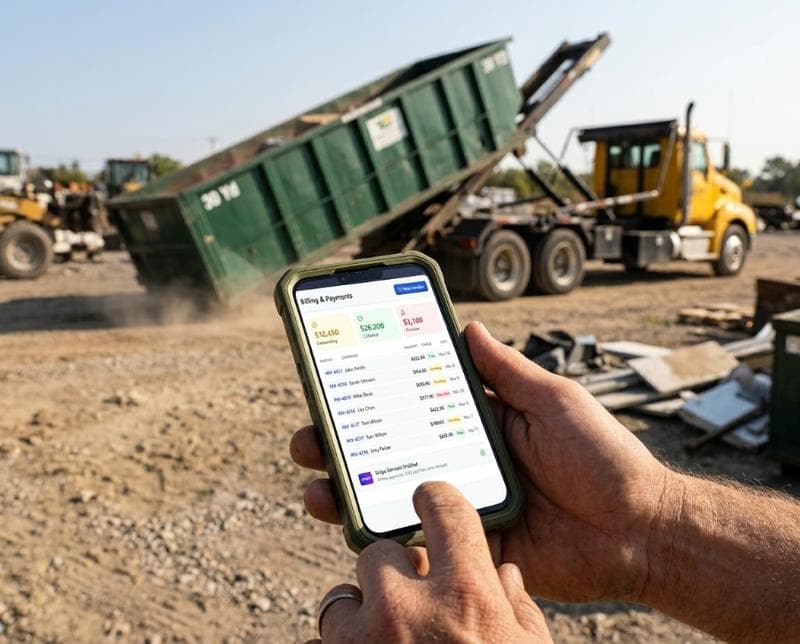
When your driver app talks to your dispatching and route optimization platform, drivers always have the most current route assignments, customer details, and special instructions. When a driver completes a job and the app captures photos and notes, that data flows automatically into your billing system, so your invoice reflects what actually happened in the field. This integration eliminates data entry errors, accelerates invoice generation, and gives you clean data for analytics and reporting. Over time, this closed-loop system becomes the foundation for spotting operational inefficiencies and making data-driven improvements to your business.
Reducing Driver Errors and Compliance Risk
Manual routing, handwritten manifests, and verbal instructions create countless opportunities for mistakes. A driver might skip a stop by accident, service the wrong container, or arrive at the wrong address—errors that damage customer relationships and create liability issues. A driver app with clear visual cues, turn-by-turn navigation, and customer information right on the screen reduces these errors dramatically. Drivers can confirm they're at the right address, pull up the exact service instructions for that customer, and check them off as they go.
From a compliance perspective, a driver app also creates a record of service that protects your company. If there's ever a question about whether a driver showed up, what work was performed, or whether safety protocols were followed, your app data provides documentation. For waste haulers working with regulated materials or operating in markets with strict service standards, this documentation becomes increasingly important. A driver app that logs every stop, every photo, and every timestamp gives you the evidence you need to demonstrate compliance and protect your business from liability claims.
Frequently Asked Questions
What happens if a driver loses cell signal or goes offline during their route?
A well-designed driver app works offline by caching route data, customer details, and navigation maps on the driver's phone. Drivers can complete stops, take photos, and log notes without an active connection. Once the phone reconnects to cellular or Wi-Fi, all that data syncs automatically to the back office. This means even in areas with spotty coverage, drivers never lose their work or fall out of communication.
Can a driver app really reduce dispatch staff workload, or does it just replace one problem with another?
When implemented correctly, a driver app removes the most repetitive parts of dispatch work—answering "where are you?" calls, manually collecting proof of service, and re-entering field data into billing systems. This frees dispatch staff to spend time on higher-value work like handling exceptions, optimizing routes, and building customer relationships. Most operators see a 15-20% productivity increase in their dispatch team within the first few months.
How long does it typically take drivers to adopt a new app and feel comfortable with it?
Good driver apps are designed to be intuitive, not require a computer science degree. Most drivers pick up the basics in one shift and become proficient within a week. The key is keeping the interface simple—show what the driver needs to do next, let them tap to confirm, and capture photos with one button. Operators who invest in proper training and support during the rollout see adoption rates above 90% within the first month.
Does using a driver app mean we need better phones or cellular plans?
Modern driver apps run efficiently on standard Android and iOS smartphones, even budget models. You don't need a specialized device or expensive infrastructure upgrade. Most waste haulers either equip drivers with basic company phones or allow drivers to use their personal devices with a company app license. Your cellular costs depend more on your coverage area and data needs than the app itself.
Getting Started With a Driver App for Your Waste Hauling Business
If you're running a waste hauling operation without real-time visibility into your drivers and jobs, a modern driver app isn't a luxury—it's a competitive necessity. The efficiency gains, customer satisfaction improvements, and operational insights you gain from mobile-first dispatching pay for themselves in weeks, not months. The question isn't whether you can afford to implement a driver app; it's whether you can afford not to.
The best time to start is now. See how BinFleet's driver app integrates with your dispatching, billing, and route optimization with a personalized demo, or explore our blog for more practical guides on running efficient waste hauling operations. A few minutes invested in understanding how the right technology can transform your field operations will give you clarity on what's possible for your business in 2026 and beyond.
Ready to Streamline Your Operation?
See how BinFleet AI helps waste haulers save time, cut costs, and grow.
Request a Free 30-Day Trial