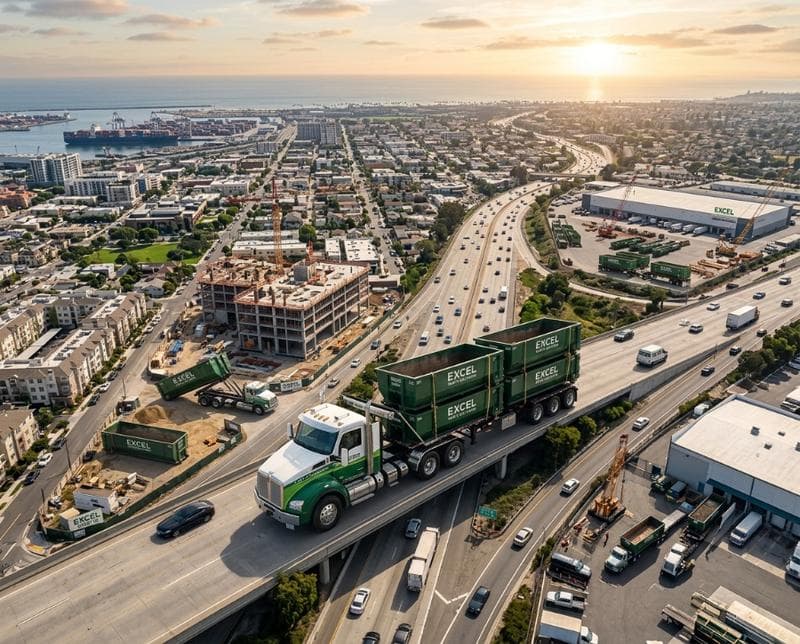
Dumpster Route Optimization: How to Reduce Fuel Costs and Maximize Daily Stops
The Real Cost of Poor Route Planning
Every mile your truck travels costs money—fuel, maintenance, driver wages, and vehicle depreciation all add up fast. When routes aren't optimized, drivers backtrack, spend time idle at traffic lights, and waste hours in the field completing fewer stops than they should. A typical 10-stop day that should take 6 hours might stretch to 8 or 9 hours with poor sequencing, and the customer experience suffers too. That translates to lower revenue per gallon burned and frustrated dispatchers managing impossible schedules.
The problem gets worse when multiple factors compete for attention: traffic patterns change daily, customer locations scatter across your service area, and same-day requests force mid-route adjustments. Dispatchers working with paper maps or basic spreadsheets can't recalculate routes in seconds, so drivers make guesses, miss the best sequence, and burn extra fuel. For a 20-truck fleet, just 2 extra miles per truck per day equals 40 miles wasted—roughly 6 gallons weekly at current fuel prices, or $10,000+ annually.
How Modern Route Optimization Works
Route optimization software uses real-time traffic data, service window constraints, and geographic clustering to build the most efficient sequence for each driver. Instead of sorting stops by address alone, the algorithm considers travel time between locations, traffic patterns at specific hours, vehicle capacity, and driver shift constraints. The result is routes that respect real-world conditions rather than theoretical ideals. When a driver starts their day with an already-optimized sequence, they spend less time deciding where to go next and more time completing profitable work.
The best routing platforms update dynamically throughout the day. When a rush order comes in or a customer requests a specific time window, the system recalculates affected routes in real time and alerts the dispatcher and driver instantly. This flexibility means you can accept more jobs without overcommitting drivers, and customers get accurate ETAs instead of vague two-hour windows. Dynamic routing also catches inefficiencies humans miss—like a sequence that works on Tuesday but creates gridlock on Thursday due to school schedules or construction.
Measuring the Impact: Fuel and Productivity Gains
Companies implementing strategic route optimization typically see 15–25% reductions in miles driven, which translates directly to fuel savings. A 20-truck fleet burning 1,000 gallons monthly at $3.50 per gallon spends $3,500 on fuel; a 20% improvement saves $700 monthly or $8,400 annually. But the real gain is usually bigger: with better routes, drivers complete 1–2 additional stops per day, meaning more revenue per vehicle without hiring extra trucks. That extra productivity often offsets the investment in routing software in 3–6 months.
The secondary benefits add up quickly. Drivers working efficient routes finish earlier, improving morale and retention in an industry where turnover is expensive. Customers receive more accurate delivery windows, leading to fewer missed appointments and fewer costly re-routes. Your fleet utilization improves because optimized routes reveal whether you have too many trucks for your actual volume or can safely add routes to existing capacity. Many operators discover they can run 25–30% more volume with the same fleet by simply eliminating wasted miles and dead time.
Practical Steps to Optimize Your Routes Today
Start by auditing your current routing process. How do dispatchers build routes now? Are they clustering by geography, or is it ad-hoc? Pull data from your last month of routes: average miles per stop, total miles driven daily, fuel spend, and average stops per truck. This baseline is essential for measuring improvement later. You'll likely spot obvious waste immediately—like a driver heading to the north side, then the south side, then north again instead of doing all northern stops together.
Once you have the baseline, invest in routing software that integrates with your dispatch system. BinFleet AI includes dynamic routing built for dumpster and waste rental, so you're not forcing a generic logistics tool into a waste-specific workflow. The software should handle service windows (must be there 9am–5pm), multiple vehicle types (10-yard vs. 20-yard containers), and real-time order changes without rebuilding routes manually. After implementation, give drivers 2–3 weeks to adapt, then compare metrics to your baseline. Most operators see measurable improvement within the first month.
Driver Adoption and Change Management
Drivers sometimes resist optimized routes because they have mental maps and prefer familiar patterns. The key is transparency: show drivers the math. Explain that optimized routes mean fewer hours on the road, earlier finish times, and potentially higher pay if you tie compensation to stops completed rather than hours worked. Frame it as a tool that benefits them, not a surveillance system. When drivers see they can finish by 3pm instead of 5pm, resistance usually disappears. Provide a week of onboarding with the new routing interface and let drivers ask questions without judgment.
Communication matters more than the software itself. Hold a team meeting, walk through a sample optimized route, and explain why the sequence matters. Show a driver their current average route (say, 45 miles for 8 stops) versus the optimized version (say, 32 miles for 9 stops). That visual proof builds buy-in. Then monitor real-world performance and celebrate early wins. If a driver beats the projected time or completes an extra stop, acknowledge it. This approach transforms route optimization from a top-down mandate into a collaborative efficiency project.
Handling Constraints Without Sacrificing Efficiency
Real dumpster rental routes have constraints that generic routing algorithms don't handle well: certain customers need pickups before 10am, some sites require a lift gate (limiting which trucks can serve them), and a few locations demand same-day service. Good routing software absorbs these constraints without creating massive inefficiencies. It should let you set hard windows (must arrive between 8–9am) and soft preferences (try for 1pm, but flexibility exists). The algorithm then builds routes that satisfy hard constraints while optimizing around soft ones, striking a practical balance between customer service and efficiency.
Environmental and traffic constraints matter too. In urban areas, some streets prohibit commercial trucks during peak hours; coastal regions might have tide-dependent access windows; winter weather or construction detours change daily optimal routes. Advanced routing platforms integrate traffic APIs and allow rapid manual adjustments when conditions shift. This adaptability is why off-the-shelf GPS tools often fail for waste hauling—they don't understand that your 25-ton truck can't use certain routes that work for passenger vehicles, and they miss the operational complexity of waste management.
FAQ: Route Optimization for Waste Haulers
How much does route optimization software cost, and when does it pay for itself?
Most modern routing platforms charge per-vehicle or per-dispatch basis, ranging from $200–800 monthly depending on features and fleet size. A 10-truck operation typically invests $300–500 monthly. With even modest 10–15% fuel savings, a fleet saving $500–1,000 monthly in fuel alone will recoup the software cost, usually within 2–4 months. Additional revenue from extra daily stops accelerates payback to 6–8 weeks for many operators.
Can I optimize routes if I accept same-day customer requests?
Yes, that's exactly what dynamic routing solves. When a customer calls with a rush order, the software recalculates active routes instantly, showing the dispatcher which truck can absorb the new stop with minimal detour. This capability turns same-day requests from chaos into opportunity—you can confidently accept orders and place them mid-route, improving customer satisfaction and revenue without overcommitting drivers.
What if my drivers keep taking their own routes instead of following the app?
This happens when drivers don't understand why the optimized route is better, or when they've built inefficient habits over years. Solve it by starting with transparent conversations about the benefits, celebrating early wins, and if needed, tying compensation to completion targets rather than hours. Most drivers adopt optimized routing within 2–3 weeks once they see it gets them home earlier. Request a demo to see how dispatch oversight and driver interfaces work together to build accountability.
How do I know if my routes are actually optimized?
Track three metrics: average miles per stop (aim to reduce it by 15–20%), average stops per driver per day (should increase by 1–2), and fuel spend per completed stop. Compare these month-to-month. If miles per stop stay flat or increase, the routing algorithm or driver adoption has a problem worth investigating. Good software provides dashboards showing these metrics in real time, making problems visible immediately.
The Future of Route Optimization in Waste
Route optimization is evolving beyond fuel efficiency. By 2026, leading platforms will integrate predictive analytics—forecasting demand patterns to pre-optimize Thursday and Friday routes based on Monday–Wednesday trends. Machine learning will identify which customer combinations naturally cluster and which ones are outliers worth premium pricing. Sustainability metrics will matter more too; software will track carbon emissions per route and let you report progress toward net-zero goals that customers increasingly demand.
The competitive advantage is clear: operators who master route optimization will have lower costs, faster service, happier drivers, and more capacity from their existing fleet. It's not about buying new trucks or hiring more staff; it's about squeezing efficiency from what you already own. Explore more operational strategies or schedule a free trial of BinFleet AI to see how integrated routing, dispatch, and billing work together to improve your bottom line.
Ready to Streamline Your Operation?
See how BinFleet AI helps waste haulers save time, cut costs, and grow.
Request a Free 30-Day TrialRelated Articles
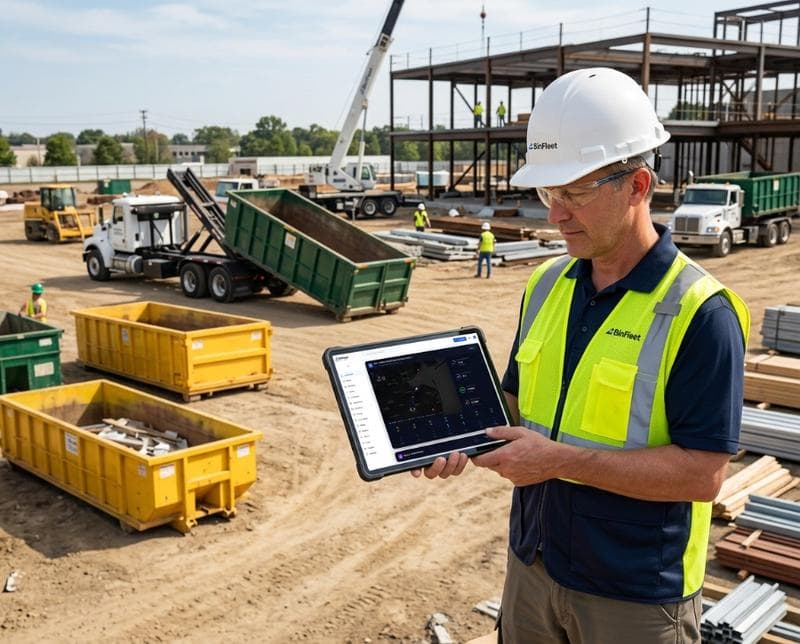
Waste Hauler Technology Trends Reshaping Operations in 2025-2026
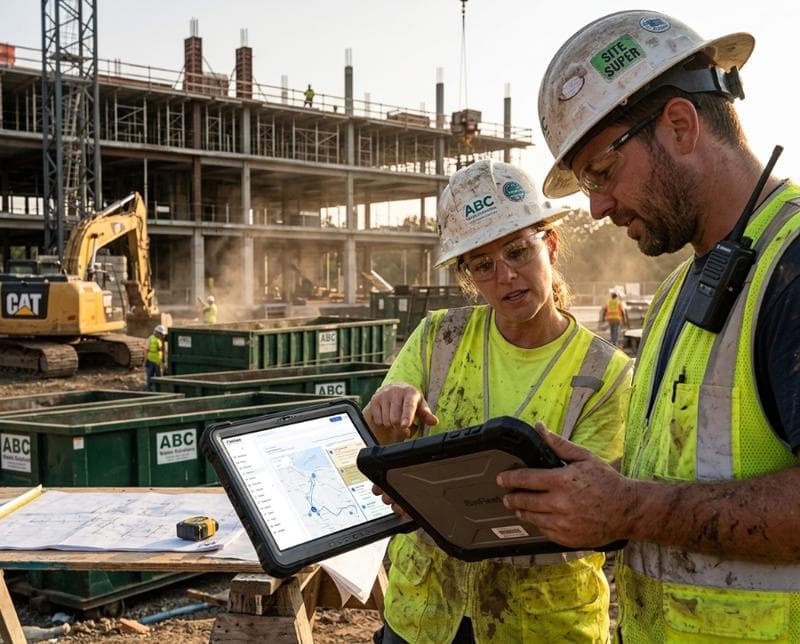
How AI-Powered Dumpster Scheduling Cuts Empty Miles and Maximizes Truck Utilization