How to Scale a Dumpster Rental Business Without Losing Operational Control
Start with Data, Not Trucks
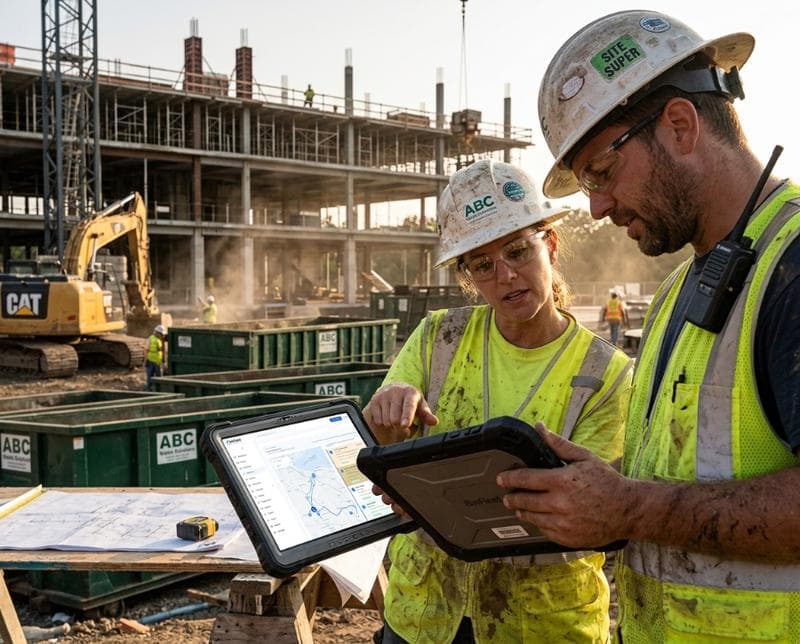
Most dumpster rental operators make the same mistake when scaling: they buy more trucks before understanding their current capacity and profitability. Before you hire a second driver or purchase additional containers, audit three critical metrics. First, calculate your average revenue per truck per month—not gross sales, but profit after fuel, maintenance, and labor. Second, measure your utilization rate: what percentage of your available inventory is deployed versus sitting idle? Third, track your driver efficiency, which shows how many pickups one driver completes per day and how much dead time they accumulate between jobs.
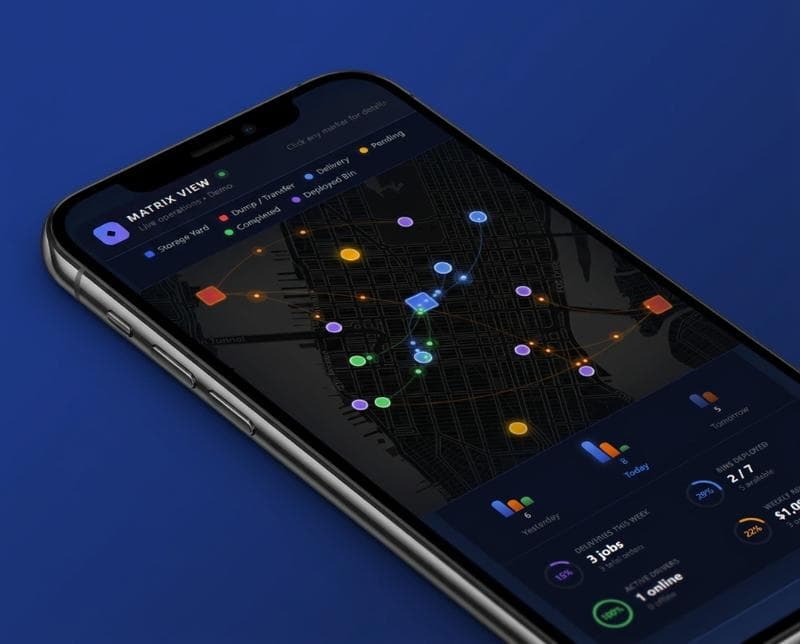
These numbers tell you whether you're ready to scale or whether you need to optimize your current operation first. If one truck generates consistent profit with 70% utilization and your drivers complete six to eight pickups daily, you have a repeatable model worth multiplying. If your numbers are weak, adding more assets will multiply problems, not revenue. Many owners discover they can improve profitability by 20-30% through route optimization alone before spending a dime on expansion. This is where BinFleet's analytics dashboard becomes invaluable—real-time visibility into utilization, margins, and driver performance tells you exactly when you're operationally ready to grow.
Build Your Dispatch and Routing Foundation
The single biggest operational bottleneck for scaling haulers is dispatching. What works for one driver—a notebook and phone calls—breaks down completely with three or four drivers. Without intelligent route planning and dispatch automation, your second truck becomes less efficient than your first, not more. You'll have drivers crossing routes, overlapping territories, customers complaining about unpredictable arrival windows, and fuel costs eating margins. The solution is not hiring a dedicated dispatcher; it's implementing a system that lets one person manage five or six drivers effectively.
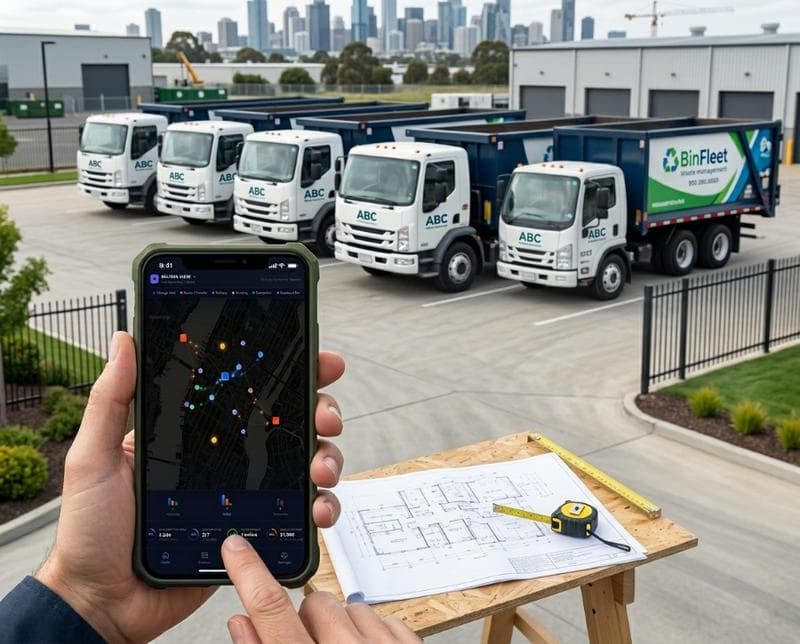
Modern dispatch software automatically assigns jobs to the nearest available driver, calculates optimal pickup sequences, and sends real-time SMS updates to customers. This cuts dispatch time per order from minutes to seconds and improves driver utilization by 15-25%. Drivers spend less time on the phone and more time working, customers receive accurate ETAs instead of vague time windows, and you get data showing which territories and routes are most profitable. Before scaling your team, request a demo of BinFleet to see how automated dispatch eliminates the operational friction that kills growth.
Hire for Operations, Not Just Driving Skill
Your first employee hire should not be your second driver. Instead, hire a part-time operations manager or dispatcher—someone who handles customer calls, manages billing inquiries, coordinates maintenance, and monitors driver performance. This person becomes the nervous system of your operation and frees you to focus on sales, pricing, and strategic decisions. Even if you're only paying them $18-22/hour for 20-25 hours weekly, the leverage they provide is transformative. They catch billing errors before they become customer complaints, they notice when a driver's efficiency drops, and they can train new hires on your company's standards.
Once dispatch operations are stable, then hire your second driver. Look for reliability and coachability over experience—someone who shows up on time, follows procedures, and learns from feedback. You can train a good person to run a dumpster truck in 2-3 weeks. You cannot train discipline or accountability. Communicate your expansion plan clearly during onboarding so new hires understand they're part of a growing team with clear expectations. As you add drivers, invest in standardized training that covers not just equipment operation but customer service, safety protocols, and your company's cost management practices.
Manage Inventory and Yard Operations at Scale
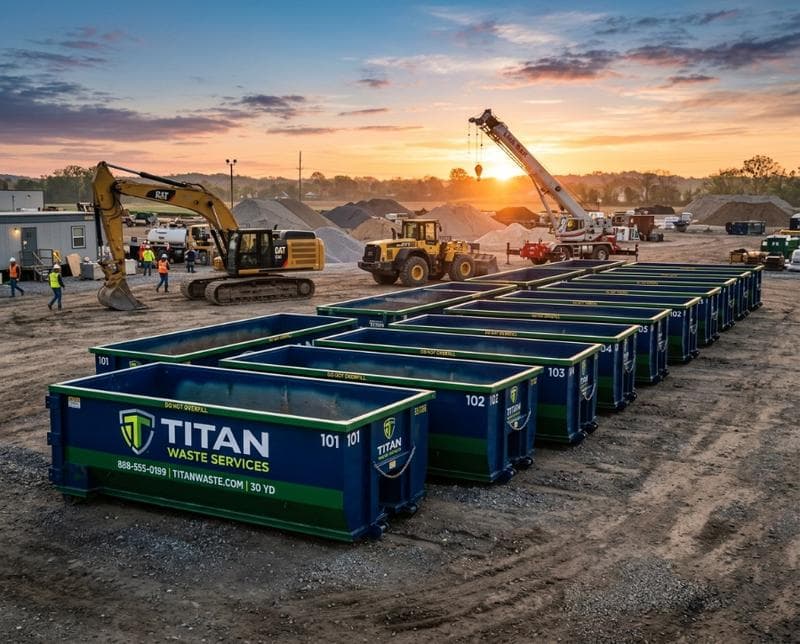
One truck means one or two yard locations. Three trucks means managing inventory across potentially multiple yards, coordinating maintenance, and preventing the chaos of bins scattered everywhere with no tracking. Without a system, you'll lose track of where bins are, spend time searching for available inventory, and miscalculate what you actually own. This directly impacts cash flow because you can't price services accurately if you don't know your true container asset base and their locations.
Implement container tracking from day one of expansion—even if it starts as a simple spreadsheet. Better, use software that tracks bins by ID, location, customer, and condition. Know your total deployed inventory, what's in the yard ready for work, and what needs maintenance before it can be rented. This prevents overbooking (promising a dumpster you don't have available) and reduces emergency rental costs when you scramble to fulfill a booking. As you scale, yard management becomes a half-time or full-time role. The person managing your yard should know exact inventory counts, anticipated returns, and seasonal demand patterns.
Price for Growth, Not Just Survival
Many operators scale while secretly undercutting themselves on pricing, hoping volume will compensate. It won't. If your profit margin is 25% at current prices, doubling volume doubles your profit—but only if you maintain that margin. Instead, use your growth phase to implement strategic price increases. You've built a better operation, you deliver faster ETAs through dispatch automation, and your customer retention is improving through reliable service. These justify modest price increases of 5-8% year-over-year. Customers care about reliability and service; they're less price-sensitive than you think.
Segment your pricing by service tier and delivery time. A same-day rental costs more than a scheduled pickup three days out. A customer who wants their bin at 8 a.m. sharp pays different rates than someone flexible about time windows. This isn't nickeling and diming—it's good business that rewards customers who make dispatching easier and penalizes those who demand premium service. Track pricing and margins by customer, route, and bin type. You'll discover that 20% of your customers generate 60% of profit, while others barely cover operational costs. Use that data to reshape your customer mix as you grow.
Invest in Payment and Invoicing Systems Early
Scaling manually managed cash and invoice collection is a nightmare. You'll have money tied up in unpaid invoices, drivers collecting cash without accountability, and no visibility into what you're owed. Before adding trucks, implement payment processing that lets customers pay online, via mobile app, or through automatic billing. This accelerates cash flow and reduces collection friction, which becomes increasingly important as your customer base grows and your overhead increases.
Automated invoicing saves hours monthly and reduces billing disputes. Customers receive detailed invoices immediately after service completion, payment due dates are consistent, and late payments trigger automatic reminders. For a scaling operation, this is non-negotiable—your finance person should never spend time manually creating invoices. The time saved pays for the software itself, and the cash flow improvement directly impacts your ability to fund growth. Read our guide to payment processing for dumpster companies to understand how streamlined billing accelerates scaling.
FAQ: Scaling Questions Haulers Ask
How do I know when I'm ready to buy truck number two?
You're ready when your first truck runs consistently profitable with 70%+ utilization and your driver completes six to eight pickups daily without significant downtime. If you're leaving $3,000+ in monthly revenue on the table because you can't fulfill demand, and you have documented customer requests you've turned away, a second truck makes sense. Run the numbers: cost of truck, driver wages, fuel, and insurance should be covered within 12-18 months of realistic volume projections.
What's the ideal ratio of dispatchers to drivers as I scale?
With good dispatch software, one person can manage 5-6 drivers effectively. Without software, that ratio drops to 2-3 drivers per dispatcher before quality falls apart. Investing in automated dispatch early is cheaper than hiring a dedicated dispatcher for every two drivers. Start with part-time operations support, then move to full-time when you hit four or five drivers.
Should I expand geographically or deepen service in my current territory?
Deepen first. Add service frequency (same-day options, weekend availability) and customer density in your existing territory where you already have brand awareness and operational efficiency. Geographic expansion increases complexity: new service territories, unfamiliar competitors, higher marketing costs. Master one market thoroughly before expanding.
How do I prevent quality from declining as I hire more drivers?
Document everything about how your best driver works: route sequence, customer communication standards, equipment checks, safety procedures. Create a training manual that new hires follow exactly. Monitor driver performance with dispatch software that shows completion times, customer ratings, and incident reports. Set clear standards and enforce them consistently—your reputation depends on it.
The Bottom Line: Scale Intelligently
Scaling from one truck to three or four is not about blind growth. It's about building operational systems that let you multiply your capacity without multiplying your headaches. Start with data, implement dispatch automation, hire for operational depth before driver quantity, manage inventory systematically, price confidently, and collect payments automatically. Most failing scaling attempts fail because operators skipped these steps and bought trucks before the fundamentals were solid. The operators who successfully grow 1-truck operations into 5 or 10-truck fleets do so because they built infrastructure first, then leveraged it. If you're ready to scale, the operational systems you choose today determine whether growth is smooth or chaotic. See how BinFleet helps operators manage the dispatch and billing complexity that comes with multi-truck growth, and start your free trial to see whether automation is the piece you've been missing.
Ready to Streamline Your Operation?
See how BinFleet AI helps waste haulers save time, cut costs, and grow.
Request a Free 30-Day TrialRelated Articles
How to Scale a Dumpster Rental Business from One Truck to Multi-Yard Operations
How to Scale Your Dumpster Rental Business: A Step-by-Step Growth Plan