How to Scale Your Dumpster Rental Business: A Step-by-Step Growth Plan
Understand Your Current Unit Economics Before Scaling
Before you acquire a second truck, you need complete clarity on what one truck actually makes you. Most haulers operate on gut feel—knowing your exact margin per pull, average revenue per route, and true all-in cost (fuel, driver wage, maintenance, depreciation) is non-negotiable. Pull three months of data: revenue by customer, cost per service, average days to cash, and repeat customer rate. These numbers tell you if your business model works at scale or if you're just moving expensive debt around. If margins are tight on one truck, they won't magically improve when you add three more.
Calculate your break-even point for a second asset. A used dumpster truck runs $35,000–$65,000; a new one costs $90,000–$150,000. Factor in insurance, fuel, driver labor, and maintenance. If your current truck generates $8,000–$12,000 per month in profit, you're looking at a payback window of 6–12 months on a used asset. If payback stretches beyond 18 months, you're not ready to scale yet. Strong unit economics at one truck is the foundation. Everything else is just execution.
Build the Operational Systems That Make Multi-Truck Work Possible
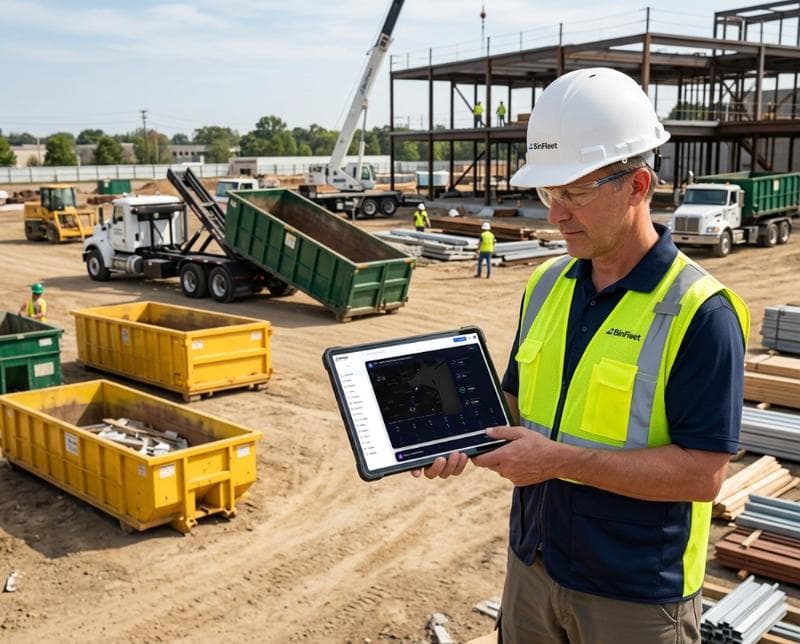
A solo operator can manage pickup schedules in a notebook and track containers with sticky notes. A two-truck operation cannot. The moment you add a second truck, you need a dispatch system, route optimization, and visibility into which driver has which container where. Without this, you'll lose track of inventory, double-book routes, miss pickups, and burn through your margin. Software isn't a luxury at scale—it's the nervous system that keeps multiple vehicles profitable. BinFleet handles dispatch, route optimization, container tracking, and driver SMS in one platform, which eliminates the chaos that kills growth-stage operations.
Document your operational standards now, while you're small. How long does a pickup take? What's your service area boundary? How do you handle after-hours calls? What's your response time SLA? Write these down. When you hire a second driver, they need clarity on process, not a phone call every time something varies. Create a simple operations manual covering pickup procedure, customer communication, safety, and quality standards. Your second driver isn't a clone of you—they'll make mistakes—but clear process reduces expensive ones.
Finance Your Growth Without Choking Cash Flow
Equipment financing is the obvious path, but it's not the only one. A bank loan typically requires 20–30% down plus personal guarantee, which ties up working capital you need for payroll and fuel. Consider a lease, which spreads payments over 36–60 months with lower upfront cost. Used truck sales (buy private or from auction sites) can be 40% cheaper than new and still give you 8–10 years of service. Some operators partner with yard owners or hauling companies to split ownership and risk. The goal isn't to own everything—it's to own enough capacity to serve your market without overextending.
Your second funding source should be customer deposits and improved collections. Many dumpster rental operators leave 30–60 days of receivables on the table by not pushing upfront payment or net-15 terms. If you're sitting on $15,000 in outstanding invoices, that's effectively a free loan you're giving customers. Shift to credit card processing, ACH auto-pay, or strict net-15 with late fees. Recovering just $5,000 in aged receivables is cheaper and faster than taking a bank loan. Your software should make this automatic—see how BinFleet handles invoicing and payment collection—so you're not chasing checks manually.
Hire and Train Your First Additional Driver (The Critical Hire)
Your second truck is only valuable if you have a driver. This hire makes or breaks scaling. You need someone reliable, safety-conscious, and able to represent your brand under pressure. A bad hire will cost you more than a truck payment through accidents, customer complaints, and turnover. Recruit from within your network first—ask current customers if they know someone trustworthy. Offer a signing bonus if they come from a competing hauler. Pay 15–20% above local average for this first hire; you're buying stability and experience, not just labor. Don't cut corners on background check, driving record review, or trial period (30 days minimum).
Train on safety and customer service before they touch a truck. One accident or property damage claim will erase months of profit. Make sure they understand pre-trip inspection, load securement, and what to do when something goes wrong. Assign them to ride along with you for the first week, shadowing your exact process. They should know which customers are repeat, which need special handling, and where the tricky angles are. After scaling to three or four trucks, hire a safety manager or operations coordinator to handle training and compliance. At one or two trucks, this responsibility falls on you.
Expand Service Area Strategically, Not Geographically Randomly
Your second truck doesn't mean you instantly serve 2x the territory. Expansion should cluster around existing routes to minimize deadhead miles and fuel waste. If you're currently maxed out on deliveries in a five-mile radius, expanding 15 miles away creates unprofitable routes. Instead, look at underserved sectors within your current footprint: commercial contractors, property management companies, or municipalities you haven't approached yet. These are easier to serve because your truck is already in the neighborhood. A customer base that generates tight, efficient routes is worth 30% more profit than scattered, distant accounts.
Use data to choose your next market. Once you have six months of operation with two trucks, you'll see which areas and customer types generate the best margins. Maybe residential jobs are margin killers but contractor accounts are gold. Maybe Tuesday–Thursday are dense but Monday and Friday are sparse. Load that data into your operations analysis and design routes around actual demand patterns, not assumptions. Forcing growth into a bad market wastes truck capacity and driver time. Growing smart means growing into pockets of density you've already proven profitable.
Systems and Accountability Keep Multi-Truck Operations Profitable
Three trucks running without clear accountability quickly become three money pits. You need weekly metrics: revenue per truck, fuel costs, driver utilization, customer acquisition cost, and cash position. Assign one person (you, initially) to review these numbers every Monday morning. Are two trucks pulling their weight while one lags? Is fuel cost creeping up? Are you converting leads? Without this weekly check-in, problems compound silently. By the time you notice, you're bleeding cash. Software with reporting capability—not just dispatch—is essential here.
Hold monthly driver meetings and quarterly business planning sessions. Drivers need to know the numbers too. If they understand that efficient routing saves fuel and helps the company grow, they become partners in profitability, not just employees logging hours. Set realistic growth targets for next quarter: new customer count, revenue per truck, utilization rate. Track against those targets relentlessly. Scaling a hauling business isn't about adding trucks—it's about building a system where each truck, driver, and customer interaction compounds value. Without systems, you just get bigger, not better.
FAQ: Common Questions About Scaling a Dumpster Rental Business
How long should I run one truck before scaling to two?
You need at least 12 months of solid operating history with positive unit economics. One year gives you seasonal data, reveals which customers stick around, and shows true profit after accounting for maintenance surprises and downtime. If you're still figuring out pricing or chasing problem customers, adding trucks adds complexity, not profit. Wait until one truck is running predictably and profitably before you scale.
Should I finance new trucks or buy used?
Used trucks aged 5–10 years with under 150,000 miles offer the best risk-reward for early-stage scaling. They cost 40–50% less than new, depreciate slower, and give you proven reliability if you inspect properly. Finance the used truck instead of buying cash to preserve working capital for driver wages and fuel. A 36-month loan keeps payments reasonable while the truck is still productive. New trucks make sense once you have four+ vehicles and proven demand.
What's the minimum revenue needed to support a second truck and driver?
Your first truck should consistently generate $8,000–$12,000+ monthly profit before adding a second asset. That second truck should achieve similar margins within 90–120 days of launch. If your first truck barely hits $6,000 monthly profit, a second truck will sink you. Focus on improving margins and utilization on truck one before overextending with truck two. Growing into demand is smart; forcing demand to justify growth is expensive.
How do I prevent driver poaching when I scale?
Competitive pay is half the answer—the other half is culture and clarity. Drivers jump ship when they don't know where the company is headed or feel undervalued. Share financial wins, involve drivers in problem-solving, and create advancement paths (senior driver, trainer, operations roles). Good drivers are the asset; protect them with competitive compensation, clear scheduling, and genuine respect. A driver earning $55,000–$65,000 with stable hours is far cheaper than constantly recruiting and training replacements.
Start Your Multi-Truck Roadmap Today
Scaling a dumpster rental business is achievable if you do the foundational work first: nail unit economics, build operational systems, finance smartly, and expand thoughtfully. The difference between a hauler who grows profitably and one who crashes under debt is usually just discipline around these fundamentals. You don't need perfect systems to start—you need honest data and a willingness to fix what doesn't work. See how BinFleet helps multi-truck operators streamline dispatch, reduce costs, and scale efficiently. Your roadmap from one truck to five starts with clarity on the one you have today.
Ready to Streamline Your Operation?
See how BinFleet AI helps waste haulers save time, cut costs, and grow.
Request a Free 30-Day TrialRelated Articles
How to Scale a Dumpster Rental Business from One Truck to Multi-Yard Operations
How to Scale Your Dumpster Rental Business: A Step-by-Step Growth Plan