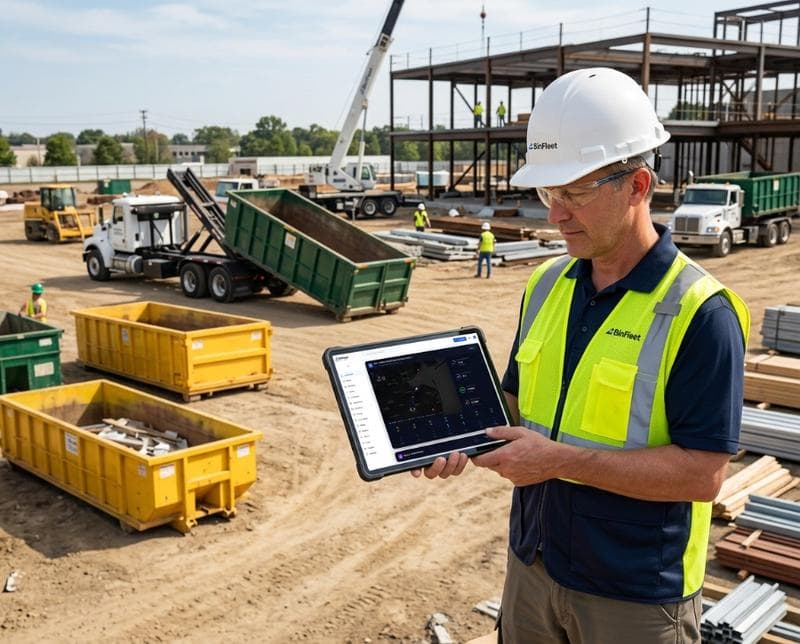
How Waste Haulers Manage Multiple Trucks, Drivers, and Yards in 2026
The Hidden Cost of Fragmented Fleet Operations
Most waste hauling companies still operate with a patchwork of tools: dispatch via radio or phone calls, route optimization guesswork, inventory tracking in spreadsheets, and invoicing through accounting software. This fragmentation creates blind spots. A driver doesn't know which container is at which yard. A dispatcher can't see real-time truck location or predict arrival times. A manager can't quickly answer whether a customer's bin was picked up on schedule. Each gap costs money through inefficiency, missed pickups, and customer dissatisfaction.
The operational reality in 2026 is that scale kills you without the right infrastructure. Adding a second or third yard compounds these problems exponentially. You need visibility across every truck, driver, and container—not just for dispatch, but for customer accountability, driver accountability, and financial accuracy. Unified fleet management isn't a luxury feature anymore; it's the baseline for competitive operations.
Consolidating Dispatch and Route Optimization
Real-time dispatch from a single platform eliminates the coordination delays that plague phone-based systems. When a new customer order comes in, dispatchers see all available trucks, their current locations, fuel levels, and remaining capacity in seconds. The system suggests optimal routes based on current positions, time windows, and traffic conditions—not guesswork. This means faster customer response times and tighter scheduling that fills more routes per day without adding vehicles.
Route optimization feeds directly into driver accountability. Drivers see their assigned route on their phone, including pickup order, addresses, and container details. They can't accidentally skip a stop or pick up the wrong bin. Customers get accurate ETAs, reducing call-ins asking where their hauler is. The ripple effect is significant: fewer reroutes, less fuel waste, fewer customer complaints, and higher on-time performance metrics that actually mean something because they're based on real data.
Unified Container and Inventory Tracking Across Yards
Container tracking becomes chaos fast when you operate multiple yards. Which location has 40-yard dumpsters available? How many 20-yard roll-offs are currently deployed, and which ones need cleaning or maintenance? Spreadsheet-based inventory systems go stale within hours. A unified platform maintains real-time inventory across all yards in one view. Every container has a location tag, condition status, and assignment history. When a new order comes in, dispatchers instantly see which nearby yard can fulfill it with the right equipment.
This visibility prevents the costly mistakes that happen at scale: deploying a dirty container, double-booking equipment, or not knowing a roll-off is stranded at a job site waiting for pickup. It also streamlines maintenance scheduling. The system flags containers due for cleaning or inspection based on usage cycles, not memory. For multi-yard operations, this single source of truth reduces deadstock and maximizes asset utilization, directly improving margins without new capital investment.
Driver Performance and Accountability in One Dashboard
Managing driver performance across multiple yards requires metrics that matter. A good fleet management system tracks not just hours worked, but actual productivity: pickups completed, drive time versus idle time, fuel efficiency per route, and safety metrics like hard braking events or speeding. Dispatchers and operations managers see this data in real time, identifying training needs or efficiency gaps before they become costly problems. When a driver consistently takes longer routes or misses stops, the system alerts you, not your customers.
Accountability also protects you legally. GPS tracking, timestamped photo evidence of pickups, and digital proof of service documentation create an audit trail that defends against customer disputes. If a customer claims they weren't charged correctly or their bin wasn't picked up, you have the data to back up your billing. This confidence in your own data means fewer chargebacks, fewer customer service escalations, and less time wasted on "he said, she said" disputes that should never reach management.
Payments, Invoicing, and Financial Control at Scale
Growth in waste hauling happens fast, and invoicing can't be the bottleneck. A unified platform captures all service data automatically: which customer, what service, when it happened, how long it took. That data flows directly into invoicing without manual entry, reducing billing errors and accelerating cash collection. Customers see transparent, detailed invoices tied to actual service dates and times—fewer disputes, faster payment processing. Multi-yard operations can track profitability by location, service type, and customer segment without waiting for month-end accounting reports.
Digital payments integrated into the platform speed up cash flow further. Customers can pay directly through SMS confirmation links or an online portal, removing the manual collection effort. For subscription-based customers, recurring billing happens automatically. For operations managers, real-time financial dashboards show revenue per yard, per driver, and per route, revealing where you're actually making money and where you're not. This data is essential when you're deciding whether to grow a yard or optimize existing operations.
Multi-Yard Management Without the Chaos
Operating multiple yards shouldn't mean multiple headaches. A centralized platform lets a small management team oversee trucks, containers, drivers, and billing across all locations from one dashboard. A manager at headquarters can see what's happening at Yard A in real time while monitoring efficiency at Yard B, without needing to travel between locations or rely on inconsistent reports. Yard supervisors have their own focused view of their inventory and local operations, while still being part of the larger company reporting structure.
This unified command center approach scales your operations without scaling your overhead proportionally. You don't need a dispatch team at every yard—one centralized dispatch can handle multiple locations efficiently because they have visibility into all available resources. Inventory management becomes systematic instead of reactive. Financial reporting happens automatically, not through manual consolidation. Multi-yard operations that would require 5-6 administrative staff with fragmented systems can operate smoothly with 2-3 when everything is integrated.
FAQ: Waste Hauler Fleet Management Questions
How quickly can we see ROI after implementing a fleet management system?
Most haulers see measurable improvements within 30-60 days. Early wins typically come from reduced fuel costs through better route optimization (5-10% savings are common), faster invoicing reducing billing cycles from weekly to daily, and fewer missed or duplicate pickups. Within three months, improved driver accountability and container utilization usually deliver another 8-12% efficiency gain.
Can we integrate a new fleet management system with our existing accounting software?
Modern platforms like BinFleet are designed for integration. They can sync with QuickBooks, Xero, and other accounting systems so that service data flows into invoicing without manual work. API connections to mapping and fuel card systems are also standard. The key is choosing a platform built for the waste industry, not a generic transportation system.
What happens if a driver's smartphone dies or they lose signal during a route?
Good fleet management systems work offline. Drivers can load their route on their phone before leaving the yard, complete pickups and notes without connection, and the app syncs data back to the system once they regain signal. This ensures they never lose work or access to their assigned route, even in areas with spotty coverage.
How does a unified system help us compete with larger waste companies?
Technology levels the playing field. A 10-truck independent hauler using unified fleet management can operate with the efficiency and data visibility of a company three times its size. Better customer service through accurate ETAs, fewer billing disputes through transparent invoicing, and higher driver accountability lead to reputation and retention—the advantages larger companies can't always match because their legacy systems are slower to change.
Start Managing Your Fleet as One System
The waste hauling companies pulling ahead in 2026 aren't necessarily the ones with the most trucks. They're the ones with the clearest visibility into their operations. When you can see every truck location, track every container, optimize every route, and invoice every customer from one platform, you're not just managing a fleet—you're running a business with real operational control. Request a demo to see how BinFleet helps operators at your scale consolidate their operations and reclaim time currently lost to coordination and manual work. Ready to explore how unified fleet management could transform your operations? Start with a free trial to see the difference real-time visibility makes.
Ready to Streamline Your Operation?
See how BinFleet AI helps waste haulers save time, cut costs, and grow.
Request a Free 30-Day TrialRelated Articles
Construction Dumpster Rental Best Practices: A Guide for Waste Haulers
Roll Off Container Maintenance: A Preventive Strategy for 2026