Waste Hauler Technology Trends Transforming Operations in 2026
The waste hauling industry stands at a technological crossroads in 2026, where traditional operations meet cutting-edge innovation. Companies that embraced digital transformation early are now reaping the benefits of streamlined operations, reduced costs, and improved customer satisfaction. Meanwhile, operators still relying on paper schedules and manual dispatching find themselves struggling to compete in an increasingly efficient marketplace.
This technological shift isn't just about staying current—it's about survival and growth. Waste haulers who understand and implement these emerging technologies position themselves to capture market share, improve margins, and build resilient operations that can adapt to future challenges. The question isn't whether to adopt new technology, but which innovations will deliver the greatest operational impact.
AI-Powered Route Optimization and Dynamic Dispatching
Artificial intelligence has moved beyond experimental phase to become a practical tool for optimizing daily routes and dispatching decisions. Modern AI systems analyze historical pickup data, traffic patterns, driver preferences, and customer requirements to create routes that reduce fuel costs by 15-25% while improving on-time performance. These systems continuously learn from real-world conditions, automatically adjusting routes when construction, weather, or equipment issues disrupt planned schedules.
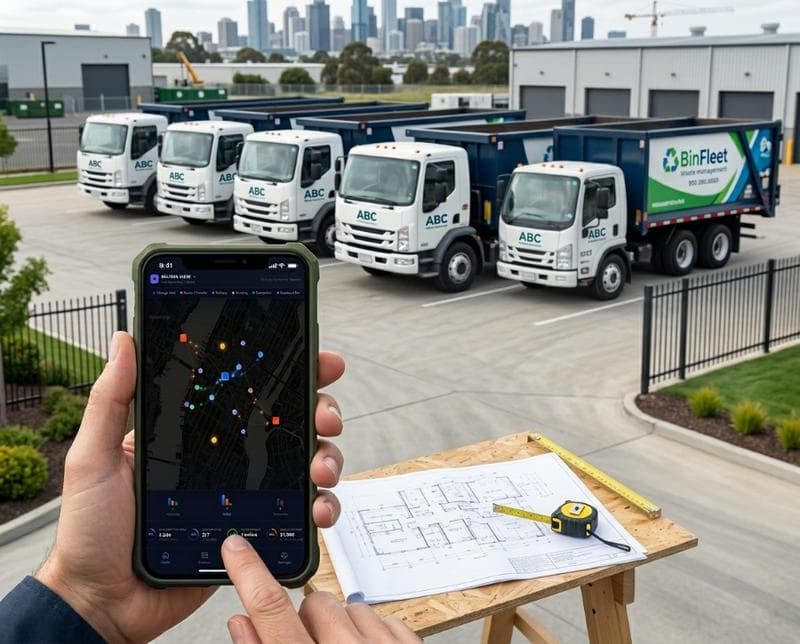
Dynamic dispatching takes this optimization further by making real-time adjustments throughout the day. When a driver calls in sick or a truck breaks down, AI-powered systems immediately recalculate assignments to minimize customer impact and operational disruption. Advanced platforms like BinFleet integrate these capabilities directly into dispatch workflows, enabling operators to manage complex multi-truck operations with unprecedented efficiency and reduced stress.
IoT Sensors and Smart Container Management
Internet of Things sensors embedded in containers are transforming how waste haulers track inventory and schedule pickups. These devices monitor fill levels, location, and usage patterns, providing real-time visibility into container status across entire service areas. Haulers can now identify containers ready for pickup before customers call, eliminate unnecessary trips to empty containers, and prevent overflow situations that damage customer relationships.
Smart container technology also enables predictive maintenance and theft prevention. Sensors detect unusual movement patterns, alerting operators to potential theft or unauthorized relocations before containers disappear entirely. The data collected helps haulers understand customer usage patterns, enabling better container sizing recommendations and more accurate service scheduling that improves both efficiency and customer satisfaction.
Customer Communication and Experience Automation
Automated SMS notifications and customer portals have become standard expectations rather than competitive advantages. Customers now expect real-time updates about delivery schedules, pickup confirmations, and service changes without needing to call dispatch. Modern communication systems integrate with route management to send automatic notifications when drivers are en route, containers are delivered, or services are completed.
Self-service customer portals extend this automation by allowing customers to place orders, modify services, and track container status independently. This reduces administrative overhead while improving customer satisfaction through 24/7 access to account information. The most effective systems maintain the personal touch by flagging situations that require human intervention while automating routine interactions that previously consumed significant staff time.
Mobile Workforce Management and Digital Workflows
Driver mobile applications have evolved from simple navigation tools to comprehensive workforce management platforms. Today's apps enable drivers to update job status, capture photos, collect signatures, and communicate with dispatch without returning to base or making phone calls. This real-time data flow improves accuracy, reduces paperwork, and enables faster response to customer issues or operational changes.
Digital workflows extend beyond driver apps to include automated invoicing, payment processing, and compliance documentation. When drivers complete jobs through mobile apps, the system automatically generates invoices, processes payments, and updates customer records. This integration eliminates duplicate data entry, reduces billing errors, and accelerates cash flow by processing transactions immediately upon service completion.
Predictive Analytics for Equipment and Operations
Predictive analytics platforms analyze operational data to identify patterns and forecast future needs across multiple business dimensions. These systems predict equipment maintenance requirements based on usage patterns, helping haulers schedule repairs during planned downtime rather than responding to unexpected breakdowns. Predictive models also forecast demand fluctuations, enabling better capacity planning and inventory management.
Operations analytics extend to customer behavior prediction, identifying accounts at risk of cancellation and suggesting retention strategies. By analyzing service history, payment patterns, and communication records, these systems help haulers proactively address customer concerns before they escalate to cancellations. This predictive approach transforms reactive customer service into proactive relationship management that improves retention rates and lifetime customer value.
Integration Platforms and Unified Operations
The most successful waste haulers in 2026 operate integrated technology stacks where all systems communicate seamlessly. Rather than managing separate solutions for dispatching, customer management, accounting, and fleet maintenance, leading operators use platforms that unify these functions into cohesive workflows. This integration eliminates data silos, reduces training requirements, and provides comprehensive visibility into all operational aspects.
Unified platforms also enable more sophisticated business intelligence and reporting capabilities. When all operational data flows through connected systems, haulers can analyze relationships between route efficiency, customer satisfaction, equipment utilization, and profitability with unprecedented granularity. These insights drive strategic decisions about expansion, pricing, and service offerings based on real operational data rather than intuition or incomplete information.
Technology Implementation: Essential Considerations
Successfully implementing new technology requires careful planning and realistic expectations about adoption timelines. The most effective approach involves starting with core operational systems that address immediate pain points, then expanding to additional capabilities once initial systems are fully integrated into daily workflows.
Training and change management prove equally important as technology selection. Even the most advanced systems fail when staff resist adoption or lack proper training to utilize new capabilities effectively. Consider these key factors when evaluating technology investments:
- Integration capabilities with existing systems and workflows
- Training requirements and ongoing support availability
- Scalability to accommodate business growth and changing needs
- Data security and compliance with industry regulations
- Return on investment timeline and measurable success metrics
FAQ
What's the most impactful technology investment for small waste hauling operations?
Route optimization and dispatching software typically deliver the highest immediate return on investment for smaller operations. These systems reduce fuel costs, improve customer service, and enable better resource utilization without requiring significant upfront capital investment in hardware or sensors.
How long does it typically take to see results from new technology implementations?
Most haulers see operational improvements within 30-60 days of implementing route optimization and mobile workforce management systems. More complex technologies like predictive analytics may require 3-6 months to generate meaningful insights as the system collects sufficient operational data.
Are there technology solutions specifically designed for waste hauling operations?
Yes, specialized platforms like BinFleet are designed specifically for waste hauling and dumpster rental operations. These industry-specific solutions understand the unique requirements of waste management workflows, compliance needs, and operational challenges better than generic business software.
What happens to older technology investments when implementing new systems?
Modern platforms typically offer integration capabilities or data migration tools to protect existing technology investments. However, the most efficient approach often involves consolidating multiple point solutions into comprehensive platforms that eliminate redundancy and improve operational efficiency.
Ready to Streamline Your Operation?
See how BinFleet AI helps waste haulers save time, cut costs, and grow.
Request a Free 30-Day Trial